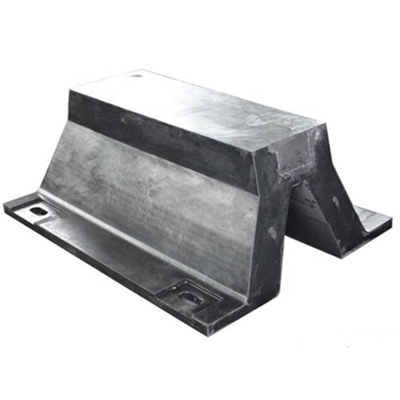
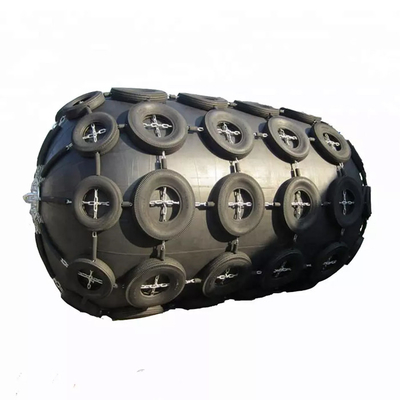
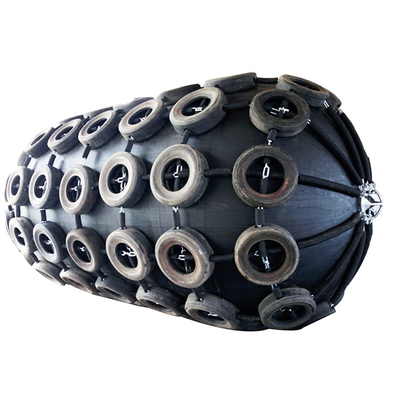
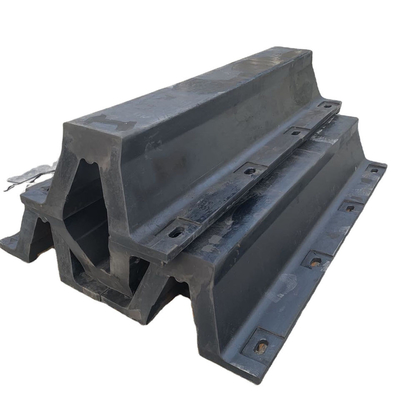
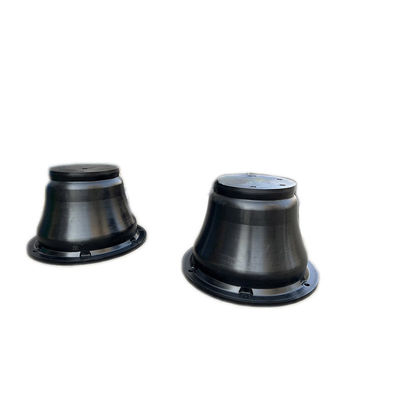
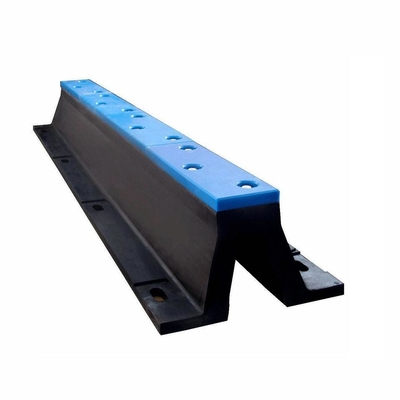
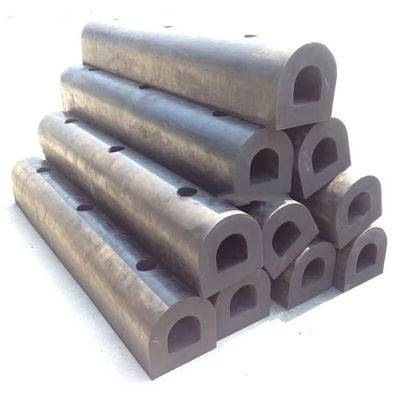
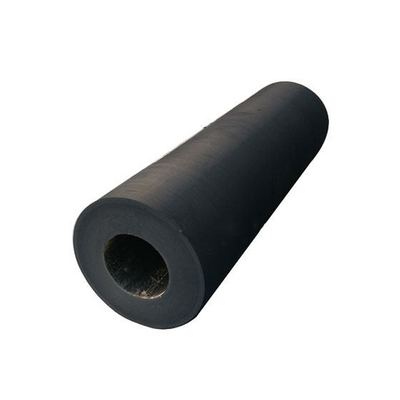
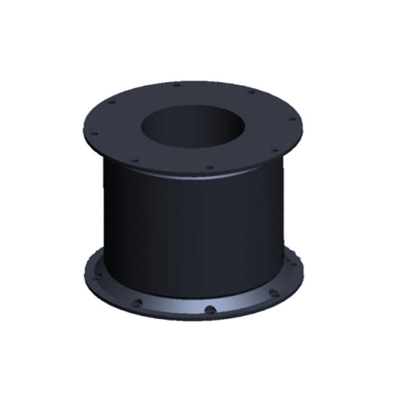
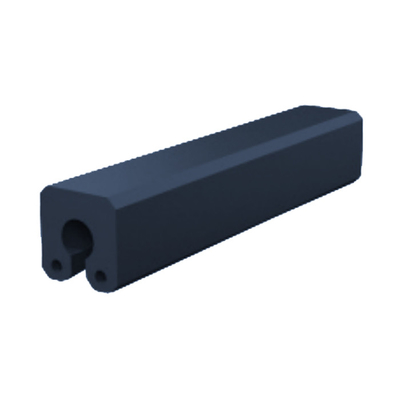
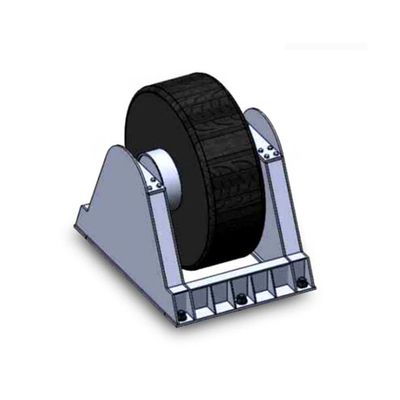
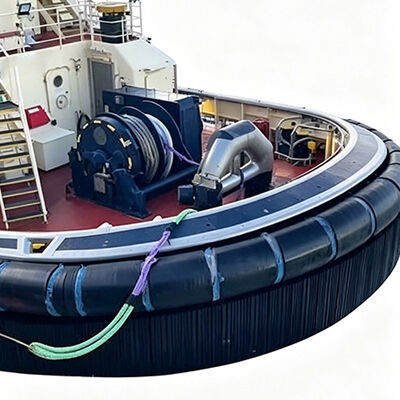
Tug Boat Fenders are marine rubber protection systems engineered for tugboats involved in ship-assist, berthing, unberthing, towing, escort, pushing, and close-quarter maneuvering operations. These fenders are installed directly on working vessels and are designed to withstand repeated contact, compression, sliding, shear, abrasion, and fluctuating impact loads.
Manufactured from specially formulated marine-grade rubber, these fenders create a controlled contact interface between the tugboat and other vessels or marine structures while protecting hull structures, reducing localized contact pressure, and maintaining operational stability.
A shipbuilding facility in South Korea operated a 2,800 hp ASD tug with 420 tonnes displacement for vessel movement within the shipyard basin. The original fender arrangement wasn't optimized for high contact frequency, leading to noticeable abrasion and frequent maintenance requirements.
After engineering assessment considering the tug's displacement, contact patterns, and hull geometry, a reinforced marine rubber configuration was implemented. The revised fender arrangement provided stable contact during pushing operations, reduced direct steel-to-steel contact, and enabled predictable maintenance planning.
| Parameter | Specification |
|---|---|
| Place of Origin | China |
| Brand Name | Hongruntong Marine |
| Product Name | Tug Boat Fenders |
| Material | High Quality Natural Rubber |
| Warranty | 3 Years |
| Standard | PIANC2002, HGT2866-2016 |
| Tensile Strength | ≥16 MPA |
| Hardness | ≤82 Shore A |
| Lifespan | 15-20 Years |
| Service | OEM or ODM |
| Color | Customers' Requirements |
| Application | Tugboat, Workboat etc |
| D*d | E | A max | B max | C | M | F | L |
|---|---|---|---|---|---|---|---|
| 250*125 | 190 | 200 | 570 | 500 | 75 | 300 | 2-13 metres in one section or joined for longer length |
| 300*150 | 225 | 225 | 600 | 700 | 75 | 350 | 2-13 metres in one section or joined for longer length |
| 380*190 | 280 | 225 | 650 | 800 | 100 | 400 | 2-13 metres in one section or joined for longer length |
| 400*200 | 300 | 250 | 670 | 800 | 100 | 400 | 2-13 metres in one section or joined for longer length |
| 450*225 | 350 | 250 | 700 | 850 | 100 | 400 | 2-13 metres in one section or joined for longer length |
| 480*240 | 350 | 250 | 700 | 850 | 100 | 400 | 2-13 metres in one section or joined for longer length |
| 500*250 | 375 | 280 | 730 | 900 | 100 | 400 | 2-13 metres in one section or joined for longer length |
| 540*270 | 375 | 280 | 730 | 900 | 100 | 400 | 2-13 metres in one section or joined for longer length |
| 600*300 | 450 | 300 | 800 | 900 | 125 | 500 | 2-13 metres in one section or joined for longer length |
| 700*350 | 500 | 350 | 870 | 950 | 125 | 500 | 2-13 metres in one section or joined for longer length |
| 800*400 | 600 | 350 | 930 | 1000 | 125 | 500 | 2-13 metres in one section or joined for longer length |
| 900*450 | 675 | 350 | 1000 | 1100 | 150 | 500 | 2-13 metres in one section or joined for longer length |
Specially formulated marine-grade rubber provides optimal balance between elasticity, tensile strength, hardness, abrasion resistance, and fatigue performance. The material deforms progressively under contact pressure, increasing effective contact area and reducing localized stress concentrations.
Engineered to withstand multi-directional loading including compression, friction, shear, and localized forces. Reinforced sections provide structural support where higher forces are expected, while proper mounting arrangements distribute applied forces into supporting structures.
Designed to withstand repeated abrasion from sliding contact during pushing operations. Wear-resistant design extends service life and enables predictable maintenance planning for high-utilization tugboats.
Customizable dimensions accommodate different hull forms, freeboard, propulsion arrangements, and contact locations. Engineering considerations include length, diameter, hardness, section geometry, and mounting arrangements specific to each vessel.
With over 30 years of manufacturing experience in marine rubber products, we maintain dimensional accuracy and material consistency crucial for marine fender systems.
We develop product dimensions according to customer specifications, installation measurements, and project requirements, ensuring compatibility with vessel supporting structures.
Comprehensive manufacturing and inspection procedures maintain stable product quality, including dimensional verification and material testing according to project specifications.
We provide technical documentation, installation support, and coordinated delivery planning to minimize vessel downtime and ensure successful project implementation.
Tug Boat Fenders can be manufactured in different profiles, lengths, diameters, cross-sectional dimensions, and hardness levels. The appropriate dimensions depend on tugboat size, hull geometry, contact position, operating loads, and available installation space.
Selection should consider tug displacement, operating horsepower, contact speed, pushing direction, contact frequency, hull structure, and expected contact area. The actual installation position should be evaluated rather than relying only on tug horsepower.
Routine maintenance includes visual inspection for abnormal abrasion, cracking, deformation, loose fixing components, and surface damage. High-contact areas should be inspected more frequently, and cleaning seawater deposits helps maintain service conditions.
Yes. Replacement fenders can be manufactured according to existing system dimensions and mounting arrangements. Providing drawings, dimensional records, or sample components helps confirm required geometry.
Documentation may include product specifications, dimensional inspection records, material information, test reports, and quality documents. Specific requirements should be confirmed before production to align manufacturing and testing arrangements.