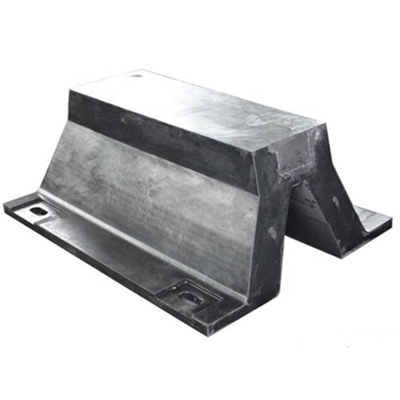
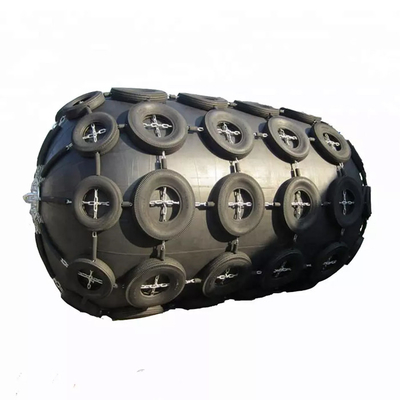
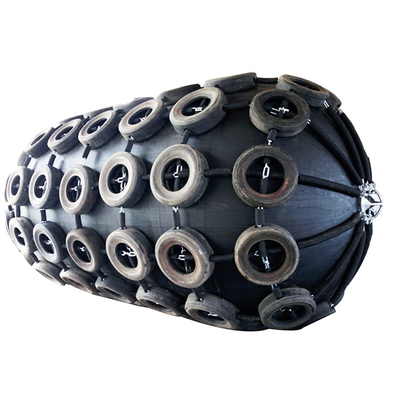
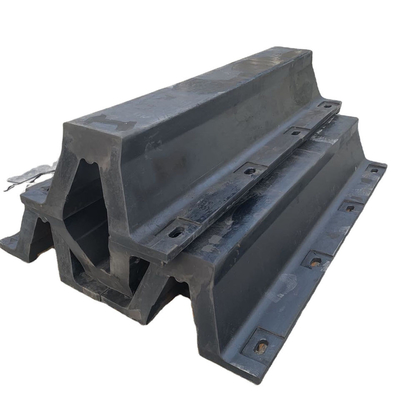
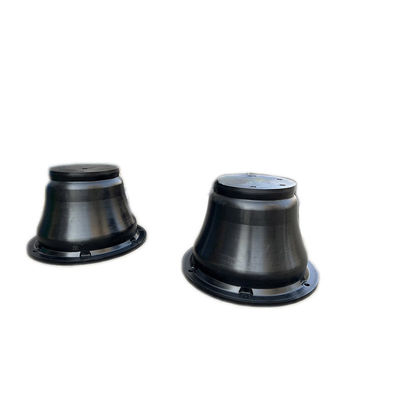
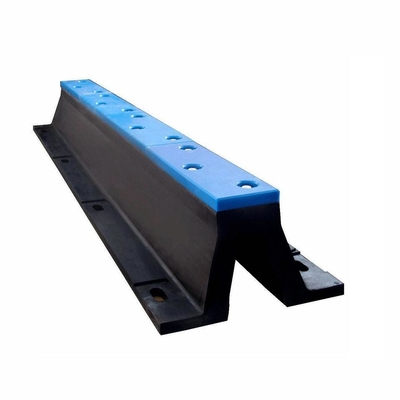
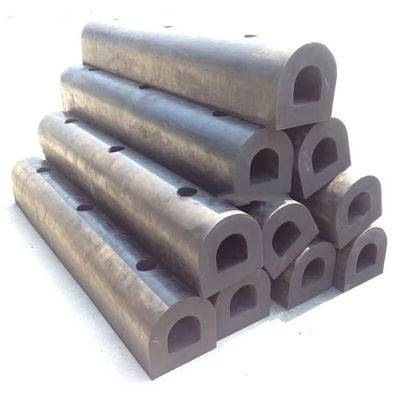
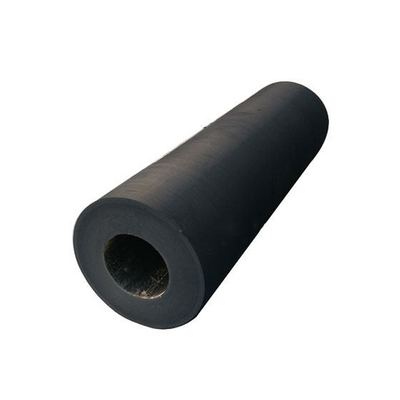
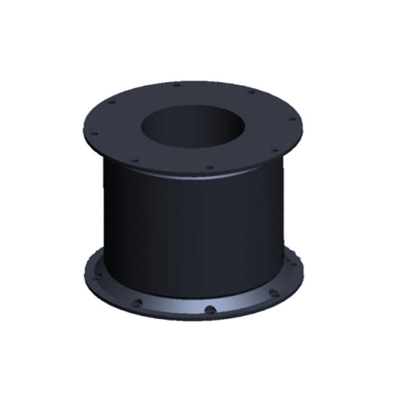
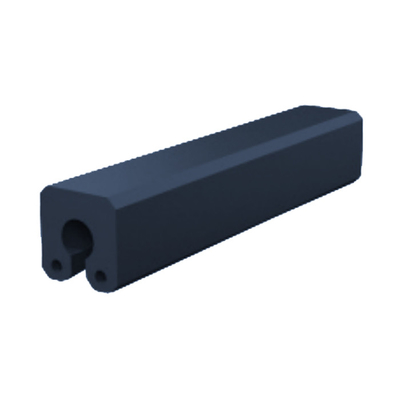
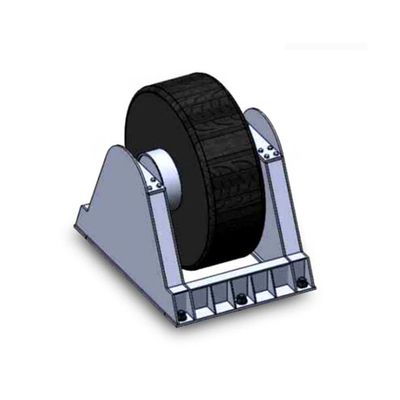
Arch Rubber Fender is a marine berthing protection system engineered for controlled impact energy absorption and structural load mitigation between vessel hulls and quay structures. The product is manufactured from marine grade elastomer compounds through controlled vulcanization molding processes, ensuring stable molecular structure, consistent mechanical properties, and long term resistance to compressive deformation under repeated operational cycles.
The structural configuration is based on an arch geometry designed to optimize force distribution during vessel contact. When subjected to berthing impact, the structure undergoes progressive elastic deformation, converting kinetic energy into controlled strain energy and reducing localized stress concentration on both marine vessels and port infrastructure.
The system is designed for marine engineering environments requiring stable docking performance, structural protection, and operational reliability under variable conditions including tidal fluctuation, wave motion, and continuous vessel traffic.
A container terminal rehabilitation project in Busan South Korea implemented Arch Rubber Fender systems to replace an aging berthing protection system that had exhibited uneven wear patterns and insufficient energy absorption performance under continuous container vessel operations. The terminal handles medium and large vessels with frequent berthing cycles which previously resulted in progressive damage to quay wall edges and increased maintenance requirements.
The engineering challenge involved reducing peak impact load transmission to concrete quay structures while maintaining stable vessel alignment during docking under tidal variation conditions. The existing system was unable to provide consistent load distribution leading to structural fatigue accumulation over time.
Arch Rubber Fender units were installed along the primary berthing zone with reinforced anchoring interfaces integrated into the existing quay structure. After implementation operational monitoring indicated improved load distribution characteristics and reduced localized stress concentration during vessel contact events. The system contributed to more stable docking behavior and reduced structural maintenance frequency under continuous operational conditions.
| Product Name | Arch Rubber Fender |
|---|---|
| Material | Natural Rubber, Silicone Rubber |
| Colour | Black, or Customized |
| Surface | Smooth |
| Size | Height: 200-1000mm Length: 1000-3500mm All Sizes Can Be Customized |
| Physical Properties | Polymer Content: 100% Virgin Working Temperature: -50℃~240℃ Tensile Strength: ≥16 Mpa Density: 90+/-5 Per 100mm in Hardness: 50-70 (shore A) Elongation: ≥400% |
| Features | 1. Through High Temperature Resistant 2. Excellent Tear Resistant, Oil Resistant, Aging Resistant 3. Resistant to Industrial Acid & Alkali and Good Elastic 4. Built as Per PIANC2002 |
| Application | Multi-Purpose-Terminals, RoRo Ramps, Passenger Vessel Terminals, Barge |
| Model | W [mm] | B [mm] | F [mm] | C [mm] | H [mm] |
|---|---|---|---|---|---|
| HM-ARF200H | 400 | 320 | 145 | 128 | 200 |
| HM-ARF250H | 500 | 410 | 175 | 160 | 250 |
| HM-ARF300H | 600 | 490 | 225 | 196 | 300 |
| HM-ARF400H | 800 | 670 | 300 | 260 | 400 |
| HM-ARF500H | 1000 | 840 | 375 | 325 | 500 |
| HM-ARF600H | 1200 | 1010 | 450 | 390 | 600 |
| HM-ARF800H | 1600 | 1340 | 600 | 520 | 800 |
| HM-ARF1000H | 2000 | 1680 | 750 | 650 | 1000 |
Service life typically ranges from eight to fifteen years depending on operational frequency environmental exposure and maintenance practices under standard marine conditions.
The product is designed for installation on existing concrete and steel quay structures using standard anchoring systems without requiring major structural modification.
The system is suitable for marine environments including tidal variation saltwater exposure wave influence and repeated vessel impact within designed performance limits.
Customization is available for dimensional specifications hardness levels and mounting configurations based on vessel type and port infrastructure requirements.
Maintenance involves periodic inspection of structural condition mounting stability and surface wear to ensure long term operational reliability.