Product Overview
Mooring Bollards are permanent or semi-permanent marine fittings designed to provide secure anchoring points for vessels operating alongside ports, docks, shipyards, offshore service facilities, and industrial waterfront structures. They form part of the fixed mooring infrastructure that enables vessels to remain in designated positions during cargo handling, passenger transfer, maintenance, loading, unloading, and other port activities. By receiving forces transmitted through mooring ropes or wires and transferring them into the supporting structure, bollards contribute to the overall integrity of the vessel-to-shore mooring arrangement. Their selection must be based on the intended operating conditions, vessel characteristics, berth configuration, environmental loading, and structural design requirements.
The engineering function of a Mooring Bollard is closely related to the load path established between the mooring line and the foundation. When a line is secured around the bollard, the applied tension generates forces that act on the bollard body and its supporting components. Depending on the line direction and point of contact, these forces may produce direct loading, bending moments, and localized stresses. The bollard body, base, anchorage, and supporting structure must therefore be evaluated as an integrated assembly. Rated capacity should be established according to the applicable design criteria, while the supporting concrete or steel structure must be verified for the corresponding loads. A product rating alone cannot establish the suitability of the complete installation.
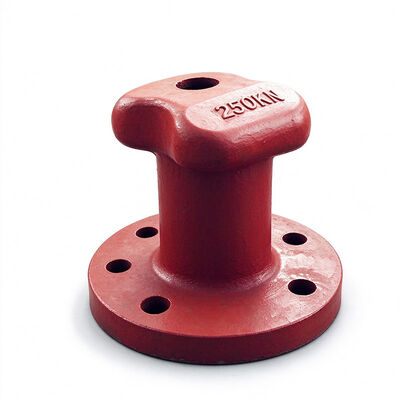
Bollard geometry influences both structural behavior and practical line handling. Common configurations include single-post and double-horn designs, with the appropriate type determined by the mooring arrangement, available space, rope or wire characteristics, and operating procedures. The head and body geometry should provide suitable contact surfaces for the intended line arrangement without introducing unnecessary abrasion or unsuitable bending conditions. The configuration must also allow the line to be positioned and handled in accordance with established procedures. The final design should account for the intended operating environment rather than relying solely on the general appearance or popularity of a particular bollard type.
Material selection is another important consideration in product specification. Depending on the design and project requirements, Mooring Bollards may be manufactured from cast steel, fabricated steel, ductile iron, or other suitable materials. The selected material should provide the mechanical properties required for the specified loading conditions and manufacturing process. Material grade, production method, critical dimensions, inspection scope, and acceptance criteria should be identified in the approved technical documentation. Where a project requires material traceability or formal quality records, the documentation requirements should be confirmed before production begins.
Marine installations expose bollards to environmental factors that may affect surface condition and long-term serviceability. Salt-laden air, moisture, rainfall, temperature variation, and repeated mechanical contact can contribute to corrosion or coating deterioration. The protective treatment should be selected according to the base material, exposure category, project specification, and maintenance strategy. Surface preparation and coating application should follow the specified process, and the finished surface should be inspected against the agreed acceptance criteria. Protective coatings reduce environmental exposure but do not eliminate the need for maintenance, particularly in areas subject to rope contact, impact, or water accumulation.
The mounting arrangement must be coordinated with the structural design of the berth. Relevant parameters include the bollard's base dimensions, mounting-hole positions, anchor spacing, installation height, and clearance from nearby structures or equipment. For new construction, these details should be coordinated with the civil and structural drawings before the foundation or deck is completed. For replacement installations, existing dimensions and the condition of the supporting structure must be verified before the new unit is selected. Any changes to the anchorage, foundation, or load-bearing arrangement require appropriate engineering review to ensure that the revised installation remains suitable for the specified loading conditions.
The operating environment determines how the bollard should be inspected and maintained. Wind, current, wave action, water-level changes, and variations in vessel loading can affect the forces acting on the mooring system. The bollard should be used within its specified capacity and according to the approved mooring arrangement. Routine inspections may include examination of the body, contact surfaces, protective coating, anchor components, and surrounding foundation for cracking, deformation, corrosion, loosening, or other deterioration. Inspection frequency should reflect the severity of exposure, operational frequency, design requirements, and the facility's maintenance program.
For marine infrastructure procurement, the product specification should define the required bollard type, capacity, dimensions, material, surface protection, mounting interface, inspection criteria, and applicable documentation. Clear drawings and technical requirements allow the purchaser, supplier, structural engineer, and installation contractor to work from a consistent basis. Custom configurations may be required for specialized berth layouts, replacement projects, or facilities with restricted installation space. Any proposed changes to the structural geometry or mounting arrangement should be assessed against the approved engineering requirements before production or installation.
Hongruntong Marine supplies Mooring Bollards for port facilities, shipyards, commercial berths, and other marine engineering applications. With more than 30 years of manufacturing experience, the company can coordinate product requirements with customer drawings, specified materials, mounting dimensions, surface protection, and agreed inspection documentation. Each configuration should be confirmed against the intended operating conditions and the approved technical specification. By addressing structural requirements, manufacturing details, and installation compatibility together, project teams can establish a clearer basis for procurement and support the serviceability of the complete mooring system.
Product Features
Integrated Structural Design for Marine Mooring Loads
Mooring Bollards must be designed to receive the forces applied by mooring ropes or wires and transfer those forces into the supporting structure. This requires consideration of the bollard body, base configuration, material properties, anchorage arrangement, and foundation capacity. The relevant design loads depend on the intended vessel range, berth geometry, environmental conditions, and the approved mooring arrangement. The structural configuration must be compatible with these requirements so that the load path from the mooring line to the foundation can be evaluated as a complete system.
The loading behavior of a bollard may vary with the direction and point of application of the mooring line. A line acting at an angle or contacting the bollard away from the assumed design position can introduce bending moments and localized stresses. For this reason, the design specification should establish the applicable loading conditions and any limitations on use. The supporting foundation, including anchor bolts, concrete reinforcement, steel members, and base components where applicable, must be checked against the same design basis. This is particularly important for installations where the existing structure has been designed for a different configuration or operating requirement.
For procurement, the rated capacity should be accompanied by sufficient technical information to confirm the intended application. Drawings, dimensions, material requirements, and mounting details should correspond to the approved engineering design. Hongruntong Marine can coordinate product specifications with customer-provided technical documentation, helping clarify the configuration and interface requirements before production. The final structural suitability of the assembly must be established through the approved design and verification of the supporting structure.
Material and Manufacturing Requirements
The material selected for a Mooring Bollard affects its strength, toughness, manufacturing method, structural geometry, and environmental performance. Depending on the application, suitable options may include cast steel, fabricated steel, ductile iron, or another material defined by the project specification. The choice should be based on the required mechanical properties, manufacturing feasibility, relevant technical standards, and operating conditions. Material grade and acceptance criteria should be stated clearly in the technical documentation before production begins.
Manufacturing control should focus on conformity with the approved drawings and specified requirements. Critical dimensions, mounting features, load-bearing sections, and rope-contact surfaces should be evaluated according to the applicable inspection plan. Depending on the contract, quality checks may include dimensional measurement, visual inspection, material-document review, and other specified examinations or tests. Where material traceability is required, the documentation scope should be established during order review so that the purchaser knows which records will accompany the product.
Manufacturing conformity is important because discrepancies in critical dimensions or material requirements can affect installation and structural performance. The acceptance process should therefore use defined criteria rather than relying on appearance alone. If the project requires third-party inspection, special testing, or formal certification, these requirements should be confirmed as part of the order. This enables the supplier and purchaser to coordinate the appropriate production and inspection arrangements without assuming that identical procedures apply to every project.
Environmental Protection for Hot and Coastal Conditions
Marine bollards installed in hot coastal regions may be exposed to intense sunlight, elevated temperatures, salt deposits, moisture, and occasional standing water. These conditions can contribute to coating deterioration and corrosion, particularly where protective layers are damaged or the substrate is inadequately prepared. The protective system should be selected according to the specified substrate, exposure category, project requirements, and maintenance strategy. Surface preparation, coating compatibility, application conditions, and inspection requirements should be defined before manufacturing.
Operational contact also affects the protective surface. Mooring ropes, wires, handling equipment, and incidental impacts may cause localized wear. The base and anchorage areas may be particularly important inspection points because water or debris can accumulate around structural interfaces. A maintenance program should therefore include regular examination of coating condition, visible corrosion, mechanical damage, and the integrity of the supporting structure. Damaged coatings should be repaired according to the specified procedure, while signs of cracking, deformation, or substantial section loss should be referred for appropriate engineering assessment.
Environmental protection should be treated as part of the product specification rather than as an optional finishing detail. The correct system depends on the actual exposure conditions and the level of maintenance available at the installation site. Where the facility operates in a severe environment, the customer should identify the relevant conditions during technical review. This allows the surface treatment and maintenance expectations to be coordinated with the intended service environment without making unsupported guarantees about corrosion resistance or service life.
Installation Precision and Long-Term Inspectability
Installation precision affects both the structural behavior and maintainability of a Mooring Bollard. The base dimensions, anchor spacing, mounting-hole locations, installation height, and required clearance must match the approved drawings. In new construction, these parameters should be coordinated with the quay or deck design before the foundation is completed. In replacement projects, the existing mounting interface and supporting structure should be inspected to determine whether they can accommodate the proposed unit under the required loading conditions.
A mismatch between the bollard and the foundation can create installation delays or lead to unplanned modifications. Changes to the anchor arrangement or supporting structure may affect the load path and should therefore be reviewed by the responsible engineers. The installation plan should also account for access to the completed bollard, allowing personnel to inspect the body, protective coating, anchorage, and surrounding concrete or steelwork. Inspection access is particularly important for facilities where equipment must remain in service for extended periods between major maintenance activities.
Long-term inspectability supports the maintenance of the complete mooring assembly. Routine checks can identify corrosion, cracks, deformation, loose anchor components, coating damage, or deterioration around the foundation. The frequency of inspection should reflect environmental exposure, operating loads, facility procedures, and applicable requirements. By coordinating installation details and inspection access during project planning, the facility can make routine maintenance more practical and establish a clearer basis for condition monitoring.
Case Study: Mooring Bollard Replacement at a Middle Eastern Industrial Port
This is a representative illustrative scenario and is not presented as a verified Hongruntong Marine customer project.
An industrial port in a Middle Eastern coastal region planned a maintenance program for selected berths used by commercial vessels and service craft supporting regional industrial operations. The facility operated in an environment characterized by high temperatures, intense sunlight, salt-laden air, and periodic exposure to moisture. As part of the maintenance program, the operator needed to assess the condition of several existing Mooring Bollards and determine the requirements for replacement equipment. The project had to address the structural suitability of the mooring points, the condition of the protective coatings, and compatibility with the existing quay infrastructure.
The main challenge was to establish a replacement specification that addressed both the operating requirements and the limitations of the existing installation. The original bollards had been installed as part of an earlier infrastructure phase, and the available documentation did not necessarily provide all the information required for immediate replacement. The project team therefore needed to verify the dimensions of the mounting interfaces, assess the condition of the supporting foundations, and confirm the required capacity for the vessels using the berth. The environmental conditions also made the selection of suitable surface protection an important part of the specification.
The proposed engineering process began with a review of the available berth drawings, existing product information, operating requirements, and maintenance records. Site inspections would establish the visible condition of each bollard and identify any concerns involving corrosion, deformation, anchorage, or the surrounding concrete and steelwork. The responsible engineers would then determine the required capacity and configuration based on the approved mooring arrangement. The foundation and anchor system would be evaluated to confirm that they could support the specified loads. Any uncertainty involving the existing structure would need to be resolved before the replacement product was approved.
Hongruntong Marine's proposed role in this illustrative scenario would be to coordinate the bollard configuration with the confirmed technical requirements. The product specification would identify the required material, dimensions, mounting interface, rated capacity, surface protection, and inspection documentation. Coating requirements would be established with reference to the site's environmental exposure and the customer's maintenance strategy. Critical dimensions would be checked against the approved drawings, and any special inspection or testing requirements would be agreed upon before manufacturing. This would give the purchasing team and installation contractor a consistent technical basis for receiving and installing the equipment.
During installation, the contractor would verify the condition of the mounting areas and confirm that the proposed bollards matched the approved installation details. Anchorage work would follow the specified procedures, with particular attention given to alignment, foundation integrity, and the required installation tolerances. The completed work would undergo the inspections defined by the project, including checks of the visible product condition, mounting interface, and surrounding structure. Any required acceptance testing would be carried out according to the approved procedure. The berth would return to the relevant service only after the responsible personnel had confirmed that the installation met the project requirements.
The intended benefit of this approach would be a more systematically managed replacement process in which product capacity, foundation condition, installation compatibility, and environmental protection were considered together. A suitable coating system and defined maintenance procedures could help the operator manage deterioration associated with the local climate. Verified mounting details could also reduce the likelihood of unplanned modifications during installation. Actual service-life improvements, reductions in maintenance expenditure, and operational results would depend on the final design, installation quality, exposure conditions, and ongoing maintenance.
Why Choose Hongruntong Marine
More Than 30 Years of Manufacturing Experience
Hongruntong Marine has more than 30 years of manufacturing experience in marine equipment, supporting its work with customers involved in ports, shipyards, docks, and other marine infrastructure applications. Mooring Bollards require a coordinated approach to material selection, structural configuration, dimensional control, surface protection, and installation requirements. Their suitability depends on the technical demands of the specific project, making clear specification review an important part of the manufacturing and procurement process.
Experience in marine equipment manufacturing is particularly relevant when a project involves multiple technical requirements that must be coordinated before production. Customers may specify different bollard types, capacities, mounting interfaces, material grades, protective treatments, and inspection requirements. These details should be confirmed against the approved documentation rather than assumed from a generic product description. Hongruntong Marine can coordinate the requested product scope with customer drawings and specifications, helping establish a clearer basis for quotation, production planning, and product acceptance.
Specification Review and Custom Configuration
Different marine facilities have different structural arrangements and operational requirements. A new berth may require a particular bollard configuration and mounting interface, while a replacement project may need to accommodate existing foundations and restricted installation dimensions. Hongruntong Marine can coordinate the required type, dimensions, material, capacity, surface treatment, and mounting details with customer-provided technical information. This helps ensure that the order reflects the actual project requirements instead of relying on generalized product assumptions.
Customization should begin with a clear definition of the intended application. Relevant information may include the approved mooring plan, structural drawings, mounting dimensions, foundation details, required capacity, and applicable technical standards. Where information is incomplete, the outstanding points should be identified before the product configuration is finalized. Any changes that affect the structural load path or rated capacity should be evaluated by the responsible engineering personnel. This process supports technical consistency and helps reduce uncertainty during installation.
Quality Control and Documentation Coordination
Quality control is important for Mooring Bollards because material conformity, dimensional accuracy, and surface condition can affect their suitability for the intended application. The inspection plan should be based on the project specification and may include verification of critical dimensions, visual examination, material-document review, coating inspection, and other agreed checks. Acceptance criteria should be defined before production, allowing the supplier and purchaser to understand the requirements for product conformity and handover.
Hongruntong Marine can coordinate the agreed inspection and documentation scope with the customer. Depending on the order, documentation may include approved drawings, material records, dimensional information, inspection reports, or surface-treatment details. Additional testing, third-party inspection, or certification should be specified and confirmed for the individual project. This helps maintain a clear understanding of which checks will be performed and which documents will be supplied. The exact scope should be established during order review rather than assumed to be identical for every product or project.
International Procurement and Delivery Planning
International marine projects require coordination between purchasing teams, engineers, manufacturers, installation contractors, and receiving facilities. Differences in drawing revisions, dimensions, mounting details, and documentation requirements can affect the production and installation schedule if they are not resolved in advance. Hongruntong Marine can coordinate key order details, including product type, quantity, dimensions, material, surface protection, inspection requirements, packaging, and delivery destination. Confirming these items before production provides a clearer basis for manufacturing and shipment preparation.
Delivery planning should consider product weight and dimensions, protective packaging, handling requirements, and the agreed delivery schedule. Clear identification of each supplied unit can assist the receiving team in checking the shipment against the purchase order and assigning equipment to the intended installation locations. Lead time depends on the final specification, order quantity, manufacturing requirements, and logistics arrangements. These factors should be confirmed for each order so that delivery can be coordinated with the construction or maintenance program. By maintaining clear communication throughout procurement, the supplier and customer can reduce avoidable uncertainty and support a more organized project handover.
Frequently Asked Questions
1. Can Mooring Bollards be supplied for high-temperature coastal environments?
Mooring Bollards can be specified for hot coastal environments when the material, surface protection, and installation arrangement are suitable for the expected exposure conditions. The specification should consider temperature variation, salt deposits, moisture, sunlight, and the facility's maintenance strategy. The customer should identify the relevant environmental conditions during order review so that the appropriate requirements can be confirmed. Long-term performance depends on the selected materials, protective system, installation quality, and maintenance practices.
2. How should the bollard and its foundation be evaluated together?
The bollard, anchorage, and supporting structure should be assessed as one load-bearing assembly. The review should consider the specified capacity, line direction, bollard geometry, anchor arrangement, foundation material, and relevant structural calculations. A bollard's rated capacity does not independently establish that the foundation can resist the applied loads. The responsible engineers should verify the complete installation against the approved design requirements.
3. What information is required for a customized Mooring Bollard?
Useful information includes the required configuration, rated capacity, dimensions, material, mounting-hole positions, anchor spacing, surface protection, quantity, and delivery requirements. Customer drawings, berth layouts, and foundation details can help establish the intended installation interface. Any applicable standards, inspection requirements, or documentation needs should also be identified before production. Custom configurations should be confirmed against the approved technical specification.
4. What inspection items are important during routine maintenance?
Routine inspection should cover the bollard body, rope-contact surfaces, protective coating, anchor components, and surrounding foundation. Inspectors should look for cracks, deformation, corrosion, loose components, coating damage, and deterioration of the supporting concrete or steelwork. Inspection frequency should reflect operating conditions, environmental exposure, and the facility's maintenance plan. Significant defects should be assessed by qualified personnel before the affected equipment continues in service.
5. Can inspection, testing, and certification requirements be included in the order?
Yes, project-specific inspection and testing requirements can be discussed and defined during procurement. The customer should specify the required inspection scope, acceptance criteria, documentation, and any third-party verification or certification requirements. The supplier and purchaser should confirm which activities and records are included in the final order. This ensures that the agreed quality requirements are clear before manufacturing begins.


 Your message must be between 20-3,000 characters!