Product Overview
Ship Mooring Bollards — Superior Strength, Weather Resistant, Low Maintenance
Mooring bollards are fixed mooring components used in marine infrastructure to secure vessels at designated berthing positions and transfer mooring-line forces to the supporting structure. They are installed at commercial ports, container terminals, bulk cargo facilities, shipyards, ferry terminals, industrial docks, and other waterfront locations where vessels must be restrained during loading, unloading, maintenance, passenger transfer, or temporary berthing.
Their engineering function is closely connected to the overall mooring arrangement, which includes vessel characteristics, rope or wire properties, berth geometry, environmental loads, and the structural capacity of the installation. Correct bollard selection helps establish a suitable interface between vessel operations and shore-side infrastructure.
Configuration and Load Transfer
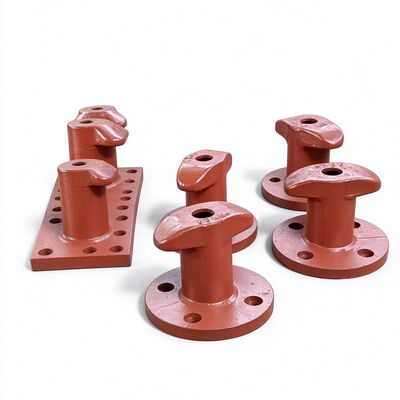
The configuration of a mooring bollard determines how mooring lines engage with the equipment and how the resulting forces are transferred through the body and mounting system. Common designs include single-post and double-horn configurations, although the appropriate form depends on the specific operating requirements. The bollard must provide suitable contact geometry for the intended line arrangement while maintaining sufficient structural integrity under the loads specified for the application.
The design should also allow personnel to handle lines according to approved procedures without unnecessary interference from adjacent structures, equipment, or access routes. Selection should therefore consider both the structural function and the practical conditions of daily operation.
The principal load-bearing components may include the bollard body, base section, base plate where applicable, anchor bolts, and associated mounting elements. Their dimensions and material properties influence the behavior of the assembly under the specified loading conditions. When a mooring line applies force to the bollard, the resulting load is transferred into the anchorage and then into the supporting concrete or steel structure. Depending on the line direction and contact position, the assembly may experience direct forces, bending moments, or localized stresses. The design capacity must be established using the relevant engineering criteria, and the foundation must be verified for the same load assumptions. A bollard's rated capacity alone does not establish the suitability of the complete installation.
Material Selection
Material selection should be based on structural requirements, manufacturing considerations, environmental exposure, and applicable technical specifications. Cast steel, fabricated steel, ductile iron, and other suitable materials may be considered according to the product configuration and project requirements. The specified material must provide the mechanical properties necessary for the intended application, while the manufacturing process should support the required geometry and quality criteria.
Material grade, inspection scope, dimensional tolerances, and acceptance requirements should be confirmed before production. For projects requiring traceability, the documentation scope should be defined in the procurement specification so that the delivered equipment can be checked against the approved requirements.
Environmental Protection
Environmental protection is an important part of marine bollard specification. Equipment installed in coastal locations may be exposed to salt deposits, high humidity, rainfall, temperature changes, and mechanical contact during routine operations. The appropriate surface treatment depends on the base material, exposure category, project requirements, and maintenance strategy. Surface preparation and coating application must be carried out in accordance with the specified system.
Because repeated rope contact or impact can damage protective coatings, inspection should include both exposed surfaces and areas around the base and anchorage. Where corrosion or mechanical damage is identified, the condition should be assessed and addressed through the established maintenance procedure.
Installation and Maintenance Considerations
Installation conditions can significantly affect the long-term performance of a mooring bollard. Base dimensions, mounting-hole positions, anchor spacing, available clearance, and the condition of the supporting structure must correspond to the approved installation details. In new construction, these requirements should be coordinated with the structural design before the relevant concrete or steelwork is completed. In refurbishment projects, the existing foundation should be examined to establish whether it can accommodate the replacement bollard and resist the specified forces. Changes to the mounting arrangement or foundation should be reviewed by qualified engineering personnel, particularly when the changes affect load transfer or rated capacity.
The operational environment also influences inspection and maintenance requirements. Vessels may experience movement caused by wind, current, water-level variation, wave action, or changes in mooring-line tension. The bollard must be used within its specified capacity and according to the approved mooring arrangement. Routine inspection may include checking for cracks, deformation, corrosion, coating damage, loose anchorage, and deterioration of the surrounding concrete or steel structure. The inspection interval should reflect the operating conditions, environmental severity, usage frequency, and facility maintenance plan. Records of inspections and repairs can help operators track changes in condition and determine when further engineering assessment is required.
Manufacturer Capability
Hongruntong Marine supplies mooring bollards for a range of marine infrastructure applications. With more than 30 years of manufacturing experience, the company can coordinate product requirements related to configuration, dimensions, material, rated capacity, mounting interface, surface protection, and agreed inspection documentation. Each order should be developed from the customer's technical requirements and verified installation conditions. By clarifying the product specification before production and coordinating manufacturing details with the intended application, the procurement process can provide a clearer basis for installation planning, inspection, and ongoing maintenance.
Case Study: Bollard Specification for a Bulk Cargo Export Terminal in South America
Representative engineering scenario — not a verified customer project or a claim of measured results achieved by Hongruntong Marine.
A bulk cargo export terminal in a South American coastal region planned to improve selected mooring positions along a berth serving bulk carriers and other commercial vessels. The terminal's infrastructure was exposed to humid marine air, rainfall, and regular operational activity associated with cargo loading. As part of its maintenance and asset-management program, the operator needed to review the specification of several fixed mooring points and establish whether replacement bollards could be integrated into the existing quay structure. The work required coordination between the terminal operator, structural engineering team, installation contractor, and equipment supplier.
The main challenge was to define a bollard configuration that matched the required mooring capacity and the available mounting conditions. The existing berth drawings contained information about the quay layout, but the project team still needed to confirm the condition of the foundations and verify the dimensions of the mounting interfaces. The terminal also required a surface protection system suitable for its environmental exposure and maintenance practices. Because the bollards were part of a load-bearing system, the project could not be resolved through a simple dimensional replacement without checking the structural requirements and anchorage arrangement.
The proposed engineering process began with a review of the approved mooring plan, expected vessel range, required bollard capacities, and relevant structural documentation. The design team would confirm the loading assumptions and determine the appropriate bollard configuration for each installation position. Existing foundations would be inspected to identify any deterioration or dimensional constraints. The engineers would then verify the anchor arrangement and supporting structure against the specified loads. Any required changes to the foundation or mounting details would be reviewed and approved before the product configuration was finalized.
Hongruntong Marine's potential supply scope in this illustrative scenario would involve coordinating the bollard drawings, dimensions, material requirements, surface treatment, and inspection documentation with the approved specification. Material selection would be based on the structural design and manufacturing requirements. Surface protection would be defined according to the terminal's environmental conditions and the agreed maintenance approach. Critical dimensions and the mounting interface would be checked against the approved drawings to reduce the likelihood of installation discrepancies. Any additional inspection or testing would be identified in the contract and performed according to the agreed procedures.
The installation contractor would organize the replacement work around the terminal's operating schedule and approved site controls. Before installation, the receiving foundations would be checked for dimensional compatibility and structural condition. The bollards would then be positioned and anchored according to the approved drawings and installation procedures. Final inspection would cover the installation interface, visible condition, anchorage, and surrounding structure. Where required by the project, acceptance testing would be conducted under the specified procedure before the mooring point was returned to service.
The intended engineering outcome would be a better-coordinated mooring installation in which bollard capacity, mounting details, and foundation requirements were addressed together. Appropriate material and surface protection specifications could help the terminal manage environmental deterioration, while verified installation dimensions could reduce avoidable site adjustments. A documented inspection plan would also provide a basis for future maintenance and condition monitoring. Actual operating performance and any changes in maintenance cost or service life would depend on the final design, installation quality, environmental exposure, and ongoing inspection.
Specifications
| Product Name |
Mooring Bollards |
| Brand Name |
Hongruntong Marine |
| Material |
Carbon Steel, Stainless Steel, Alloy, Ductile Iron |
| Color |
Black and Customers' Requirements |
| Shape |
Tee, Horn, Pillar, etc. |
| Standard |
ISO 13797:2020, PIANC 2002 |
| Surface Treatment |
Galvanizing Spraying |
| Application |
Port, Dock, Quay, etc. |
Product Features
Load Capacity Defined by Engineering Requirements
The rated capacity of a mooring bollard is a fundamental selection parameter because it defines the load requirement against which the product is specified. However, the capacity must be considered in the context of the intended mooring arrangement, including line direction, vessel characteristics, environmental loading, and the geometry of the berth. Forces applied through a rope or wire are transferred through the bollard body and mounting interface into the supporting structure. The bollard's configuration, material properties, structural dimensions, and anchorage arrangement must therefore be consistent with the design loads established for the project.
A complete capacity assessment should consider the supporting foundation as well as the bollard itself. Anchor bolts, base plates, reinforced concrete, steel deck members, and other supporting components may govern the capacity of the overall installation. If the line acts at an angle or contacts the bollard away from the assumed loading position, additional forces or moments may arise. The design team should define the permitted loading conditions and ensure that the assembly is suitable for those conditions. Selecting a bollard based only on a nominal rating, without reviewing the installation structure, can leave important engineering requirements unresolved.
For procurement, the rated capacity and relevant loading assumptions should be clearly stated in the approved specification. Product drawings and mounting details should correspond to the same design basis. Hongruntong Marine can coordinate the requested configuration with the customer's engineering documentation to help confirm the required product scope. Final suitability must be established through the approved design and verification of the supporting structure.
Material Selection for Structural Reliability
The choice of material affects the bollard's mechanical properties, manufacturing method, structural configuration, and maintenance requirements. Depending on the project, suitable materials may include cast steel, fabricated steel, ductile iron, or other specified materials. The correct choice depends on the required load-bearing performance, product geometry, applicable technical standards, and environmental conditions. Material grade should be defined in the project specification and verified through the agreed quality-control process.
Manufacturing requirements should also reflect the selected material and the structural function of the component. Critical sections must conform to the approved design, and relevant dimensions should be checked before shipment. Where material documentation or traceability is required, the necessary records should be identified before production. Any specified testing or inspection should follow the agreed acceptance criteria. This helps ensure that the delivered equipment can be evaluated against the requirements established during engineering and procurement.
Material suitability cannot be determined from appearance alone. A visually acceptable component may still require verification of its material grade, dimensions, or specified mechanical properties. For this reason, product acceptance should be based on the technical documentation and inspection requirements rather than visual assessment alone. The material and manufacturing process should be selected to meet the actual project specification without making unsupported assumptions about universal capacity or service life.
Protective Surface Treatment for Marine Exposure
Marine exposure can contribute to corrosion and surface deterioration, particularly when equipment is subjected to salt deposits, persistent moisture, and changing weather conditions. A suitable protective treatment should be selected according to the bollard's substrate material, environmental exposure, and project requirements. Surface preparation, coating compatibility, application method, and inspection criteria all affect the quality of the finished protection system. These details should be specified before manufacturing so that the treatment can be evaluated against the intended service environment.
Mooring operations may also create localized mechanical wear. Rope contact, accidental impact, and maintenance activities can damage coatings and expose the underlying material. The areas around the base and mounting interface may require particular attention because moisture and debris can accumulate in these locations. The inspection plan should therefore cover the coating condition, visible corrosion, and any signs of deterioration that may affect the equipment or supporting structure. Where damage is found, repairs should follow the specified maintenance procedure.
Protective treatment is most effective when combined with appropriate inspection and maintenance. The expected service environment should guide the coating specification, while the facility's operating conditions should determine inspection frequency. If the equipment is installed in an unusually aggressive environment, additional protective measures may need to be considered by the project team. The selected system should be confirmed against the approved technical requirements rather than relying on a general claim of corrosion resistance.
Installation Compatibility and Maintenance Access
Installation compatibility is a practical design requirement for both new berths and replacement projects. Relevant parameters may include the bollard's overall dimensions, base configuration, anchor spacing, mounting-hole positions, and available clearance. These details should match the approved drawings and the supporting structure. For new construction, coordination between the bollard supplier and structural design team helps establish the correct mounting interface before concrete or steelwork is completed. For existing facilities, site measurements and foundation assessment are necessary to determine whether a replacement unit is suitable.
A mismatch between the bollard and its mounting interface can create difficulties during installation and may require unplanned structural modifications. Changes to anchor locations or foundation geometry should not be made without engineering review, because they may affect the load path and structural capacity. Inspection of the receiving area should include the condition of the concrete or steelwork, existing anchor components, and the surrounding installation space. These checks help establish whether the planned installation can proceed according to the approved details.
Maintenance access should also be considered during layout planning. Operators and maintenance personnel need sufficient access to inspect the bollard body, coating, anchorage, and foundation. Where the installation is surrounded by equipment or restricted by the berth layout, inspection may become more difficult. A practical arrangement supports routine condition checks and helps maintenance teams identify defects before they progress. The final installation should therefore address structural requirements, dimensional compatibility, and access for inspection as connected aspects of the same engineering task.
Applications
Bulk Cargo Export Terminals
Bulk cargo terminals use mooring bollards to secure vessels during loading and unloading operations involving commodities such as mineral products, grain, and other dry bulk materials. The mooring arrangement must correspond to the vessel types expected at the berth, the quay configuration, and the environmental loads established by the engineering design. Bollard capacity, location, and mounting details should be coordinated with the structural design and approved mooring plan. Corrosion protection should be suitable for the local environment, while routine inspections should address coating deterioration, anchorage condition, and the integrity of the supporting structure.
Commercial Ports and General Cargo Berths
General cargo berths accommodate vessels involved in transporting packaged goods, project cargo, equipment, and other commercial materials. Different vessel dimensions and cargo-handling arrangements may require specific mooring layouts and bollard configurations. The selected equipment should provide the required capacity while remaining compatible with the available installation space and rope-handling procedures. Where existing infrastructure is upgraded, the condition of the foundations and mounting interfaces should be verified before replacement units are specified. Inspection and maintenance provisions should be incorporated into the facility's asset-management plan.
Industrial Marine Facilities and Coastal Terminals
Industrial marine facilities use fixed mooring points for supply vessels, service craft, commercial ships, and other vessels supporting waterfront operations. Their operating conditions may include frequent berthing movements, exposure to salt-laden air, and changing environmental loads. Bollard selection should be based on the approved design capacity, intended line arrangement, material requirements, and foundation details. For installations subject to repeated use, inspection should include the body, rope-contact surfaces, anchorage, protective coating, and supporting structure. A coordinated specification and maintenance plan helps operators manage the condition of the mooring equipment throughout its service.
Why Choose Hongruntong Marine
Established Manufacturing Experience
Hongruntong Marine has more than 30 years of manufacturing experience in marine equipment, providing a foundation for supplying products used in ports, shipyards, docks, and industrial waterfront facilities. Mooring bollards require careful coordination of structural configuration, material properties, mounting dimensions, surface treatment, and project documentation. Their suitability depends on the technical requirements of the intended installation, so manufacturing and procurement should be based on a clearly defined specification.
Experience is particularly relevant when customers need to coordinate several technical details before production. A project may require a specific bollard type, rated capacity, material grade, coating system, or mounting interface. Each item should be reviewed against the available drawings and engineering documentation. Hongruntong Marine can coordinate the requested product scope with customer requirements and help clarify information that needs to be confirmed before the order is finalized. This supports a more consistent basis for production planning and product acceptance.
Product Configuration Coordinated with Drawings
Mooring bollards must match the requirements of the berth rather than being selected solely by their general appearance. The required configuration, dimensions, mounting arrangement, and material should correspond to the approved technical documentation. Hongruntong Marine can coordinate product details with customer drawings and specifications to help establish the intended configuration before manufacturing. For replacement projects, this process should include the available mounting dimensions and relevant information about the existing foundation.
Where drawings are incomplete or the proposed product differs from the original installation, the outstanding details should be identified and reviewed before production. Any change that affects the structural load path or rated capacity must be evaluated by the responsible engineering personnel. This helps avoid treating dimensional compatibility as proof of structural suitability. Clear coordination at the specification stage also gives procurement teams a more reliable basis for comparing quotations and confirming the scope of supply.
Quality Requirements and Inspection Coordination
Quality control should reflect the technical requirements that govern the suitability of the bollard for its intended use. Depending on the project specification, inspection may include verification of critical dimensions, review of material documentation, examination of surface condition, assessment of the specified coating system, and other agreed checks. Acceptance criteria should be defined before production, especially when the bollard is part of a larger infrastructure project with formal handover requirements.
Hongruntong Marine can coordinate the inspection scope and required documentation with the customer. The documentation may include approved drawings, dimensional records, material information, inspection reports, and coating details when specified. Additional testing or third-party inspection should be identified and agreed upon as part of the order. This approach helps the purchaser verify that the supplied product corresponds to the agreed specification and provides a clearer record for installation and future maintenance. The exact documentation and inspection services should always be confirmed for the individual project.
Order Planning and International Delivery Coordination
International marine equipment procurement requires coordination between engineering, purchasing, manufacturing, logistics, and the receiving site. Incomplete technical information or inconsistent drawing revisions can cause avoidable changes during production or installation. Hongruntong Marine can coordinate order details such as product type, quantity, dimensions, material, surface treatment, packaging, documentation, and delivery destination. Confirming these items before production helps establish a consistent scope and supports more orderly project planning.
Packaging and transportation arrangements should reflect the dimensions, weight, surface protection, and handling requirements of the bollards. Clear product identification can help the receiving team check the shipment against the order and allocate the equipment to the intended installation locations. Delivery schedules depend on the confirmed product specification, manufacturing requirements, order quantity, and transportation arrangements. These factors should be agreed upon for each order so that shipment can be coordinated with the project's construction, maintenance, or berth-upgrade schedule.
Frequently Asked Questions
1. Which factors determine the required mooring bollard capacity?
The required capacity depends on the approved mooring design, vessel characteristics, environmental loads, line direction, berth geometry, and the structural capability of the supporting foundation. Bollard selection should be based on the relevant engineering calculations and project requirements. The complete load-bearing assembly, including the bollard, anchorage, and foundation, must be considered. Vessel tonnage alone is not sufficient to establish the required capacity.
2. Which materials can be specified for mooring bollards?
Suitable materials may include cast steel, fabricated steel, ductile iron, and other materials specified for the intended design. Selection depends on the required mechanical properties, manufacturing method, environmental exposure, and applicable standards. The material grade and relevant inspection requirements should be defined before production. Final selection should follow the approved technical specification.
3. How can bollard corrosion be managed in coastal environments?
Corrosion management begins with selecting a protective system suitable for the base material and environmental exposure. Appropriate surface preparation and coating application are important, but routine inspection is also necessary. Maintenance personnel should check for coating damage, corrosion, and deterioration around the base and anchorage. Repairs should follow the specified maintenance procedure, and any suspected structural damage should be assessed by qualified personnel.
4. Can a bollard be manufactured to match an existing installation?
Project-specific dimensions and mounting arrangements may be considered when the requirements are technically feasible and clearly documented. Customers should provide existing drawings, mounting measurements, required capacity, material preferences, and relevant foundation information. The suitability of the replacement must be verified against the approved engineering requirements. If the proposed configuration requires changes to the foundation or anchorage, those changes should be reviewed by the responsible engineer.
5. What information should be confirmed before production begins?
The order should define the bollard type, rated capacity, dimensions, material, mounting interface, surface protection, quantity, applicable standards, inspection requirements, documentation scope, and delivery arrangements. Approved drawings and relevant structural information should be provided where available. Any special testing, certification, or third-party inspection should be confirmed in the contract. Completing this review before manufacturing helps establish clear acceptance criteria and reduces uncertainty during installation.


 Your message must be between 20-3,000 characters!