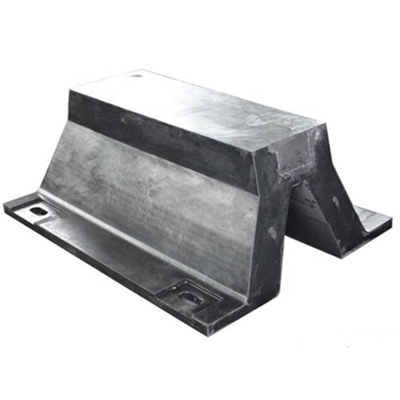
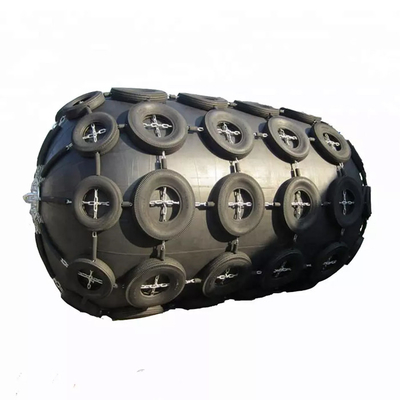
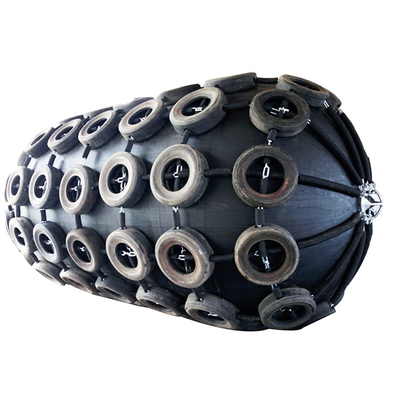
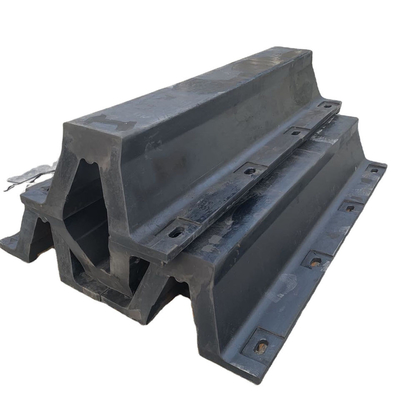
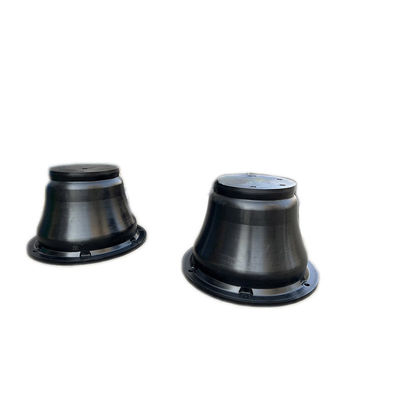
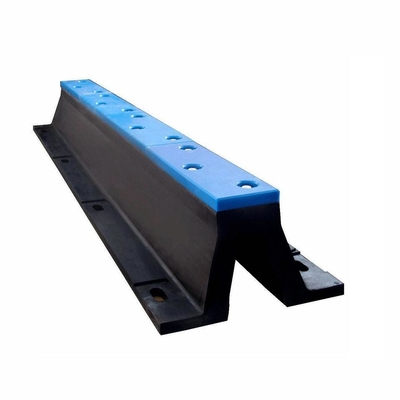
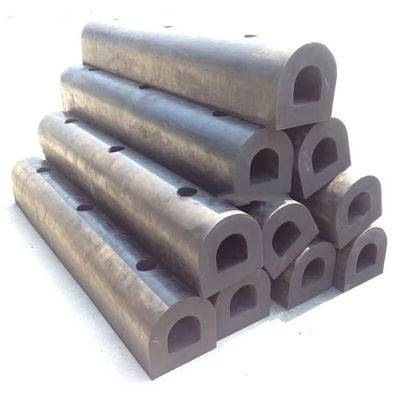
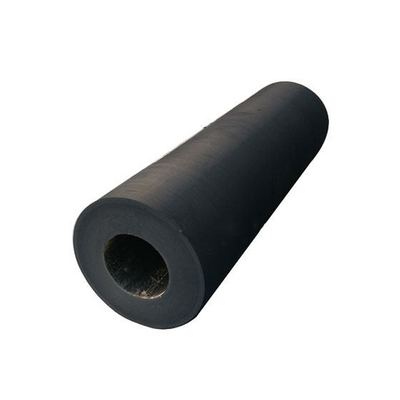
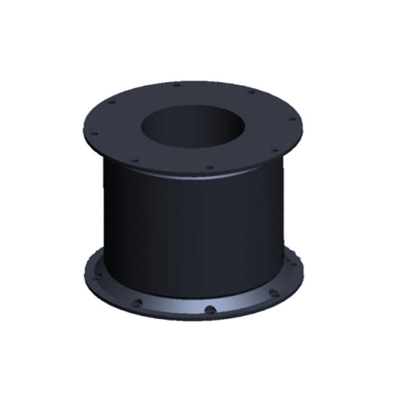
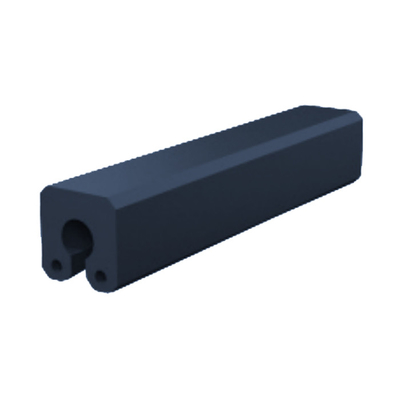
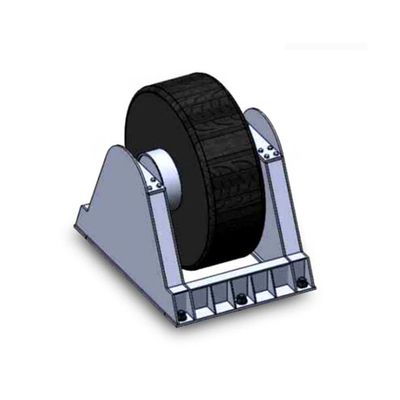
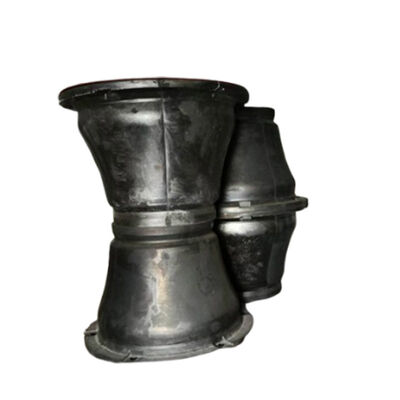
Cone Rubber Fenders are engineered marine berthing energy absorption systems designed for structural protection of quay infrastructure and vessel hulls under high-impact docking conditions in industrial port environments. The product is manufactured from high-density natural rubber compounds processed through controlled vulcanization technology, combined with reinforced elastomer formulation to ensure stable mechanical properties under repeated compression, shear deformation, and multi-directional loading conditions.
The structural design is based on a conical geometry that enables progressive stiffness response during vessel contact. When subjected to berthing impact, the deformation begins at the outer cone surface and gradually propagates toward the core structure, converting kinetic energy into distributed elastic strain energy. This mechanism reduces peak reaction force transmission to the supporting quay structure and improves load stability during irregular berthing events influenced by vessel misalignment, tidal variation, and wave-induced motion.
The system is engineered for continuous operation in heavy-duty marine infrastructure, particularly in deep-water ports, bulk material terminals, and offshore transfer stations where structural reliability, fatigue resistance, and long-term operational stability are critical engineering requirements.
A large iron ore export terminal in Western Australia operating under extreme swell conditions and accommodating cape-size bulk carriers experienced recurring structural stress damage on its quay wall due to insufficient energy absorption capacity of the existing fender system, leading to increased maintenance shutdowns and operational inefficiency. After the installation of Cone Rubber Fenders designed with high-load steel reinforcement and fatigue-resistant rubber compounds optimized for high-energy impact conditions, the terminal achieved improved berthing load distribution, reduced structural vibration during vessel docking, enhanced stability under wave-influenced impact conditions, and extended operational maintenance intervals while maintaining uninterrupted export throughput.
| Product Name | Cone Rubber Fenders |
|---|---|
| Brand Name | Hongruntong Marine |
| Material | High Quality NR |
| Standard | PIANC, HGT |
| Face Pads | UHMW-PE Available |
| Certificates | BV, ABS, DNV, LR, SGS, RS, CCS |
| OEM / ODM | Welcome |
| Packing Details | Pe Plastic Bags Then to The Pallet / as Per Your Request |
| Production Capacity | 3000 Pcs Per Month |
| Lead Time | 7 Days for Prototype Tooling & Samples, 14 Days for Production Mold, 14-28 Days for Moq |
| Payment Terms | T/T, L/C, Paypal, Western Union |
| Rubber Specification | ASTM D2000, SAE J200 |
| Model | H [mm] | h [mm] | F [mm] | D [mm] | Q [mm] | W [mm] | d-m [mm] | d-n [mm] |
|---|---|---|---|---|---|---|---|---|
| HM-CRF300 | 300 | 13.5 | 255 | 450 | 195 | 405 | M16 | 20 |
| HM-CRF350 | 350 | 25 | 300 | 570 | 235 | 510 | M20 | 25 |
| HM-CRF400 | 400 | 18 | 340 | 600 | 260 | 540 | M20 | 25 |
| HM-CRF500 | 500 | 25 | 425 | 750 | 325 | 675 | M24 | 30 |
| HM-CRF600 | 600 | 27 | 510 | 900 | 390 | 810 | M24 | 30 |
| HM-CRF700 | 700 | 32 | 585 | 1050 | 455 | 945 | M30 | 38 |
| HM-CRF800 | 800 | 36 | 680 | 1200 | 520 | 1080 | M36 | 44 |
| HM-CRF900 | 900 | 41 | 765 | 1350 | 585 | 1215 | M36 | 44 |
| HM-CRF1000 | 1000 | 45 | 850 | 1500 | 650 | 1350 | M42 | 56 |
| HM-CRF1050 | 1050 | 55 | 1030 | 1680 | 900 | 1530 | M36 | 44 |
| HM-CRF1100 | 1100 | 50 | 935 | 1650 | 715 | 1485 | M42 | 50 |
| HM-CRF1150 | 1150 | 52 | 998 | 1725 | 750 | 1550 | M42 | 56 |
| HM-CRF1200 | 1200 | 54 | 1020 | 1800 | 780 | 1620 | M42 | 50 |
| HM-CRF1300 | 1300 | 59 | 1105 | 1950 | 845 | 1755 | M48 | 60 |
| HM-CRF1400 | 1400 | 66 | 1190 | 2100 | 930 | 1890 | M48 | 60 |
| HM-CRF1600 | 1600 | 72 | 1360 | 2400 | 1060 | 2160 | M48 | 70 |
| HM-CRF1800 | 1800 | 78 | 1530 | 2880 | 1190 | 2430 | M56 | 76 |
| HM-CRF2000 | 2000 | 80 | 1900 | 3200 | 1540 | 2920 | M56 | 76 |
Cone Rubber Fenders are widely implemented in bulk cargo handling terminals where large displacement vessels require controlled berthing impact absorption to protect quay infrastructure under continuous loading cycles, in LNG and petroleum transfer terminals where operational safety and structural reliability are required under hazardous material handling conditions, and in offshore marine engineering facilities where vessel motion, environmental forces, and docking misalignment demand adaptive energy absorption systems with high fatigue resistance and structural stability.