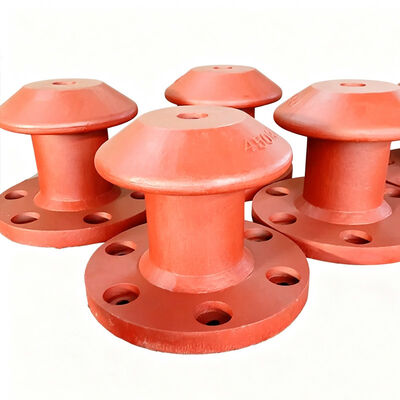
Mooring Bollards for offshore engineering applications are structural load-bearing components designed to secure vessels, support positioning stability, and transfer mooring forces into offshore platform or jetty foundation systems. These environments are characterized by high wind exposure, wave-induced dynamic loading, saline corrosion acceleration, and continuous multi-directional force variations.
The product is manufactured using high-strength cast steel or ductile iron materials with controlled metallurgical composition to ensure structural stability under extreme marine conditions. Manufacturing processes include precision casting, controlled cooling, heat treatment optimization, CNC finishing, and multi-layer anti-corrosion surface engineering.
The operating mechanism is based on fixed anchoring integration where mooring line tension is transmitted through the bollard structure into reinforced offshore foundation systems. Load transfer is distributed through anchor bolts embedded in high-strength concrete or steel structural frames designed for offshore load resistance.
Offshore environments introduce complex engineering challenges including wave surge impact, vessel drift tension, salt spray corrosion, and structural vibration caused by continuous environmental forces. The bollard system is therefore engineered with enhanced fatigue resistance, high corrosion tolerance, and structural reinforcement to maintain stability under continuous offshore exposure.
The system is widely used in offshore platforms, LNG terminals, FPSO support structures, and marine energy infrastructure requiring high structural reliability and long-term operational endurance.
A large LNG terminal project located along the Gulf Coast region was developed to support deep-water LNG carrier operations with vessel capacities exceeding 160,000 cubic meters. The offshore berthing structure was exposed to high wind loads, hurricane seasonal conditions, and continuous saltwater spray corrosion.
The engineering challenge required mooring bollards capable of withstanding extreme dynamic loads generated by LNG carriers during berthing under tidal variation and strong lateral wind pressure. Existing structural components in the preliminary design phase were deemed insufficient in fatigue resistance and corrosion durability under long-term offshore exposure.
Hongruntong Marine supplied 180-ton class high-strength cast steel mooring bollards with reinforced internal structural ribbing and enhanced load dispersion geometry. The bollards were designed specifically for offshore environmental stress conditions, incorporating high-performance anti-corrosion coating systems suitable for continuous salt spray exposure.
Installation was carried out on reinforced offshore jetty structures using embedded anchor bolt systems designed for high axial and shear load resistance. The integration process followed strict alignment procedures to ensure uniform load distribution across the mooring structure.
Following commissioning, operational performance analysis indicated improved vessel stability during berthing operations, reduced structural vibration under dynamic wind conditions, and enhanced resistance to corrosion-related surface degradation. Long-term monitoring over a 26-month period confirmed stable mechanical performance under repeated offshore loading cycles and harsh environmental exposure.
| Product Name | Mooring Bollards |
|---|---|
| Brand Name | Hongruntong Marine |
| Material | Carbon Steel, Stainless Steel, Alloy, Ductile Iron |
| Color | Black and Customers' Requirements |
| Shape | Tee, Horn, Pillar, etc. |
| Standard | ISO 13797:2020, PIANC2002 |
| Surface Treatment | Galvanizing Spraying |
| Application | Port, Dock, Quay, etc |