Ship Mooring Bollards - Heavy Duty Reliable Performance Premium Quality
Product Overview
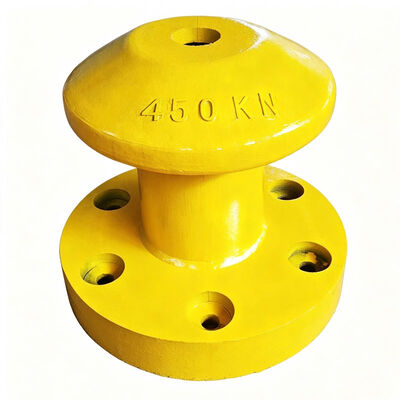
Mooring Bollards are heavy-duty marine structural components designed for vessel restraint, positioning stability, and load transfer between mooring lines and shipyard foundation structures. In shipyard environments, the product is subjected to frequent dynamic loading, short-cycle vessel operations, and high mechanical impact forces generated during docking, launching, repair, and outfitting processes.
The product is manufactured using high-strength cast steel, ductile iron, or fabricated steel structures with controlled metallurgical composition. Production processes include precision casting, heat treatment optimization, CNC machining, and multi-layer corrosion protection treatment. These processes ensure structural integrity, dimensional accuracy, and long-term fatigue resistance under intensive operational conditions.
The operating principle is based on fixed anchoring geometry where mooring forces from steel wire ropes or synthetic fiber ropes are transmitted through the bollard body into reinforced concrete foundations via anchor bolt systems. The load distribution system is engineered to minimize stress concentration and prevent localized structural failure under repeated directional loading.
Case Study: Middle East Shipbuilding Yard Expansion
A large shipbuilding facility located in the Middle East undertook an expansion of its dry dock and outfitting berths to accommodate offshore supply vessels and medium-sized tankers ranging from 20,000 DWT to 80,000 DWT. The existing mooring infrastructure was insufficient to handle increased operational frequency and showed signs of structural fatigue, anchor bolt loosening, and surface degradation due to high ambient temperatures and airborne salt exposure.
The engineering challenge required installation of high-capacity mooring bollards capable of withstanding frequent vessel repositioning and short-cycle mooring loads during ship construction and repair operations. The project also required compatibility with reinforced concrete dock structures under high thermal expansion conditions.
Hongruntong Marine supplied 120-ton cast steel mooring bollards with reinforced internal rib geometry and optimized load dispersion structure. The bollards were engineered to maintain stability under repeated high-tension mooring cycles associated with dry dock operations and vessel outfitting activities.
Installation was completed in coordination with dock construction phases to ensure continuous shipyard operation. Anchor systems were embedded into high-strength reinforced concrete blocks designed for enhanced load transfer efficiency.
After commissioning, the shipyard reported improved vessel positioning accuracy during docking and reduced structural vibration during winch tension adjustments. Over an 18-month operational period, inspection results confirmed stable mechanical performance, reduced maintenance intervention, and improved operational safety during high-frequency vessel handling operations.
Technical Specifications
| Product Name |
Mooring Bollards |
| Brand Name |
Hongruntong Marine |
| Material |
Carbon Steel, Stainless Steel, Alloy, Ductile Iron |
| Color |
Black and Customers' Requirements |
| Shape |
Tee, Horn, Pillar, etc. |
| Standard |
ISO 13797:2020, PIANC2002 |
| Surface Treatment |
Galvanizing Spraying |
| Application |
Port, Dock, Quay, etc |
Product Features
High-Cycle Fatigue Resistant Structural Design
Mooring Bollards are engineered for environments with frequent vessel docking and repositioning cycles. Structural geometry is optimized using finite element stress simulation to evaluate repeated load patterns generated by shipyard operations. Reinforced internal rib structures distribute cyclic stress more evenly, reducing fatigue crack initiation risk and improving long-term structural endurance under continuous operational use.
High Impact Load Absorption Capability
Shipyard operations often involve abrupt tension loads during vessel positioning and winch adjustments. The bollard structure is designed with enhanced impact resistance through material reinforcement and geometric optimization. This allows controlled absorption of sudden load spikes without permanent deformation, ensuring operational stability during high-intensity mooring activities.
Thermal and Environmental Stability Engineering
Shipyard environments are exposed to welding heat, machinery operation, and fluctuating temperature conditions. The material system is engineered to maintain mechanical stability under thermal expansion and contraction cycles. Surface coatings are designed to resist degradation from heat exposure, oil contamination, and industrial pollutants, ensuring consistent performance in harsh working environments.
Multi-Directional Load Transfer Optimization
Mooring forces in shipyard applications are rarely linear and often involve complex angular loading from multiple vessel positions. The bollard structure is designed to distribute multi-directional forces efficiently into foundation anchor systems, preventing localized stress accumulation and ensuring stable mechanical response under variable load conditions.
Applications
- Shipbuilding and Construction Yards: Mooring Bollards are installed in shipbuilding yards to secure hull structures during fabrication, assembly, and launching operations. They provide stable anchoring points for vessels under construction and support structural positioning during heavy assembly procedures.
- Dry Dock Facilities: In dry dock environments, bollards are used to secure vessels during maintenance, inspection, and repair operations. They ensure stable vessel positioning while supporting mechanical and hydraulic lifting systems.
- Vessel Repair and Refitting Basins: Repair yards utilize mooring bollards to stabilize vessels during engine overhaul, hull repair, and system retrofitting processes, ensuring controlled positioning under variable load conditions.
Why Choose Us
- Advanced Marine Manufacturing Capability: Hongruntong Marine operates integrated production systems covering casting, machining, assembly, and surface treatment. The manufacturing process is controlled under strict engineering standards to ensure consistent structural performance and dimensional precision.
- Shipyard-Focused Engineering Expertise: The engineering team has extensive experience in shipyard infrastructure design, providing customized bollard solutions based on operational frequency, vessel size variation, and dry dock structural constraints.
- Industrial Quality Assurance System: All products undergo rigorous testing including mechanical load verification, material composition inspection, dimensional tolerance analysis, and coating integrity evaluation to ensure compliance with marine engineering standards.
- Global Shipyard Project Experience: The company has supplied mooring systems for international shipyards and repair facilities, supporting large-scale vessel construction and offshore equipment manufacturing projects with stable technical support and logistics coordination.
Frequently Asked Questions
What makes shipyard mooring bollards different from port bollards?
Shipyard mooring bollards are designed for higher frequency loading cycles, short-duration peak loads, and complex multi-directional forces compared to standard port applications.
Can bollards withstand welding and thermal exposure conditions?
Yes, materials and coatings are engineered to maintain stability under thermal influence from shipyard welding and industrial operations.
What is the typical installation method in dry docks?
Bollards are installed using anchor bolt systems embedded into reinforced concrete dock structures designed for high load transfer efficiency.
Can bollards be customized for different vessel sizes in shipyards?
Yes, load capacity, geometry, and structural reinforcement can be customized based on vessel type and operational requirements.
What is the service life in shipyard environments?
With proper maintenance, shipyard mooring bollards can achieve long-term service life exceeding 15-25 years depending on operational intensity.


 Your message must be between 20-3,000 characters!