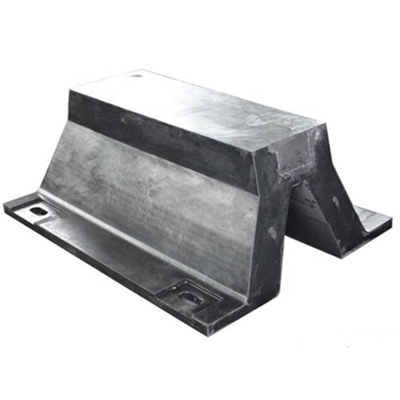
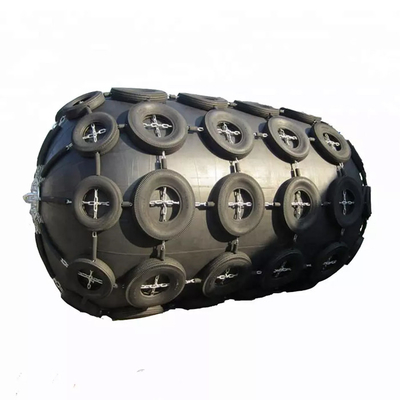
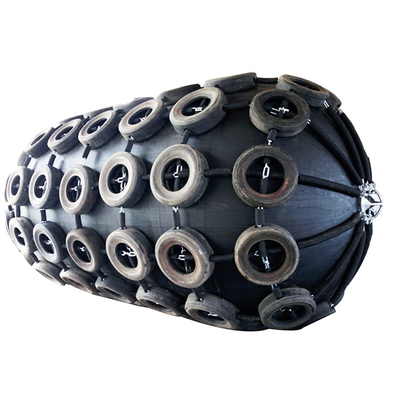
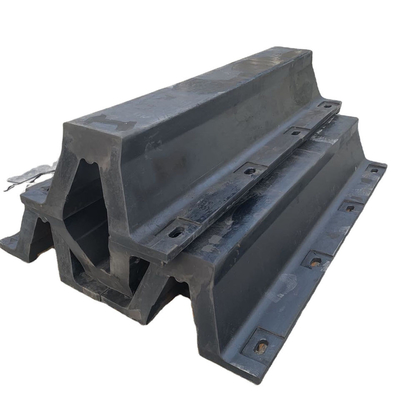
Ship Rubber Fender Marine Berthing Buffer Easy Installation Stable Performance
Product Overview
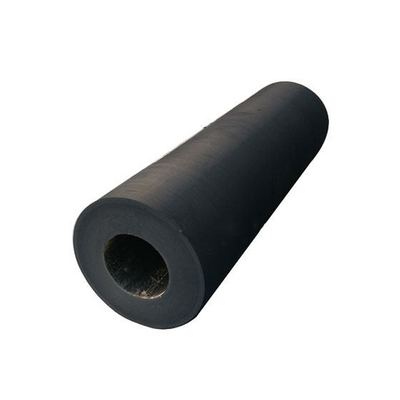
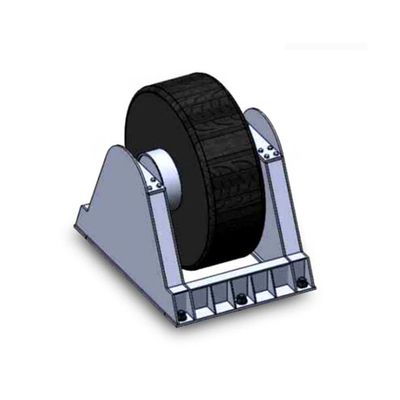
Roller Fenders are mechanical marine protection systems designed to provide controlled contact between moving vessels and fixed marine structures. The system uses a cylindrical rubber roller mounted around a central shaft and supported by a bearing or bushing arrangement and structural steel frame.
Operating Principle
When a vessel comes into contact with the roller and continues to move forward or laterally, the roller rotates around its shaft. This rotating movement helps reduce sliding friction while maintaining an elastic protective interface between the vessel hull and the supporting structure.
Roller Fenders are particularly suitable for facilities where vessel movement is influenced by tidal variation, current, maneuvering limitations, or restricted structural clearances. The system accommodates changing contact conditions while maintaining a controlled interface between the vessel and marine infrastructure.
System Components
- Rubber Roller: Provides the primary contact surface with elastic characteristics for deformation under vessel pressure
- Mechanical Support Assembly: Includes steel shaft, bearings or bushings, support frame, mounting components, and connection hardware
- Support Frame: Maintains shaft position and transfers resulting loads into dock, quay wall, or other supporting infrastructure
Design Considerations
Important design parameters include vessel displacement, hull profile, draft range, approach speed, expected contact angle, vessel traffic frequency, water-level variation, structural clearance, installation height, supporting structure capacity, and available mounting locations.
Case Study: Multi-Level Roller Fender System for Ship Repair Facility
A ship repair facility in Southeast Asia required a new vessel guidance arrangement at a narrow repair basin entrance exposed to regular tidal changes and cross-current conditions.
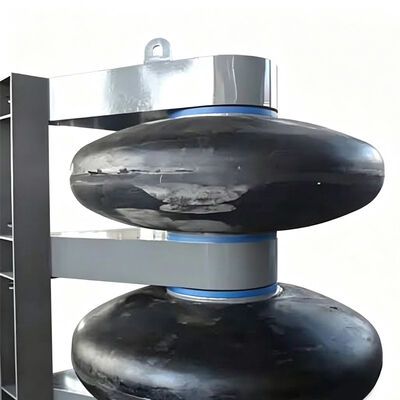
The solution involved positioning a series of cylindrical rollers along critical sections of the entrance wall with vertical distribution determined according to vessel draft range and tidal operating envelope. This multi-level arrangement provided multiple potential contact points for different water-level conditions.
During commissioning, vessels were observed under different approach conditions. When hulls contacted rollers and continued moving forward, the rollers rotated with the direction of relative movement, reducing stationary sliding contact.

Technical Specifications
| Product Name |
Roller Fenders |
| Material |
High Density NR/NBR/SBR |
| Temperature Range |
-30°C to 70°C |
| Specific Gravity |
1.45 g/cm³ |
| Intensity |
3 MPA |
| Hardness |
65 ± 5 Shore A |
| Elongation |
≥300% |
| Size Range |
D1080-2900mm |
| Color |
Black, as Required |
| Certifications |
CE, ROHS, REACH, SGS, MSDS, ISO9001 |
Dimensional Specifications
| Model No. |
A [mm] |
B [mm] |
C [mm] |
D [mm] |
E [mm] |
G [mm] |
H [mm] |
J [mm] |
K [mm] |
L [mm] |
| HM-RF1080 |
1250 |
1150 |
610 |
1080 |
1150 |
220 |
460 |
800 |
340 |
60 |
| HM-RF1450 |
1530 |
1400 |
740 |
1320 |
1450 |
260 |
510 |
950 |
400 |
75 |
| HM-RF1500 |
1600 |
1450 |
765 |
1370 |
1500 |
270 |
610 |
1000 |
425 |
75 |
| HM-RF1900 |
2050 |
1850 |
975 |
1750 |
1900 |
350 |
690 |
1250 |
500 |
125 |
| HM-RF2100 |
2300 |
2100 |
1110 |
1980 |
2100 |
400 |
765 |
1400 |
550 |
150 |
| HM-RF2700 |
3000 |
2700 |
1425 |
2550 |
2700 |
500 |
895 |
1800 |
700 |
200 |
Key Features
Controlled Rolling Contact Under Variable Vessel Movement
The defining mechanical characteristic is the ability to rotate during vessel contact, reducing sliding friction and providing a controlled mechanical interface. The rotational movement follows the direction of vessel travel, distributing wear around the roller circumference.
Multi-Level Configuration for Tidal and Draft Variation
Positioning individual rollers at different heights accommodates changes in vessel position caused by tides or draft variations. This creates an effective contact envelope across the complete operating range.
Mechanical Reliability of Shaft, Bearing and Frame Assembly
The integrated mechanical design maintains stable operation over repeated contact cycles. Shaft alignment, bearing selection, and frame integrity are crucial for maintaining controlled rotation under vessel loading.
Modular Arrangement and Maintenance Accessibility
Individual modular units allow for simplified installation and maintenance. This approach enables targeted servicing without requiring extensive shutdown of the protected structure.
Applications
Ship Repair Basin and Dock Entrance Protection
Ideal for facilities where vessels repeatedly pass through restricted entrances, reducing sliding interaction during frequent docking operations.
Tidal Ports and Restricted Navigation Channels
Suitable for ports affected by significant tidal variation, providing adaptable contact zones across changing vessel elevations.
Marine Service and Industrial Vessel Facilities
Configurable for mixed-vessel applications with different dimensions and operating requirements, providing protection at high-contact locations.
Why Choose Hongruntong Marine
Engineering Configuration Based on Operating Conditions
Selection begins with evaluating vessel characteristics, structural geometry, contact direction, water-level conditions, and expected frequency of use.
Marine Rubber Manufacturing Capability
Manufacturing with attention to dimensional consistency, elasticity, abrasion resistance, and repeated-load durability for marine environments.
Steel Fabrication and Assembly Coordination
Integration of rubber and steel elements according to required installation configuration, with proper surface protection for marine exposure.
Long-Term Technical Support and Service Planning
Comprehensive support for product selection, installation coordination, and maintenance planning with over 30 years of manufacturing experience.
Frequently Asked Questions
Can Roller Fenders operate effectively when the water level changes significantly?
Yes. The system can be designed with multiple roller elevations to accommodate changes in vessel position caused by tides or other water-level variations.
Are Roller Fenders suitable for facilities handling different vessel types?
They can be configured for mixed-vessel applications. Roller diameter, length, elevation, spacing, and support-frame configuration can be selected according to the expected operating envelope.
What components should be inspected during routine maintenance?
Routine inspection should cover the rubber roller, shaft, bearing or bushing components, steel support frame, mounting connections, and corrosion-protection system.
Can an individual Roller Fender be replaced without removing the complete system?
In a modular installation, individual roller assemblies can generally be inspected and serviced independently, depending on the mounting arrangement and access conditions.
What information should be provided when requesting a customized Roller Fender system?
Provide vessel type and displacement, approximate dimensions, draft range, approach speed, contact direction, expected contact height, water depth and tidal variation, installation location, and environmental conditions.


 Your message must be between 20-3,000 characters!