logo

Rotating Design Marine Roller Fenders with Heavy Load Capacity and Shock Absorption for Port Terminals

1
MOQ
USD147-140USD
Price
Rotating Design Marine Roller Fenders with Heavy Load Capacity and Shock Absorption for Port Terminals
Features Gallery Product Description Request A Quote
Features
Specifications
Product Name: Roller Fenders
Material: NBR
Packing: Plastic Bag+Pallet
MOQ: 1
Applications: Port Terminal
Hardness: ≤82 Shore A
Size: Customized
Feature: Shock Absorption, Flexible Installation
Highlight:

Rotating Design Roller Fenders

,

Heavy Load Capacity Marine Roller Fenders

,

Shock Absorption Dock Roller Fenders

Basic Infomation
Place of Origin: China
Brand Name: Hongruntong Marine
Certification: ISO, BV, ABS, DNV, LR, SGS, CCS, RMRS
Model Number: HM-RF12
Payment & Shipping Terms
Packaging Details: Wooden Pallet, Wooden Case
Delivery Time: 7-9 Work Days
Payment Terms: T/T,L/C,D/A,D/P,Western Union,
Supply Ability: 1580 Pcs Per Month
Product Description
Roller Marine Fender Rotating Design Reduce Hull Damage Heavy Load Capacity
Product Overview

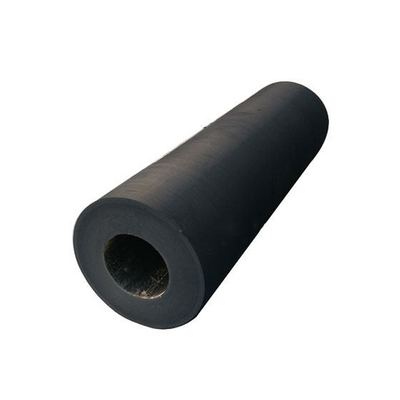
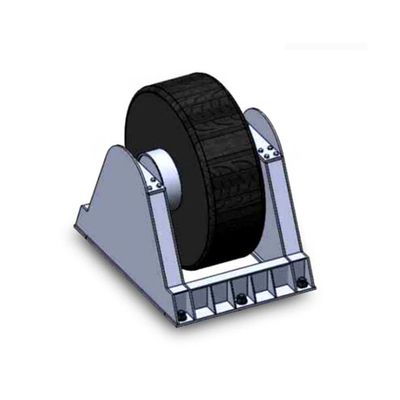
Roller Fenders are engineered marine protection systems designed to manage vessel contact with fixed infrastructure in applications where conventional static fendering cannot adequately accommodate continuous vessel movement. The system combines a cylindrical rubber roller with a load-bearing shaft, rotational support components and a fabricated steel mounting structure.

During vessel contact, the roller rotates around its longitudinal axis, allowing the fender to accommodate both impact loading and relative longitudinal movement. This operating principle is particularly suitable for marine structures where vessels approach at variable angles, move alongside a guide wall or require controlled alignment through a restricted passage.

Case Study: Roller Fender System for a Baltic Sea Ship Lock in Finland

A municipal waterway authority in Finland initiated an equipment renewal project for a ship lock serving commercial cargo traffic on a Baltic Sea-connected inland route. The lock regularly accommodated bulk carriers, general cargo vessels and service vessels, with typical commercial vessels ranging from approximately 6,000 to 15,000 DWT.

Roller Fenders were selected for installation along the most frequently contacted sections. The design focused on creating a controlled rolling interface between the vessel hull and lock wall while maintaining adequate structural protection. The operational team reported that the roller arrangement provided more predictable interaction during minor lateral corrections, reducing maintenance frequency and improving vessel handling.

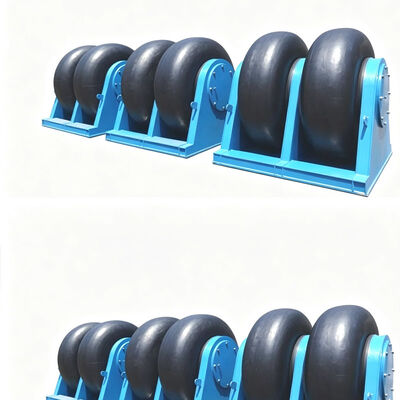
Roller Fender installation at ship lock showing marine application
Close-up view of Roller Fender mechanism and mounting structure
Technical Specifications
Product Name Roller Fenders
Material High Density NR/NBR/SBR
Temperature Range from -30°C to 70°C
Specific Gravity 1.45 g/cm³
Intensity 3 MPA
Hardness 65 ± 5 Shore A
Elongation ≥300%
Size Range D1080-2900mm
Color Black, as Required
Certificates CE, ROHS, REACH, SGS, MSDS, ISO9001
Dimensional Specifications
Model No. A [mm] B [mm] C [mm] D [mm] E [mm] G [mm] H [mm] J [mm] K [mm] L [mm]
HM-RF1080 1250 1150 610 1080 1150 220 460 800 340 60
HM-RF1450 1530 1400 740 1320 1450 260 510 950 400 75
HM-RF1500 1600 1450 765 1370 1500 270 610 1000 425 75
HM-RF1900 2050 1850 975 1750 1900 350 690 1250 500 125
HM-RF2100 2300 2100 1110 1980 2100 400 765 1400 550 150
HM-RF2700 3000 2700 1425 2550 2700 500 895 1800 700 200
Key Features
  • Rubber Formulation Engineered for Marine Exposure: Specially formulated compounds provide resistance to mechanical stress, tear resistance, abrasion resistance, and fatigue performance suitable for repeated compression and rotational loading in marine environments.
  • Mechanical Load Path Optimization: Integrated engineering across rubber roller, shaft, bearings, and steel frame ensures efficient load transfer from vessel contact to supporting structure while maintaining structural integrity.
  • Controlled Rotation Mechanism: Rotational design reduces sliding friction between vessel hull and fender surface, accommodating longitudinal vessel movement while distributing wear more uniformly around the roller circumference.
  • Configurable Geometry: Adjustable diameter, length, elevation, and mounting arrangements allow customization for different infrastructure requirements and vessel size ranges.
Applications
  • Ship Locks and Controlled Water-Level Facilities: Ideal for lock chambers where vessels maintain lateral contact with guide walls while moving longitudinally, reducing sliding resistance and improving vessel control.
  • Dry Dock Transfer and Vessel Repair Infrastructure: Suitable for shipyard entrances and guide structures where precise directional control is required during docking operations with limited clearance.
  • Ferry Terminals and High-Frequency Vessel Berths: Effective for facilities with repetitive vessel movements where frequent contact occurs during docking and alignment procedures.
Why Choose Hongruntong Marine
  • 30+ Years Manufacturing Experience: Extensive expertise in marine rubber products and associated equipment manufacturing, ensuring consistent quality and performance.
  • Application-Specific Engineering: Custom configuration based on vessel dimensions, operating conditions, water levels, and installation location requirements.
  • Integrated Component Coordination: Complete assembly manufacturing with controlled dimensions, material characteristics, and mechanical compatibility between all components.
  • International Project Support: Comprehensive technical coordination, quality documentation, and post-delivery support for global B2B applications.
Roller Fender manufacturing quality and component assembly Industrial application of Roller Fender system in port environment Technical details of Roller Fender mounting and support structure
Frequently Asked Questions
Are Roller Fenders suitable for continuous contact during vessel movement?
Yes. Their rotating construction is specifically intended to accommodate relative vessel movement along a protected structure. When the vessel remains in contact while moving longitudinally, the rubber roller rotates around its shaft, reducing the amount of sliding at the contact interface.
Can the rubber compound be selected according to the local climate?
Yes. Material selection can take environmental exposure into consideration. Factors such as seawater contact, ultraviolet radiation, humidity and temperature variation can affect rubber performance. For installations exposed to particularly low or high temperatures, material requirements should be established during the technical specification stage.
How should the supporting structure be designed for a Roller Fender retrofit?
The existing structure should be evaluated for geometry, material condition and load-bearing capacity before installation. Anchor locations, concrete thickness, steel plate dimensions and available clearance should be confirmed. The host structure must be capable of receiving the reaction forces generated during vessel contact.
Can individual rollers be replaced without replacing the complete system?
In many configurations, individual roller assemblies can be inspected and replaced separately because the system is composed of modular mechanical components. The actual replacement procedure depends on the mounting arrangement and structural configuration.
What information is needed to evaluate Roller Fender performance for a new marine project?
The engineering evaluation should normally include vessel type, DWT or displacement, principal vessel dimensions, approach or transit speed, expected contact angle, contact height, operating frequency, water-level range and installation location. Structural drawings or photographs of the proposed mounting area are also useful.
Recommended Products
Get in touch with us
Contact Person : Mr. William Lau
Tel : +8618910539783
Fax : 86-10-8946-1910
Characters Remaining(20/3000)