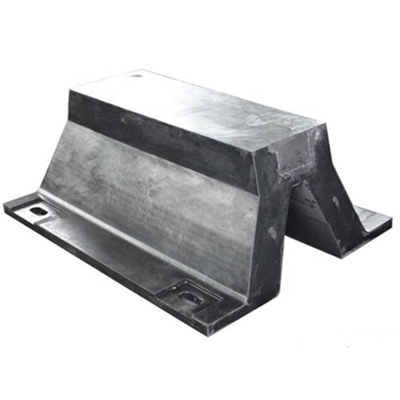
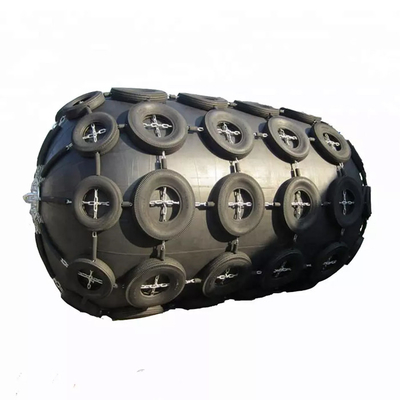
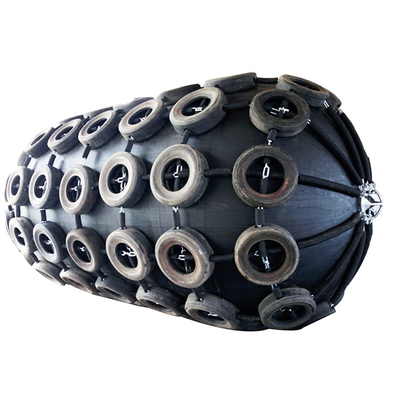
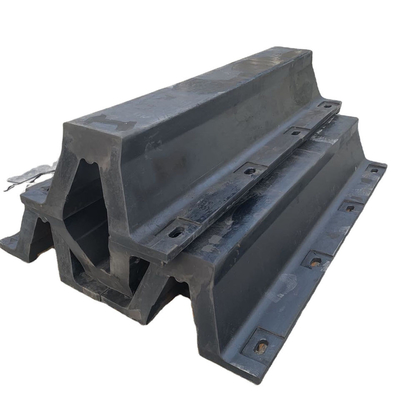
Roller Fenders are mechanical marine fendering and vessel-guidance components developed for applications where vessels require both impact protection and controlled directional movement against fixed marine structures.
Description
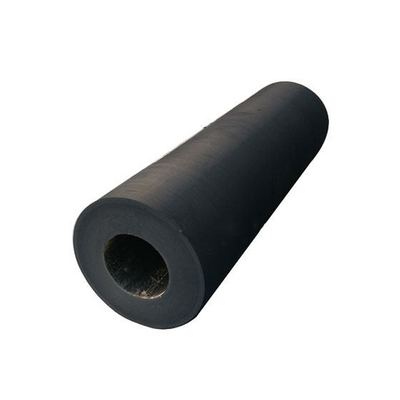
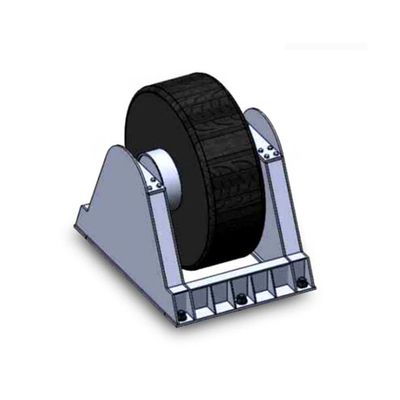
Unlike conventional stationary fender systems that primarily absorb contact energy through rubber compression, a Roller Fender incorporates a cylindrical rubber roller mounted on a steel shaft and supporting structure. When the vessel hull comes into contact with the roller, the cylindrical body rotates around its axis, allowing relative vessel movement to be converted into controlled rolling motion. This operating principle reduces sliding friction at the contact interface while transferring the applied load through the roller, shaft, bearing arrangement and supporting frame into the protected structure.
The roller body is generally manufactured from high-strength marine rubber formulated to provide elastic deformation, abrasion resistance, fatigue resistance and environmental durability. The rubber compound must maintain suitable mechanical properties under repeated compression and rotation while remaining capable of operating under outdoor marine exposure, seawater splash, humidity, ultraviolet radiation and temperature variation.
The internal shaft provides the primary rotational support for the roller and transfers mechanical forces toward the supporting structure. Depending on the system configuration, bearing or bushing components are incorporated to maintain controlled rotation and reduce mechanical resistance. The supporting frame is engineered to maintain the roller position under repeated vessel contact and distribute the resulting loads into the dock wall, quay structure, lock wall, guide structure or other supporting infrastructure.
Case Study: Roller Fender Installation for a 52,000 DWT Bulk Carrier Repair Facility in South Korea
A major ship repair facility on the southern coast of South Korea operates several dry docks for commercial vessels, including bulk carriers, container vessels and large multipurpose cargo ships. One of the dry dock entrances was frequently used by vessels in the 40,000 to 60,000 DWT range. The existing protection system consisted primarily of stationary rubber elements, but the operating team observed considerable friction when vessels contacted the entrance structure at an angle.
The shipyard initiated an improvement project focused on reducing friction while maintaining adequate impact protection. A Roller Fender system was selected for the high-contact sections of the entrance. The engineering assessment considered the dimensions of the largest regularly serviced vessels, the available mounting space, vessel approach speed, contact height and expected direction of relative movement.
The selected system used heavy-duty cylindrical rubber rollers supported by steel shafts and reinforced structural brackets. Installation was completed progressively along the high-contact sections of the dock entrance. Each roller was checked for free rotation after mechanical fixing, and the connection points were inspected before the system was placed into regular service.
The first operational trial involved a bulk carrier of approximately 52,000 DWT. When the hull contacted the Roller Fenders, the cylindrical rollers rotated in response to the vessel's longitudinal movement. The contact was more progressive than the previous stationary arrangement, and the vessel moved through the entrance without the pronounced sliding interaction previously observed.
Following the initial trial, the system was monitored during multiple docking operations. Inspection showed that the roller surfaces experienced distributed contact rather than persistent abrasion at a single stationary location. The shipyard also reported that the roller arrangement provided a more predictable contact path during minor lateral deviations in vessel alignment.

Features
High-Strength Rubber Roller with Controlled Deformation
The rubber roller is engineered to withstand repeated mechanical loading while maintaining controlled elastic deformation. During vessel contact, the rubber body compresses according to the applied load and contact geometry, creating a deformable interface between the hull and supporting structure. This deformation distributes the contact force over an appropriate area and prevents direct transfer of the entire impact load to a rigid structural connection.
Rotational Shaft and Load-Transfer Structure
The shaft is responsible for supporting the roller and transferring operational forces into the supporting frame. During contact, the vessel applies a combination of radial and tangential forces to the rubber roller. These forces are transmitted through the rubber body toward the shaft and subsequently into the bearings, brackets and structural connection.
Reduced Friction Through Rolling Contact
One of the principal engineering functions of a Roller Fender is to reduce the friction generated when a vessel moves along a protected structure. The rotating roller changes this interaction by allowing the contact element to rotate in response to the vessel's movement. Instead of relying entirely on sliding deformation, the roller follows the relative movement of the hull through rotation.
Adaptable Structural Configuration for Marine Infrastructure
Roller Fender systems can be configured for different marine structures by adjusting roller dimensions, mounting orientation, spacing and supporting frame geometry. This adaptability allows the same basic operating principle to be applied to dry dock walls, lock structures, quay corners, vessel guide systems and other locations with restricted clearance.
FAQ
What factors should be considered when selecting the diameter and length of a Roller Fender?
The principal factors include vessel displacement, hull geometry, contact height, approach velocity, contact angle, expected frequency of contact, available installation clearance and supporting-structure capacity. Roller diameter affects the contact geometry and available deformation range, while roller length determines the effective contact area.
Can Roller Fenders operate continuously in seawater and outdoor marine environments?
Roller Fenders can be designed for marine exposure, but the rubber compound and metal components should be selected according to the actual environmental conditions. The rubber should have suitable resistance to abrasion, weathering and repeated mechanical deformation. Steel components require appropriate corrosion protection where exposed to seawater spray, humidity or atmospheric conditions.
How is the service condition of a Roller Fender normally inspected?
Inspection should cover the rubber roller, shaft, bearing or bushing system, structural frame, anchor connections and protective coating. The roller should rotate without abnormal resistance, excessive noise or visible misalignment. The rubber surface should be checked for cracking, abnormal abrasion, cuts or permanent deformation.
Can Roller Fenders be customized for an existing dry dock or lock structure?
Yes. Customized configurations are commonly required for retrofit projects because existing structures may have fixed dimensions and limited installation space. The available mounting surface, anchor locations, structural capacity, required roller elevation and vessel contact envelope should be reviewed before production.
What information should be provided for an engineering quotation of Roller Fenders?
Useful technical information includes the vessel type and approximate DWT, vessel dimensions where available, expected berthing or transit speed, contact direction, installation location, required roller dimensions if already specified, number of units, mounting orientation and available structural drawings.


 Your message must be between 20-3,000 characters!