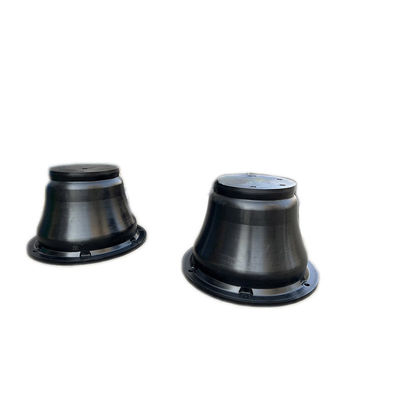
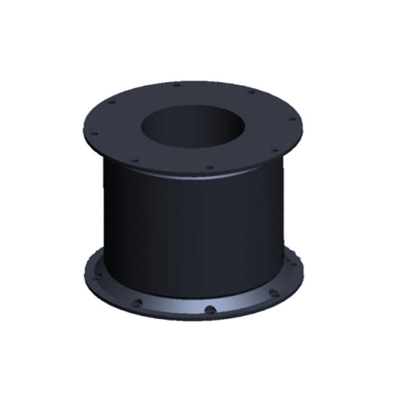
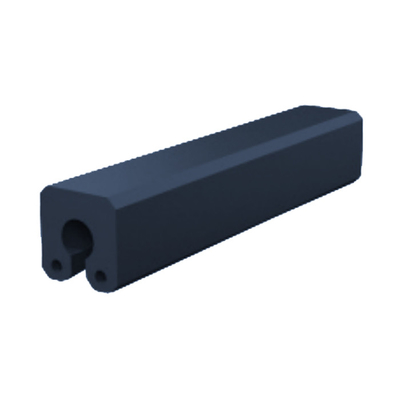
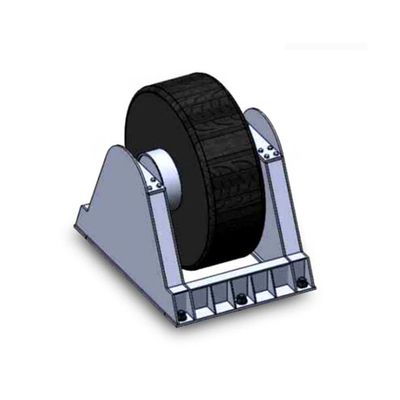
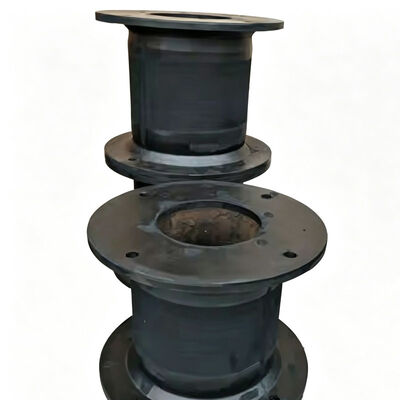
Cell Rubber Fender is a heavy-duty compression-type marine fender engineered to absorb vessel berthing energy and control the reaction force transmitted from a vessel to a quay wall, jetty, dolphin, shipyard structure, or other fixed marine infrastructure.
Manufactured from a high-strength rubber compound with controlled elasticity, wear resistance, weather resistance, fatigue resistance, and dimensional stability, its cylindrical cell structure is designed to deform progressively under compression, converting a significant portion of berthing energy into controlled elastic deformation while maintaining structural integrity.
| Product Name | Cell Rubber Fender |
|---|---|
| Brand Name | Hongruntong Marine |
| Material | High Quality Natural Rubber |
| Reaction Force | 29-4626KN |
| Energy Absorption | 4-6102KNM |
| Hardness | ≤82 Shore A |
| Standard | PIANC2002, HGT2866-2016 |
| Processing Service | Moulding, Cutting |
| Lifespan | 15-20 Years |
| Service | OEM or ODM |
| Features | Strong, Robust, Well Proven Design |
| Application | Port, Dock, Quay, etc |
| Model | H [mm] | h [mm] | D1 [mm] | D2 [mm] | n-t [mm] |
|---|---|---|---|---|---|
| CF-C400H | 400 | 25 | 650 | 550 | 30 |
| CF-C500H | 500 | 25 | 650 | 550 | 32 |
| CF-C630H | 630 | 30 | 840 | 700 | 39 |
| CF-C800H | 800 | 30 | 1050 | 900 | 40 |
| CF-C1000H | 1000 | 35 | 1300 | 1100 | 47 |
| CF-C1150H | 1150 | 40 | 1500 | 1300 | 50 |
| CF-C1250H | 1250 | 45 | 1650 | 1450 | 53 |
| CF-C1450H | 1450 | 47 | 1850 | 1650 | 61 |
| CF-C1600H | 1600 | 50 | 2000 | 1800 | 61 |
| CF-C1700H | 1700 | 55 | 2100 | 1900 | 66 |
| CF-C2000H | 2000 | 55 | 2200 | 2000 | 74 |
| CF-C2250H | 2250 | 60 | 2550 | 2300 | 74 |
| CF-C2500H | 2500 | 70 | 2950 | 2700 | 90 |
| CF-C3000H | 3000 | 75 | 3350 | 3150 | 90 |
A bulk cargo terminal in Southeast Asia upgraded its berth protection system using Cell Rubber Fenders to handle medium and large bulk carriers operating under frequent vessel movements. The system provided improved energy absorption while maintaining reaction forces within the existing concrete quay's structural capacity.
The configuration incorporated rubber cell bodies with steel mounting components and front panels at principal vessel contact positions. Installation was completed in stages to minimize operational disruption, resulting in more controlled contact response during normal vessel berthing.
Selection should be based on calculated berthing energy, allowable reaction force, hull pressure, fender spacing, structural capacity, vessel displacement, berthing velocity, berthing angle, water depth, and environmental conditions.
Yes. A steel front panel can be integrated when a larger vessel contact area or improved load distribution is required. UHMW-PE or other low-friction materials can also be installed.
Routine inspection should check the rubber body for cracks, cuts, abnormal deformation, abrasion, and surface aging. Mounting bolts, steel panels, chains, brackets, and anchor components should also be inspected.
Service life depends on berthing frequency, compression level, vessel movement, environmental exposure, rubber compound, installation quality, and maintenance. Proper selection and operation within specified ranges support long-term performance.
Yes. Dimensions, rubber hardness, mounting flange configuration, bolt-hole arrangement, front panels, and accessories can be customized to coordinate with existing or newly designed marine structures.