logo

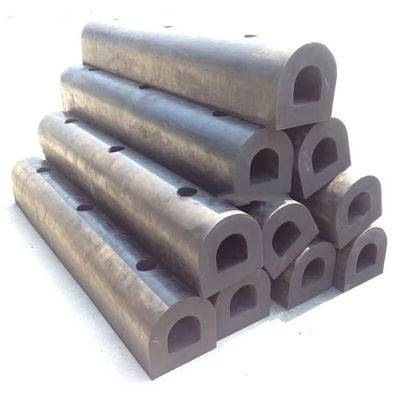
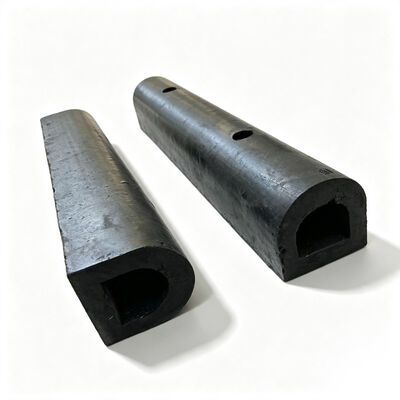
Oil Resistant Seawater Corrosion Resistance D Type Fenders Custom Size D Rubber Fenders

1
MOQ
USD11-252 Per Piece
Price
Oil Resistant Seawater Corrosion Resistance D Type Fenders Custom Size D Rubber Fenders
Features Gallery Product Description Request A Quote
Features
Specifications
Features: Durable And Sturdy
Size: Custom Size
Processing Service: Moulding, Cutting
Product Name: D Type Fenders
Applications: Dock
Usage: Ship Docking Or Berthing
MOQ: 1
Density: 1.35~2.0 G/cm3
Colour: Black And Customized
Service: OEM Or ODM
Highlight:

Oil Resistant D Type Fenders

,

Seawater Corrosion Resistance D Rubber Fenders

,

Custom Size D Shaped Fenders

Basic Infomation
Place of Origin: China
Brand Name: Hongruntong Marine
Certification: ISO, BV, ABS, DNV, LR, SGS, CCS, RMRS
Model Number: HM-DTF99
Payment & Shipping Terms
Packaging Details: Wooden Pallet, Wooden Case
Delivery Time: 5-7 Work Days
Payment Terms: L/C,D/A,D/P,T/T,Western Union,
Supply Ability: 1329 Pcs Per Month
Product Description
D Fenders Berthing Protection Oil Resistant Seawater Corrosion Resistance
Product Overview

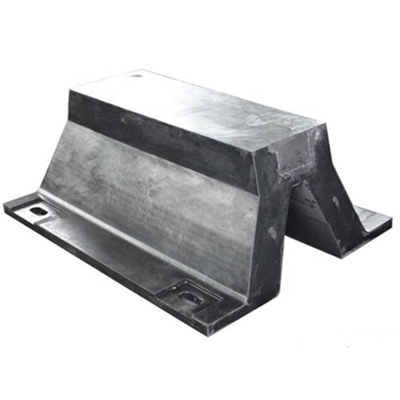
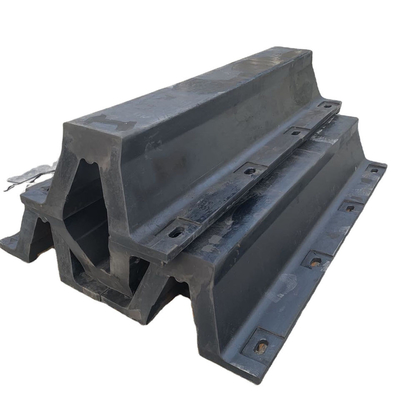
D Type Fenders are precision-engineered extruded rubber profiles developed for marine structures requiring reliable impact absorption, controlled reaction force, and durable protection under repeated vessel contact. The D-shaped cross section combines a compact installation envelope with sufficient rubber volume to accommodate compression and distribute contact loads between a vessel and a quay, pontoon, dock, platform, or other supporting structure.

The fender body is manufactured from high-strength rubber compounds selected according to the mechanical and environmental requirements of the project. These properties allow the finished profile to maintain structural integrity and functional elasticity during long-term marine service.

Operating Principle

The operating principle is based on controlled elastic deformation. When a vessel approaches a protected structure, the initial contact force is transferred into the rubber profile. As the load increases, the D-shaped body progressively compresses and deforms, absorbing a portion of the impact energy and reducing the rate at which the load is transferred to the supporting structure. After the external force is released, the rubber recovers toward its original geometry.

This deformation mechanism is especially valuable for marine structures exposed to variable operating conditions including vessel displacement, berthing velocity, approach angle, tide, current, wind, wave action, and mooring movement.

Case Study: Port Expansion Project in Northern Europe

A port authority in Northern Europe undertook an expansion project to increase handling capacity for general cargo vessels, feeder container vessels, and coastal bulk carriers. The new quay section was approximately 175 m long and incorporated reinforced concrete structures with embedded steel support members.

The project engineers selected a D Type Fender configuration because the profile could provide a resilient contact surface while maintaining a relatively compact installation envelope. The engineering process included review of quay drawings, mounting dimensions, expected vessel characteristics, and environmental conditions.

Commissioning took place before the beginning of the main operating season. During the first operating period, the quay received vessels with different hull geometries and loading conditions. The fender system accommodated variations in contact position while maintaining a resilient interface between the vessels and quay.

D Type Fender installation on marine structure Close-up view of D Type Fender profile
Technical Specifications
Product Name D Type Fenders
Brand Name Hongruntong Marine
Material High Performance Natural Rubber
Color Black and Customers' Requirements
Type Fixed D Rubber Fenders
Standard HGT2866-2016, PIANC2002
Energy Absorption 147kN to 920kN
Reaction Force 5.1KN-M to 64KN-M
Application Port, Dock, Quay, etc
Dimensional Specifications - Table 1
A [mm] B [mm] C [mm] D [mm] E [mm] F [mm] H [mm] K [mm]
70 30 15 30 45 80 90-130 200-300
100 45 15 30 50 100 90-130 200-300
125 60 20 40 60 125 110-150 250-300
150 75 20 40 75 150 110-150 250-300
150 80 25 50 100 200 130-180 300-400
200 100 25 50 100 200 130-180 300-400
200 100 30 60 125 250 140-200 350-450
250 125 30 60 125 250 140-200 350-450
300 150 30 60 150 300 140-200 350-450
350 175 35 75 175 350 140-200 350-450
380 190 35 75 190 380 140-200 350-450
300 150 35 75 175 400 140-200 350-450
400 200 35 75 200 400 140-200 350-450
500 250 45 90 250 500 160-230 400-500
Note: Other sizes can be customized according to the requirements.
Dimensional Specifications - Table 2
A [mm] B [mm] C [mm] D [mm] E [mm] F [mm] G [mm] H [mm] K [mm]
100 25 10 30 15 100 50 90-130 200-300
150 30 12 65 20 150 75 110-150 250-350
200 45 15 75 25 200 100 130-180 300-400
250 50 20 100 30 250 125 140-200 350-450
300 60 25 125 30 300 150 140-200 350-450
350 70 25 150 35 350 175 140-200 350-450
400 80 30 175 35 400 200 140-200 350-450
400 80 30 200 35 400 200 140-200 350-450
500 100 30 250 35 500 250 140-200 350-450
Key Features
  • Optimized Rubber Geometry for Energy Absorption
    The D-shaped cross section provides efficient relationship between rubber volume, deformation capacity, installation projection, and contact area. Controlled deformation maintains balance between energy absorption and reaction force.
  • Resistance to Weathering and Temperature Variation
    Manufactured using rubber compounds selected for environmental conditions including temperature range, sunlight exposure, atmospheric ozone, seawater, and humidity.
  • Stable Performance Under Multi-Directional Vessel Movement
    Accommodates tidal variation, wind, waves, current, mooring tension, and propeller action through elastic deformation and surface contact.
  • Precision Manufacturing and Sectional Consistency
    Controlled extrusion and curing processes maintain consistent cross-sectional geometry for installation efficiency and maintenance planning.
Applications
  • Modern Commercial Quays
    Suitable for general cargo ships, feeder vessels, bulk carriers, and coastal vessels where space is restricted by utility lines and structural equipment.
  • Cold-Climate and Exposed Coastal Ports
    Designed for northern regions with low temperatures, strong winds, rain, snow, and ultraviolet radiation exposure.
  • Industrial Marine Infrastructure
    Ideal for industrial jetties, coastal processing facilities, loading platforms, service terminals, and marine utility structures.
Why Choose Hongruntong Marine
  • Integrated Marine Product Manufacturing Capability
    Over 30 years of manufacturing experience covering raw material selection, rubber processing, extrusion, curing, and dimensional control.
  • Project-Specific Engineering and Customization
    Custom configurations based on engineering drawings, technical specifications, dimensional measurements, and application requirements.
  • Quality Control from Material to Finished Product
    Comprehensive inspections including dimensional verification, visual inspection, rubber hardness evaluation, and physical-property testing.
  • International Project Support and Lifecycle Service
    Technical documentation, installation information, inspection reports, and replacement support throughout product lifecycle.
Frequently Asked Questions
  • What is the typical service life of a D Type Fender?
    Service life depends on compression frequency, berthing energy, sliding movement, rubber compound, environmental exposure, and maintenance. Regular inspection is required to determine actual replacement requirements.
  • Can D Type Fenders be manufactured in non-standard dimensions?
    Yes. Cross-sectional dimensions, lengths, rubber hardness, mounting-hole patterns, and fixing configurations can be customized according to engineering requirements.
  • What should be checked before installing a D Type Fender?
    The supporting structure, mounting dimensions, fixing holes, structural condition, available projection, fender alignment, and expected contact loads should be checked.
  • How should D Type Fenders be stored before installation?
    Store in clean, dry, ventilated location away from direct sunlight, ozone-generating equipment, oils, solvents, and sharp objects. Avoid unnecessary compression or prolonged deformation.
  • Can D Type Fenders be supplied with project-specific inspection or certification requirements?
    Yes. Documentation may include dimensional records, material information, physical-property results, inspection reports, and manufacturing records as required.
D Type Fender in marine application D Type Fender installation detail D Type Fender profile and mounting
Recommended Products
Get in touch with us
Contact Person : Mr. William Lau
Tel : +8618910539783
Fax : 86-10-8946-1910
Characters Remaining(20/3000)