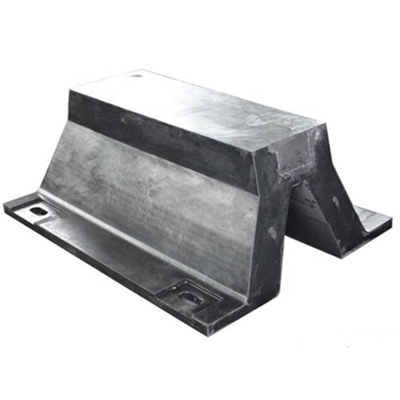
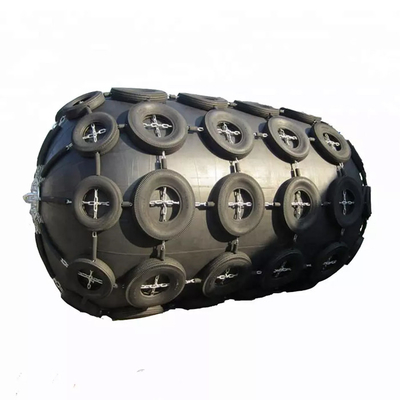
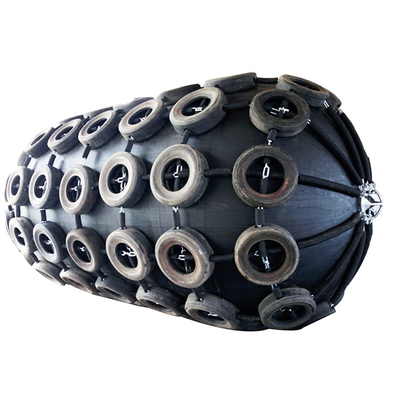
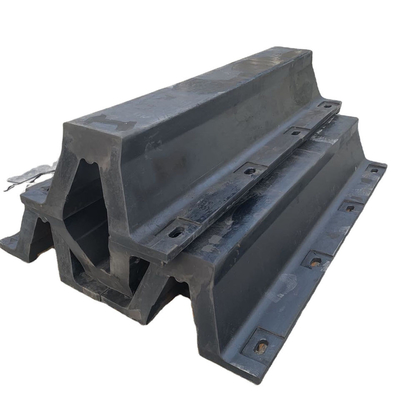
Boat Docking Bumper Anti Aging Shock Absorption Marine Grade Rubber
Product Overview
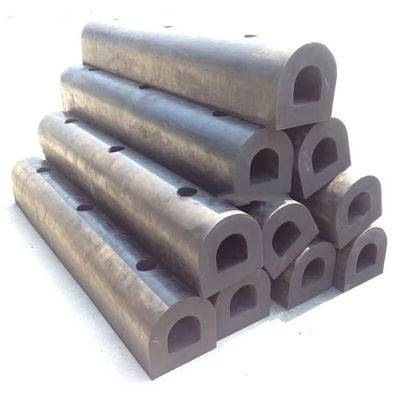
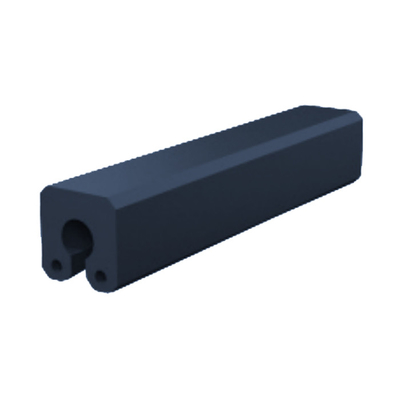
D Type Fenders are engineered extruded rubber fender profiles used to control vessel-to-structure contact during berthing, docking, maneuvering, towing, and marine handling operations. The D-shaped cross section provides a stable rubber body with a defined contact surface and controlled deformation characteristics, allowing mechanical impact energy to be absorbed while limiting direct force transmission to the protected structure.
The fender body is manufactured from high-strength rubber compounds with controlled mechanical properties. Material selection can be adjusted according to hardness, tensile strength, elongation, abrasion resistance, elastic recovery, weathering resistance, ozone resistance, and operating temperature. These material characteristics determine the fender's ability to maintain dimensional stability and mechanical performance under repeated loading.
Working Principle
The working principle is based on elastic deformation. When a vessel contacts the fender, the rubber body compresses between the vessel hull and the supporting structure. Part of the contact energy is dissipated through controlled deformation of the rubber, reducing rigid impact between metallic surfaces. After unloading, the rubber progressively recovers toward its original profile, allowing repeated contact without requiring mechanical reset or adjustment.
The D-shaped configuration provides a relatively compact solution for locations where the available installation depth is restricted. This is particularly relevant to shipyards, floating docks, vessel transfer areas, tugboats, barges, and workboats where structural equipment or operational clearance limits the projection of the fender system.
Case Study: D Type Fender Installation for a Coastal Shipbuilding and Repair Yard in South Korea
A coastal shipbuilding and repair yard in South Korea operated several berths for fishing vessels, coastal tankers, harbor workboats, and offshore service vessels. One of the repair berths was connected to a floating dock entrance and was used repeatedly during vessel transfer and positioning operations.
The existing protection system consisted mainly of discrete rubber pads installed at several contact points. The arrangement provided localized impact protection but left gaps between individual units. During vessel positioning, hull movement caused by tide and wind occasionally shifted the contact point away from the protected areas, resulting in coating damage on vessel sides and localized abrasion of the steel dock structure.
D Type Fenders were selected because the D-shaped profile could provide continuous rubber contact while maintaining a controlled installation projection. The required cross section was established according to the available mounting space and the expected contact conditions of the vessels using the berth.
After commissioning, the continuous rubber interface reduced exposed gaps between contact points. Vessel movement during docking and undocking was accommodated by progressive rubber deformation and surface sliding. The shipyard reported a reduction in localized hull coating damage and improved protection of the dock-side steel structure.

Specifications
| Product Name |
D Type Fenders |
| Brand Name |
Hongruntong Marine |
| Material |
High Performance Natural Rubber |
| Color |
Black and Customers' Requirements |
| Type |
Fixed D Rubber Fenders |
| Standard |
HGT2866-2016, PIANC2002 |
| Energy Absorption |
147kN to 920kN |
| Reaction Force |
5.1KN-M to 64KN-M |
| Application |
Port, Dock, Quay, etc |
Standard Dimensions Table 1
| A [mm] |
B [mm] |
C [mm] |
D [mm] |
E [mm] |
F [mm] |
H [mm] |
K [mm] |
| 70 |
30 |
15 |
30 |
45 |
80 |
90 - 130 |
200 - 300 |
| 100 |
45 |
15 |
30 |
50 |
100 |
90 - 130 |
200 - 300 |
| 125 |
60 |
20 |
40 |
60 |
125 |
110 - 150 |
250 - 300 |
| 150 |
75 |
20 |
40 |
75 |
150 |
110 - 150 |
250 - 300 |
| 150 |
80 |
25 |
50 |
100 |
200 |
130 - 180 |
300 - 400 |
| 200 |
100 |
25 |
50 |
100 |
200 |
130 - 180 |
300 - 400 |
| 200 |
100 |
30 |
60 |
125 |
250 |
140 - 200 |
350 - 450 |
| 250 |
125 |
30 |
60 |
125 |
250 |
140 - 200 |
350 - 450 |
| 300 |
150 |
30 |
60 |
150 |
300 |
140 - 200 |
350 - 450 |
| 350 |
175 |
35 |
75 |
175 |
350 |
140 - 200 |
350 - 450 |
| 380 |
190 |
35 |
75 |
190 |
380 |
140 - 200 |
350 - 450 |
| 300 |
150 |
35 |
75 |
175 |
400 |
140 - 200 |
350 - 450 |
| 400 |
200 |
35 |
75 |
200 |
400 |
140 - 200 |
350 - 450 |
| 500 |
250 |
45 |
90 |
250 |
500 |
160 - 230 |
400 - 500 |
Note: Other sizes can be customized according to the requirements.
Standard Dimensions Table 2
| A [mm] |
B [mm] |
C [mm] |
D [mm] |
E [mm] |
F [mm] |
G [mm] |
H [mm] |
K [mm] |
| 100 |
25 |
10 |
30 |
15 |
100 |
50 |
90 - 130 |
200 - 300 |
| 150 |
30 |
12 |
65 |
20 |
150 |
75 |
110 - 150 |
250 - 350 |
| 200 |
45 |
15 |
75 |
25 |
200 |
100 |
130 - 180 |
300 - 400 |
| 250 |
50 |
20 |
100 |
30 |
250 |
125 |
140 - 200 |
350 - 450 |
| 300 |
60 |
25 |
125 |
30 |
300 |
150 |
140 - 200 |
350 - 450 |
| 350 |
70 |
25 |
150 |
35 |
350 |
175 |
140 - 200 |
350 - 450 |
| 400 |
80 |
30 |
175 |
35 |
400 |
200 |
140 - 200 |
350 - 450 |
| 400 |
80 |
30 |
200 |
35 |
400 |
200 |
140 - 200 |
350 - 450 |
| 500 |
100 |
30 |
250 |
35 |
500 |
250 |
140 - 200 |
350 - 450 |
Key Features
Continuous Hull Contact Protection
Shipyards and marine repair facilities frequently handle vessels with different hull lengths, widths, draft conditions, and structural configurations. A fender system based only on isolated contact pads can leave unprotected areas when the actual vessel contact position changes.
D Type Fenders provide a continuous rubber interface along the selected protection zone. The continuous profile increases the probability that the vessel hull will remain in contact with a resilient surface even when the vessel moves longitudinally or vertically during docking.
Elastic Recovery Under Repeated Docking Cycles
Vessels may contact shipyard fenders repeatedly during docking, undocking, repositioning, and internal transfer operations. The fender therefore needs to tolerate repeated deformation without excessive permanent set.
The D Type profile is designed to compress under contact and recover when the external load is removed. This elastic response allows the same fender section to accommodate multiple contact events throughout its operating life.
Resistance to Hull Coating Damage and Surface Abrasion
Vessel hulls are commonly protected by paint or specialized coating systems that can be damaged by direct contact with steel structures. Even relatively low-energy contact can create scratches or localized coating removal when the surfaces are rigid.
The rubber contact surface of a D Type Fender provides a compliant barrier between the hull and supporting structure. Its deformable nature reduces sharp metal-to-metal interaction and distributes contact over a broader surface.
Adaptable Profile and Fixing Configuration
Shipyard structures vary considerably in geometry. Fender systems may need to be installed against steel beams, reinforced concrete edges, floating dock structures, vessel-side reinforcement, or specially fabricated support brackets.
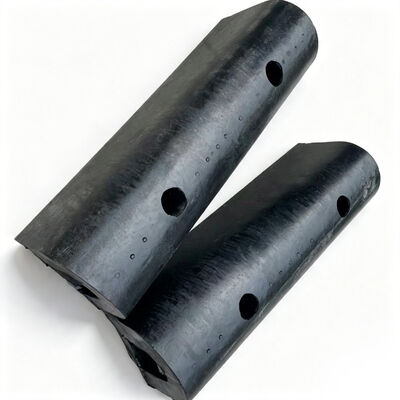
D Type Fenders can be manufactured with different cross-sectional dimensions and lengths to suit these structural conditions. Mounting holes and fixing positions can be configured according to engineering drawings, while backing components can be incorporated where additional load distribution is required.
Applications
Floating Dock Entrance and Vessel Transfer Areas
D Type Fenders can protect vessel hulls during entry into and exit from floating docks. These operations involve relatively restricted clearance and require the vessel to remain accurately aligned while moving through the dock entrance.
Ship Repair Berths
Repair berths handle repeated vessel arrival, departure, and repositioning operations. D Type Fenders can be installed along quay edges and vessel contact zones to protect both hull coatings and berth structures.
Tugboats and Harbor Workboats
Tugboats and harbor workboats frequently experience contact with larger vessels, quay structures, and floating docks during pushing, towing, and maneuvering. D Type Fenders can be installed along vessel sides to provide resilient protection in high-contact areas.
Why Choose Hongruntong Marine
Marine Product Manufacturing with More Than 30 Years of Experience
Hongruntong Marine has more than 30 years of manufacturing experience in marine products, including rubber protection systems used in vessel and infrastructure applications.
Customized Production for Vessel and Dock Structures
Shipyards often operate equipment manufactured at different times, resulting in non-standard dimensions and fixing arrangements. Hongruntong Marine can manufacture D Type Fenders according to technical drawings, physical samples, dimensional measurements, or specified installation requirements.
Manufacturing Precision and Quality Inspection
The dimensional accuracy of an extruded rubber profile directly influences installation alignment and contact performance. Hongruntong Marine maintains production controls for extrusion, curing, dimensional verification, surface inspection, and relevant rubber-property evaluation.
Technical Support for Installation and Long-Term Maintenance
A marine fender system requires appropriate mounting, inspection, and maintenance throughout its service life. Hongruntong Marine can provide technical information related to dimensions, fixing arrangements, installation requirements, and product inspection.
Frequently Asked Questions
Can D Type Fenders be installed on vessel sides?
Yes. They can be installed on selected vessel-side structures where suitable reinforcement and mechanical fixing are available. The hull structure should be evaluated to ensure that it can safely accommodate the expected fender loads.
Are D Type Fenders suitable for repeated docking and undocking operations?
Yes. Their elastic rubber construction allows repeated compression and recovery. For high-cycle shipyard applications, the rubber compound and profile should be selected according to expected loading frequency, contact pressure, and abrasion conditions.
Can D Type Fenders protect painted vessel hulls?
Yes. The rubber surface provides a compliant interface that reduces direct contact between the hull and rigid steel structures. It can therefore help reduce localized coating damage during normal docking and maneuvering operations.
How are D Type Fenders attached to a floating dock?
The fixing method depends on the dock structure and expected loads. Bolted connections, retaining bars, backing plates, clamps, or customized mechanical systems may be used. The mounting arrangement should be designed to resist both impact and sliding forces.
Can the same D Type Fender profile be used for different vessels in one shipyard?
Potentially. A common profile can serve multiple vessel types when their contact conditions and structural requirements fall within the same design range. Where vessel sizes, contact loads, or hull geometries differ significantly, separate fender dimensions or configurations may be required.


 Your message must be between 20-3,000 characters!