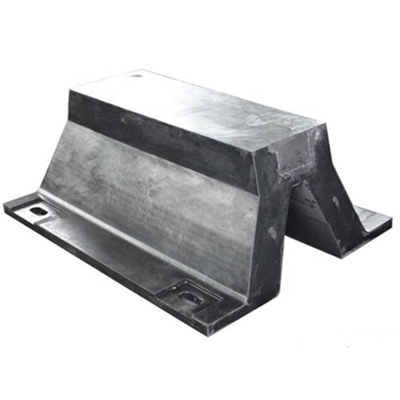
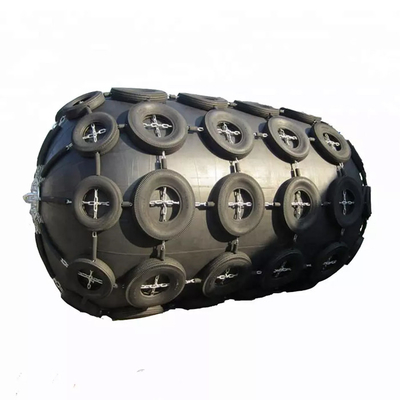
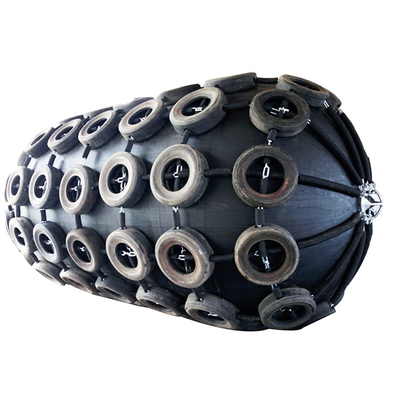
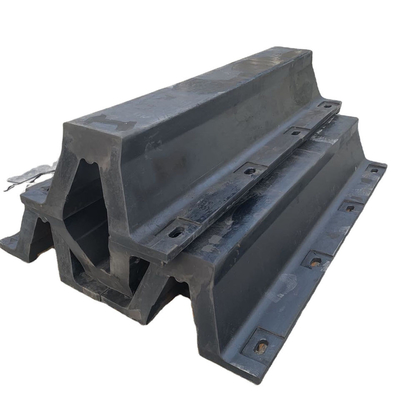
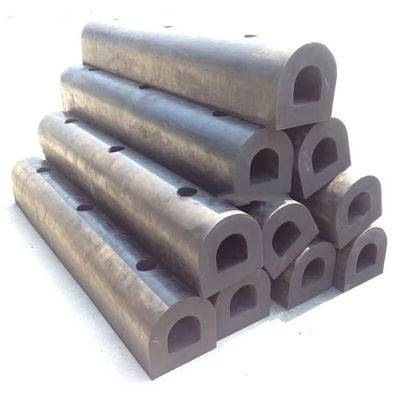
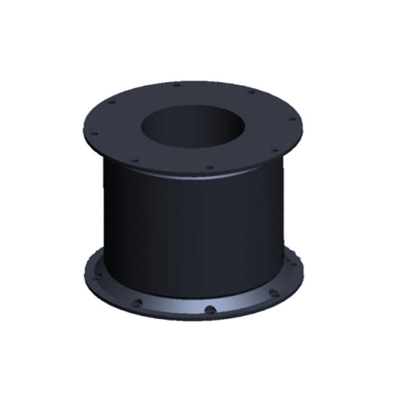
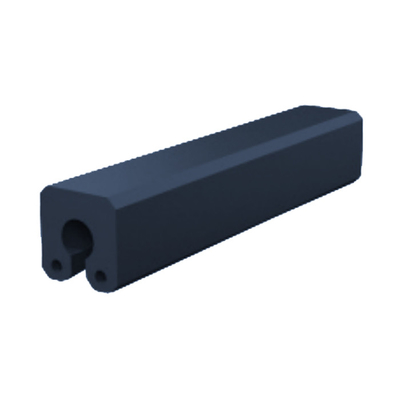
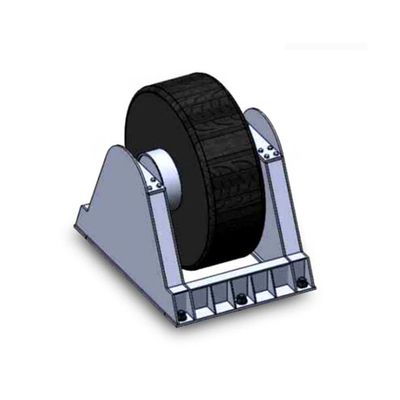
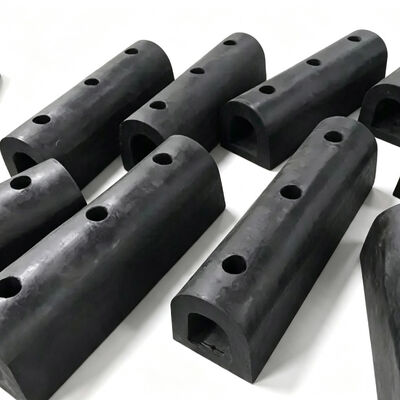
D Type Fenders are engineered marine rubber fender profiles developed for vessel-to-structure protection where compact installation, controlled deformation, and resistance to repeated mechanical contact are required. The D-shaped profile provides a relatively large rubber cross-sectional volume within a compact installation envelope, allowing the fender to absorb contact energy while maintaining clearance around quay structures, vessel hulls, floating platforms, and marine access facilities.
| Product Name | D Type Fenders |
|---|---|
| Brand Name | Hongruntong Marine |
| Material | High Performance Natural Rubber |
| Color | Black and Customers' Requirements |
| Type | Fixed D Rubber Fenders |
| Standard | HGT2866-2016, PIANC2002 |
| Energy Absorption | 147kN to 920kN |
| Reaction Force | 5.1KN-M to 64KN-M |
| Application | Port, Dock, Quay, etc |
| A [mm] | B [mm] | C [mm] | D [mm] | E [mm] | F [mm] | H [mm] | K [mm] |
|---|---|---|---|---|---|---|---|
| 70 | 30 | 15 | 30 | 45 | 80 | 90-130 | 200-300 |
| 100 | 45 | 15 | 30 | 50 | 100 | 90-130 | 200-300 |
| 125 | 60 | 20 | 40 | 60 | 125 | 110-150 | 250-300 |
| 150 | 75 | 20 | 40 | 75 | 150 | 110-150 | 250-300 |
| 150 | 80 | 25 | 50 | 100 | 200 | 130-180 | 300-400 |
| 200 | 100 | 25 | 50 | 100 | 200 | 130-180 | 300-400 |
| 200 | 100 | 30 | 60 | 125 | 250 | 140-200 | 350-450 |
| 250 | 125 | 30 | 60 | 125 | 250 | 140-200 | 350-450 |
| 300 | 150 | 30 | 60 | 150 | 300 | 140-200 | 350-450 |
| 350 | 175 | 35 | 75 | 175 | 350 | 140-200 | 350-450 |
| 380 | 190 | 35 | 75 | 190 | 380 | 140-200 | 350-450 |
| 300 | 150 | 35 | 75 | 175 | 400 | 140-200 | 350-450 |
| 400 | 200 | 35 | 75 | 200 | 400 | 140-200 | 350-450 |
| 500 | 250 | 45 | 90 | 250 | 500 | 160-230 | 400-500 |
| A [mm] | B [mm] | C [mm] | D [mm] | E [mm] | F [mm] | G [mm] | H [mm] | K [mm] |
|---|---|---|---|---|---|---|---|---|
| 100 | 25 | 10 | 30 | 15 | 100 | 50 | 90-130 | 200-300 |
| 150 | 30 | 12 | 65 | 20 | 150 | 75 | 110-150 | 250-350 |
| 200 | 45 | 15 | 75 | 25 | 200 | 100 | 130-180 | 300-400 |
| 250 | 50 | 20 | 100 | 30 | 250 | 125 | 140-200 | 350-450 |
| 300 | 60 | 25 | 125 | 30 | 300 | 150 | 140-200 | 350-450 |
| 350 | 70 | 25 | 150 | 35 | 350 | 175 | 140-200 | 350-450 |
| 400 | 80 | 30 | 175 | 35 | 400 | 200 | 140-200 | 350-450 |
| 400 | 80 | 30 | 200 | 35 | 400 | 200 | 140-200 | 350-450 |
| 500 | 100 | 30 | 250 | 35 | 500 | 250 | 140-200 | 350-450 |
The D-shaped cross section is engineered to provide a useful rubber volume while maintaining a relatively compact external profile. This geometry is important in offshore and floating applications where installation space is often restricted by structural steelwork, access platforms, pipelines, ladders, cable systems, or operational clearance requirements.
Marine fenders are exposed to environmental conditions that can gradually affect rubber performance. D Type Fenders can be manufactured from rubber compounds formulated for marine exposure, maintaining adequate elastic recovery and mechanical integrity throughout the service period.
D Type Fenders are designed to accommodate combined loading through rubber deformation and surface sliding. The engineering significance of this characteristic is that the fender must withstand both deformation and cumulative wear from repeated vessel movement.
A marine fender cannot perform correctly if the fixing system is inadequate. D Type Fenders can be supplied with mounting-hole patterns and fixing components according to project drawings, adapted to steel frames, concrete edges, vessel structures, floating pontoons, and offshore platforms.
An offshore supply base in Southeast Asia implemented D Type Fenders on their floating service berth used by platform supply vessels, crew boats, utility vessels, and small coastal cargo vessels. The continuous rubber profile eliminated unprotected contact gaps and provided a uniform interface between vessels and the berth, resulting in fewer localized coating repairs and improved protection of the berth edge.
Yes. D Type Fenders are suitable for floating pontoons, barges, service platforms, and similar structures where relative movement occurs between the vessel and the protected structure.
Rubber hardness influences deformation and reaction force. A harder compound provides greater resistance to deformation, while a softer compound provides greater deformation under comparable loading.
Yes. Marine-grade rubber compounds can be formulated for prolonged seawater and salt-spray exposure, considering temperature, ultraviolet radiation, abrasion, and expected service duration.
Common arrangements include bolts, retaining bars, clamps, backing plates, and customized mechanical fixing systems. Fixing dimensions and hole patterns can be manufactured according to project requirements.
In many replacement applications, the fender can be manufactured according to existing dimensions and mounting positions using drawings, measurements, photographs, or physical samples.