D Rubber Fender Space Saving Stable Structure Simple Maintenance
Marine Rubber Fender High Impact Resistance Wear Resistant Easy Installation
Product Description
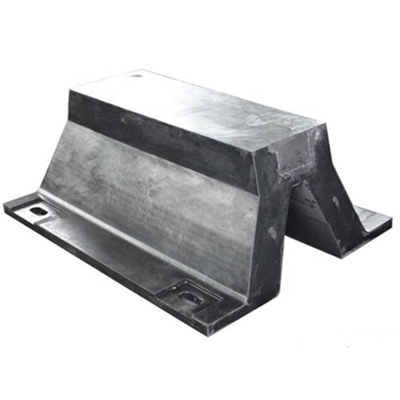
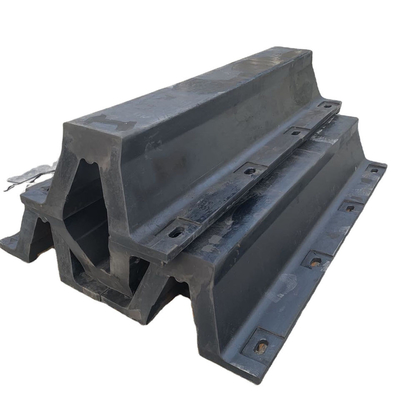
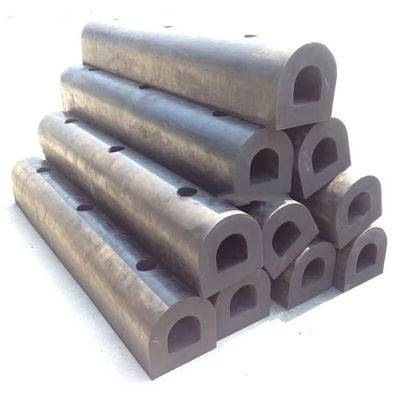
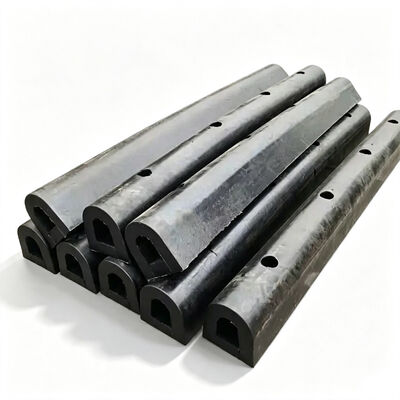
D Type Fenders are extruded marine rubber fender profiles engineered to provide continuous impact protection between vessels and fixed or floating marine structures. The D-shaped cross-sectional geometry provides a practical combination of rubber volume, contact area, deformation capability, and installation compactness, making this fender configuration suitable for quay walls, shipyards, loading berths, tugboats, barges, pontoons, floating docks, and vessel-side protection systems.
The fender body is manufactured from engineered rubber compounds selected according to mechanical loading, abrasion intensity, environmental exposure, and expected service conditions. The rubber material is designed to maintain elastic recovery under repeated compression while resisting surface wear, weathering, ozone exposure, seawater contact, and mechanical deterioration. Different rubber hardness levels and compound formulations can be specified according to the required balance between deformation, reaction force, contact pressure, abrasion resistance, and service durability.
The operating principle is based on controlled elastic deformation. When a vessel approaches a berth or comes into contact with the protected structure, the D Type Fender compresses against the vessel hull and absorbs part of the impact energy through deformation of the rubber body. This reduces direct transmission of impact loads to the supporting structure and provides a resilient interface between steel or concrete surfaces. Under normal loading conditions, the rubber recovers toward its original geometry after the external force is removed, allowing the same fender section to accommodate repeated contact cycles.
The D-shaped configuration is particularly useful where installation depth is restricted. The profile can provide effective contact protection while maintaining a relatively compact projection from the supporting structure. This characteristic is valuable around quay edges, ship repair facilities, floating structures, and vessel sides where structural clearance, access equipment, ladders, pipelines, or other components limit available installation space.
Case Study: D Type Fender System for a Bulk Carrier Repair Berth in Northern Europe
A ship repair facility on the North Sea coast operated a 145 m repair berth serving bulk carriers, general cargo vessels, and multipurpose offshore support vessels. Typical vessels using the berth ranged from approximately 12,000 to 38,000 DWT. The berth consisted of a reinforced concrete quay with exposed steel edge members, while vessel movements were affected by tidal variation, wind, and longitudinal surge during loading and repair operations.
The existing fender arrangement had been in service for several years and had developed localized surface abrasion, permanent deformation, and irregular contact zones. Several gaps between individual fender sections resulted in direct contact between vessel hull coatings and parts of the quay structure. The maintenance team consequently faced repeated repair work involving both the rubber fender system and localized quay-edge protection.
The shipyard required a replacement solution capable of providing continuous vessel-side protection while utilizing the existing structural support as far as practical. A major engineering constraint was the limited installation depth caused by access platforms, service equipment, and structural components positioned behind the berth edge.
A D Type Fender system was selected according to the available installation dimensions, vessel contact conditions, and structural load limitations. The fender sections were manufactured to the specified cross-sectional dimensions and supplied with fixing arrangements compatible with the existing steel support members. Before installation, the existing berth was surveyed to confirm mounting positions, structural condition, and dimensional tolerances.
The replacement was carried out in controlled sections so that part of the repair berth could remain operational. Each fender section was positioned against the supporting structure and mechanically secured according to the specified installation arrangement. The modular installation reduced structural modification requirements and simplified alignment along the 145 m berth.
After commissioning, the continuous rubber contact surface reduced direct vessel-to-steel interaction during routine berthing and repair operations. Maintenance personnel observed reduced localized damage to vessel coatings and improved protection of the quay edge. The modular arrangement also simplified future maintenance because individual sections could be removed and replaced without dismantling the complete fender line.
The project demonstrated that D Type Fenders can provide a repeatable protection solution for ship repair facilities exposed to frequent vessel contact, tidal movement, and sliding loads. The same engineering principle can be applied to commercial berths, shipyards, floating docks, and other marine structures where compact installation and maintainable protection are required.
Specifications
| Product Name |
D Type Fenders |
| Brand Name |
Hongruntong Marine |
| Material |
High Performance Natural Rubber |
| Color |
Black and Customers' Requirements |
| Type |
Fixed D Rubber Fenders |
| Standard |
HGT2866-2016, PIANC2002 |
| Energy Absorption |
147kN to 920kN |
| Reaction Force |
5.1KN-M to 64KN-M |
| Application |
Port, Dock, Quay, etc |
Standard Dimensions Table 1
| A [mm] |
B [mm] |
C [mm] |
D [mm] |
E [mm] |
F [mm] |
H [mm] |
K [mm] |
| 70 |
30 |
15 |
30 |
45 |
80 |
90 - 130 |
200 - 300 |
| 100 |
45 |
15 |
30 |
50 |
100 |
90 - 130 |
200 - 300 |
| 125 |
60 |
20 |
40 |
60 |
125 |
110 - 150 |
250 - 300 |
| 150 |
75 |
20 |
40 |
75 |
150 |
110 - 150 |
250 - 300 |
| 150 |
80 |
25 |
50 |
100 |
200 |
130 - 180 |
300 - 400 |
| 200 |
100 |
25 |
50 |
100 |
200 |
130 - 180 |
300 - 400 |
| 200 |
100 |
30 |
60 |
125 |
250 |
140 - 200 |
350 - 450 |
| 250 |
125 |
30 |
60 |
125 |
250 |
140 - 200 |
350 - 450 |
| 300 |
150 |
30 |
60 |
150 |
300 |
140 - 200 |
350 - 450 |
| 350 |
175 |
35 |
75 |
175 |
350 |
140 - 200 |
350 - 450 |
| 380 |
190 |
35 |
75 |
190 |
380 |
140 - 200 |
350 - 450 |
| 300 |
150 |
35 |
75 |
175 |
400 |
140 - 200 |
350 - 450 |
| 400 |
200 |
35 |
75 |
200 |
400 |
140 - 200 |
350 - 450 |
| 500 |
250 |
45 |
90 |
250 |
500 |
160 - 230 |
400 - 500 |
Note: Other sizes can be customized according to the requirements.
Standard Dimensions Table 2
| A [mm] |
B [mm] |
C [mm] |
D [mm] |
E [mm] |
F [mm] |
G [mm] |
H [mm] |
K [mm] |
| 100 |
25 |
10 |
30 |
15 |
100 |
50 |
90 - 130 |
200 - 300 |
| 150 |
30 |
12 |
65 |
20 |
150 |
75 |
110 - 150 |
250 - 350 |
| 200 |
45 |
15 |
75 |
25 |
200 |
100 |
130 - 180 |
300 - 400 |
| 250 |
50 |
20 |
100 |
30 |
250 |
125 |
140 - 200 |
350 - 450 |
| 300 |
60 |
25 |
125 |
30 |
300 |
150 |
140 - 200 |
350 - 450 |
| 350 |
70 |
25 |
150 |
35 |
350 |
175 |
140 - 200 |
350 - 450 |
| 400 |
80 |
30 |
175 |
35 |
400 |
200 |
140 - 200 |
350 - 450 |
| 400 |
80 |
30 |
200 |
35 |
400 |
200 |
140 - 200 |
350 - 450 |
| 500 |
100 |
30 |
250 |
35 |
500 |
250 |
140 - 200 |
350 - 450 |
Key Features
- High-Strength Extruded Rubber Construction: Manufactured through controlled rubber extrusion process for consistent cross-sectional geometry and dimensional stability along complete length.
- Controlled Compression and Reaction Force: Progressive deformation absorbs vessel impact energy while limiting force transmission to quay or vessel structures.
- Wear Resistance Under Sliding Contact: Engineered rubber compounds withstand repeated abrasion from vessel movement caused by tide, waves, wind, and mooring forces.
- Flexible Installation and Modular Replacement: Customizable lengths, cross-sectional dimensions, and mounting configurations with independent section replacement capability.
Applications
- Commercial Port Quay Walls: Suitable for bulk carriers, general cargo vessels, and multipurpose ships requiring resilient contact interface between vessel hulls and berth structures.
- Shipyards and Ship Repair Facilities: Ideal for repair berths, floating docks, and outfitting quays where compact profile and modular configuration support maintenance efficiency.
- Tugboats, Barges and Floating Work Platforms: Provides continuous rubber protection during maneuvering, pushing, towing, docking, and alongside operations.
Why Choose Hongruntong Marine
- More Than 30 Years of Marine Manufacturing Experience: Extensive practical knowledge of rubber compounding, extrusion, curing, dimensional control, and marine product inspection.
- Engineering-Based Customization: Capability to manufacture according to customer drawings, technical specifications, physical samples, or dimensional measurements.
- Material and Manufacturing Quality Control: Controlled material selection and manufacturing procedures maintain consistency in rubber properties and finished dimensions.
- Technical Support and Replacement Capability: Ongoing support for dimensional evaluation, product configuration, installation requirements, and replacement manufacturing.
Frequently Asked Questions
1. What information is required to select the correct D Type Fender size?
The main parameters include vessel displacement, berthing velocity, contact angle, expected contact frequency, allowable reaction force, contact pressure, supporting structure strength, available installation space, and environmental conditions. Existing fender dimensions and mounting drawings are also useful for replacement applications.
2. What rubber hardness can be specified for D Type Fenders?
Different rubber hardness levels can be considered according to the required reaction force, deformation characteristics, abrasion conditions, and structural limitations. The final hardness should be selected together with the fender dimensions and operating conditions rather than independently.
3. How should D Type Fenders be inspected and maintained?
Routine inspection should examine surface abrasion, cracks, tears, abnormal permanent deformation, displacement, damaged fixing holes, loose fasteners, and the condition of the supporting structure. Inspection intervals should be established according to vessel traffic, impact frequency, environmental exposure, and the maintenance procedures of the facility.
4. Can D Type Fenders be manufactured to replace an existing profile?
Yes. Existing drawings, dimensional measurements, photographs, physical samples, cross-sectional profiles, and mounting-hole information can be used to develop a replacement specification. Compatibility should be confirmed before production, particularly if the existing fender has undergone deformation or if the supporting structure has been modified.
5. What technical documentation can be supplied with D Type Fenders?
Documentation depends on the project specification and customer requirements. It may include product dimensions, technical specifications, material information, rubber-property data, inspection records, manufacturing information, and installation recommendations. Where third-party inspection or specific certification is required, the applicable requirements should be confirmed before production.


 Your message must be between 20-3,000 characters!