Fatigue-Resistant Design for High-Cycle Berthing
High-frequency marine terminals impose a different engineering requirement from low-traffic berths because fender components may experience repeated compression many times each day. Long-term performance therefore depends not only on maximum load capacity but also on the ability of the rubber structure to tolerate cyclic deformation.
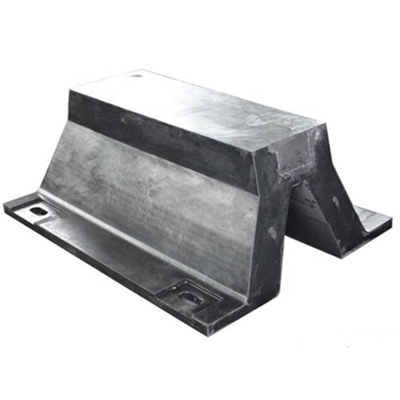
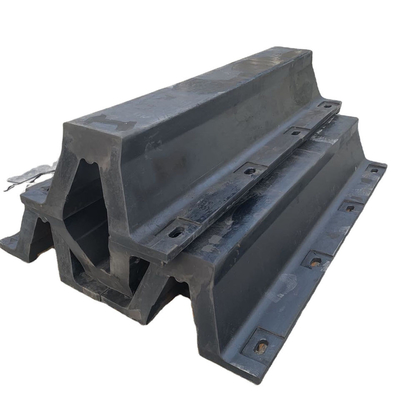
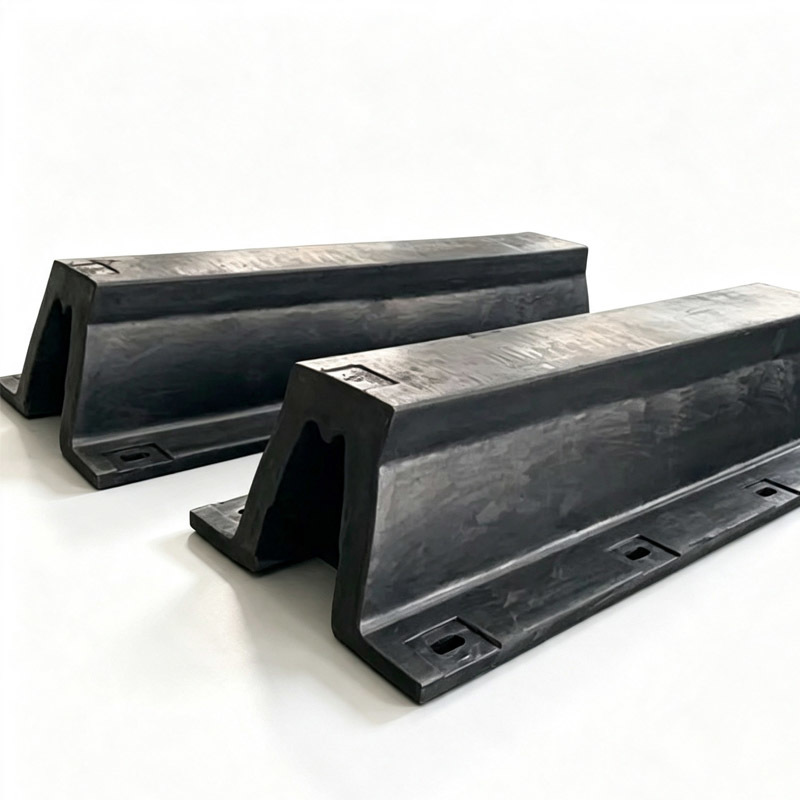
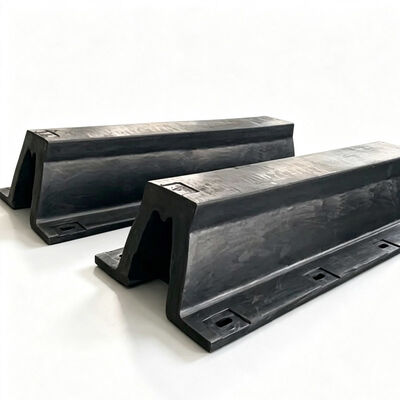
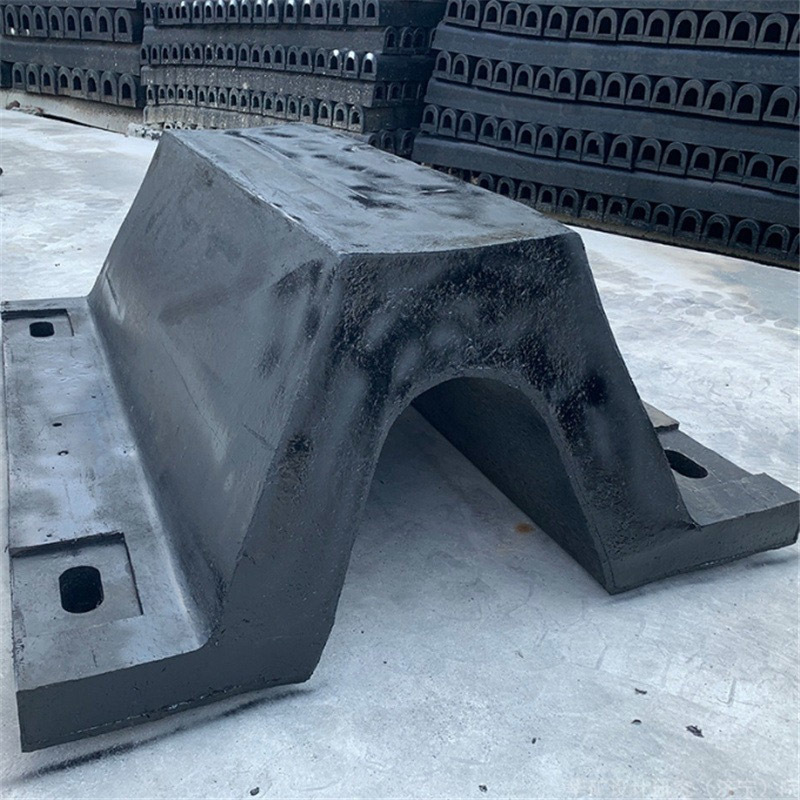
V Type Fender is designed to operate through repeated elastic compression within its specified working range. The rubber body deforms when loaded and recovers after the vessel moves away, allowing the same component to perform repeatedly without relying on mechanical reset systems.
Rubber compound formulation plays an important role in fatigue behavior. Appropriate tensile strength, elongation, tear resistance, and compression recovery characteristics help the material tolerate cyclic loading.
The geometry must also be considered because stress distribution within the rubber body changes as compression increases. Correct profile dimensions and mounting conditions help prevent localized overloading.
For high-cycle applications such as ferry terminals, container ports, and shipyards, engineering selection should consider expected daily vessel movements and long-term loading frequency rather than only the largest individual berthing event.
Stable Performance Under Variable Loading
Actual vessel contact rarely occurs under identical conditions. Changes in vessel displacement, approach velocity, wind, current, tidal level, loading condition, and berthing angle can produce different contact loads.
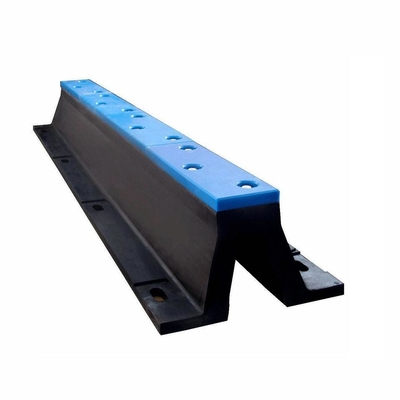
The V-shaped rubber profile provides progressive resistance across a range of compression conditions. This allows the fender to accommodate normal variations in vessel contact while maintaining controlled deformation.
The ability to handle variable loading is important for multi-vessel berths where different ship types use the same infrastructure. A suitable configuration can provide protection for the expected operating range while maintaining structural reaction forces within acceptable limits.
For engineering design, the fender arrangement should be evaluated together with the vessel operating envelope. Fender spacing, contact area, allowable compression, and structural capacity must all be considered to ensure that the complete system performs correctly under both normal and abnormal operating conditions.
Precision Manufacturing and Dimensional Consistency
Dimensional consistency is particularly important when multiple V Type Fender sections are installed along one berth. Differences in profile dimensions or mounting positions can lead to uneven contact and inconsistent load distribution.
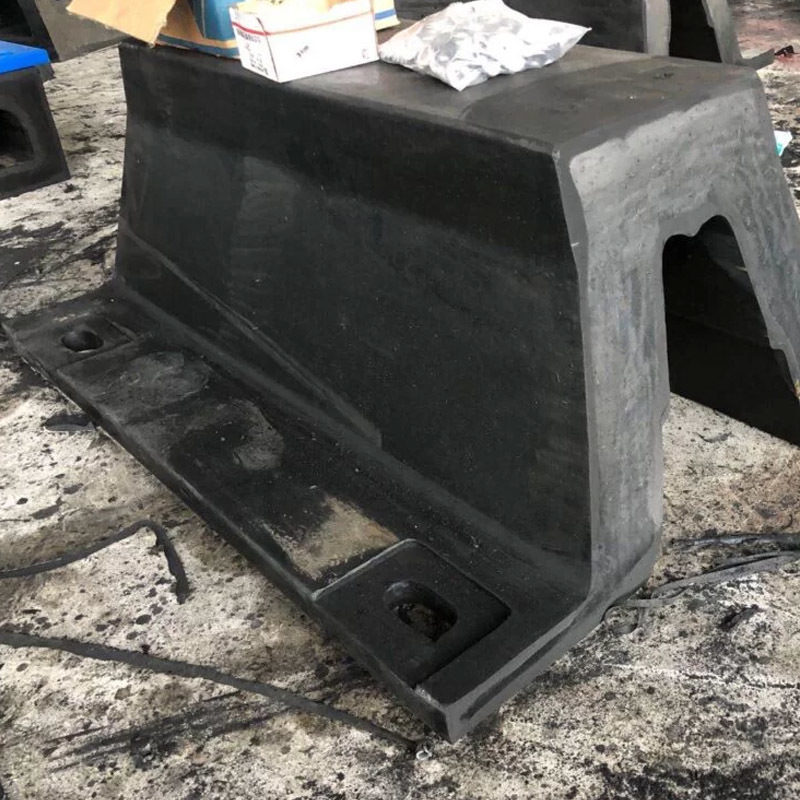
Controlled molding and vulcanization help maintain the specified geometry of the rubber body. Finished sections can be inspected for length, profile dimensions, mounting-hole positions, surface condition, and other project requirements.
Consistent rubber properties are equally important. Variations in hardness or mechanical characteristics can affect the load-deflection response between adjacent fender sections.
For replacement projects, accurate dimensions help ensure compatibility with existing brackets, steel panels, and fixing systems. This reduces the risk of field modification and installation delays.
Precision production therefore contributes not only to product quality but also to system-level performance along the complete berth.
Serviceability and Life-Cycle Maintenance
V Type Fender is structured as a serviceable marine component rather than a permanently integrated structural element. Individual sections can be inspected, documented, and replaced according to their actual condition.
A maintenance program can monitor rubber surface abrasion, cracking, permanent deformation, exposed reinforcement, fastening condition, steel-panel wear, and structural corrosion. This allows operators to identify localized deterioration before it develops into a larger berth protection problem.
The sectional design also supports planned maintenance. If a specific location experiences significantly higher vessel contact frequency, that section can be prioritized for inspection without requiring complete system replacement.
For facilities operating on continuous schedules, this approach can reduce maintenance scope and improve asset availability. It also allows replacement materials to be ordered according to actual component condition rather than replacing all fenders at the same time.
Applications
High Frequency Ferry Terminals
Ferry terminals experience repeated vessel approaches and departures, often according to fixed schedules. The high number of annual berthing cycles places significant fatigue demands on fender systems.
V Type Fender provides controlled compression and recovery during repeated contact. The system can be designed around ferry hull geometry, berth structure, vessel approach conditions, and required contact coverage.
Where tidal movement produces sliding contact, steel panels and low-friction facing materials can be incorporated to manage horizontal movement and reduce surface wear.
Container and Multipurpose Quays
Container and multipurpose terminals may accommodate vessels of different sizes and operating characteristics. The same berth may therefore experience a broad range of contact conditions.
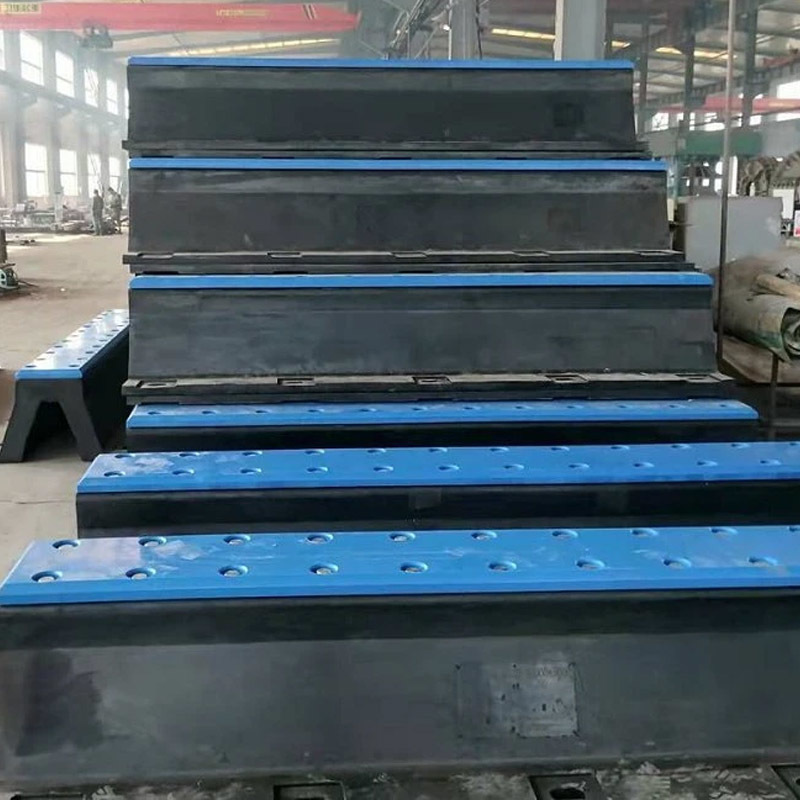
V Type Fender can be arranged according to calculated contact zones and structural loading requirements. Steel front panels can provide broader load distribution, while the rubber bodies supply the primary energy absorption mechanism.
Its modular configuration is also suitable for phased berth maintenance, allowing selected sections to be replaced while other portions remain in service where operational conditions permit.
Industrial Service Berths
Industrial facilities handling steel products, machinery, project cargo, construction materials, or other heavy goods require dependable separation between vessels and fixed infrastructure.
V Type Fender can protect concrete quay edges, steel structures, dolphins, and loading platforms from repeated vessel contact. The fender arrangement can be customized according to crane locations, conveyor systems, loading equipment, and other infrastructure positioned near the berth edge.
This makes the system suitable for industrial terminals where structural protection must be coordinated with cargo-handling operations.
Why Choose Hongruntong Marine
Manufacturing Experience Supported by Marine Product Knowledge
Hongruntong Marine has more than 30 years of experience in marine equipment and rubber product manufacturing. This provides a practical manufacturing foundation for products that must operate under mechanical loading, seawater exposure, abrasion, and repeated environmental stress.
The production process for V Type Fender requires coordination between rubber formulation, molding geometry, vulcanization parameters, dimensional finishing, and final inspection. Consistency across these stages contributes to stable product performance.
Experience across different marine product categories also provides familiarity with vessel operations, port infrastructure, shipyard requirements, and the practical challenges encountered during installation and maintenance.
Engineering Selection for Specific Berthing Conditions
A marine fender should be selected according to the actual energy and structural requirements of the berth. Hongruntong Marine can review vessel displacement, berthing velocity, contact angle, fender spacing, structural limitations, available installation space, and environmental conditions when developing a configuration.
For high-cycle facilities, operating frequency and expected loading cycles can also be considered. For exposed environments, rubber material requirements can be adjusted according to temperature, UV exposure, seawater, ozone, and humidity.
This project-based selection process provides a more technically appropriate basis for fender configuration than selecting components solely according to nominal size.
Complete Component Coordination
The performance of a fender depends on the interaction between rubber, steel components, mounting hardware, contact panels, and supporting structures.
Hongruntong Marine can coordinate the V Type Fender body with associated steel plates, front panels, UHMW-PE facing materials, brackets, chains, and fastening systems according to project requirements.
Coordinated component dimensions help ensure correct installation and reduce the possibility of interference between individual components.
For replacement projects, existing drawings and field measurements can be used to establish the required interface dimensions before production.
Quality Control and International Delivery
Quality assurance covers material properties, product dimensions, surface condition, mounting configuration, and associated components. Inspection requirements can be established according to the customer's technical specification or project documentation.
Before shipment, finished products can be checked against approved dimensions and production requirements. Rubber sections and steel components can be packed according to their physical characteristics and transportation conditions.
For international projects, technical communication can continue through specification confirmation, production, inspection, packing, and shipment coordination. This helps maintain consistency between the approved design and the supplied product.
FAQ
1. Is V Type Fender suitable for frequent vessel berthing cycles?
Yes. Its elastic rubber structure is designed for repeated compression within the specified working range. For high-cycle applications, fatigue resistance, rubber formulation, compression level, and operating frequency should be included in the engineering selection.
2. Can one berth use different V Type Fender sizes?
Yes. Different sections may be specified for different contact zones when vessel loading, structural capacity, or installation geometry varies along the berth. The complete arrangement should be checked to maintain suitable load distribution.
3. What inspections should be performed during operation?
Routine inspections should check rubber cracking, abrasion, permanent deformation, cuts, exposed reinforcement, loose fasteners, corrosion of steel components, and condition of contact panels or low-friction facing materials. Inspection frequency should reflect traffic intensity and environmental exposure.
4. Can V Type Fender be supplied for replacement of an existing system?
Yes. Existing drawings, measurements, photographs, or samples can be used to establish the required dimensions and mounting configuration. Verification of the existing structure is recommended before final production.
5. What information is required for technical quotation and selection?
Useful information includes vessel type and displacement, berthing velocity, approach angle, berth dimensions, existing fender arrangement, allowable reaction force, required energy absorption, mounting details, environmental conditions, and any applicable technical standards or certification requirements.


 Your message must be between 20-3,000 characters!