Marine V Fender High Energy Absorption Durable Rubber Construction Low Maintenance
Product Overview
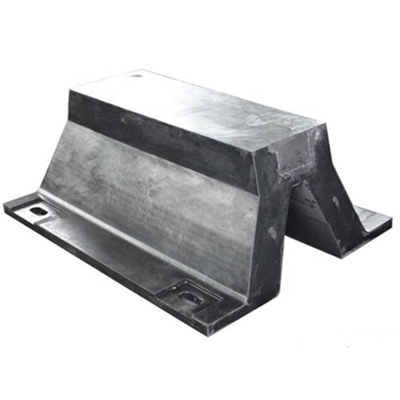
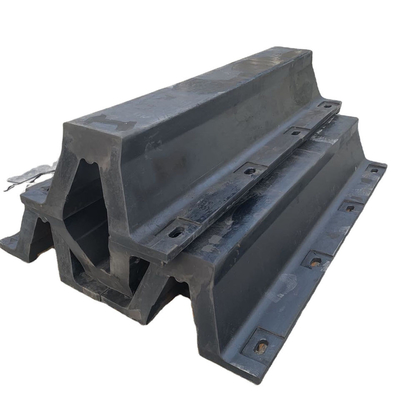
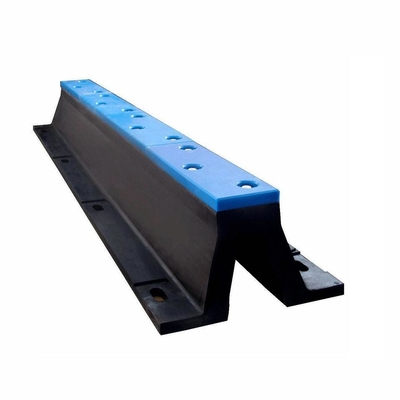
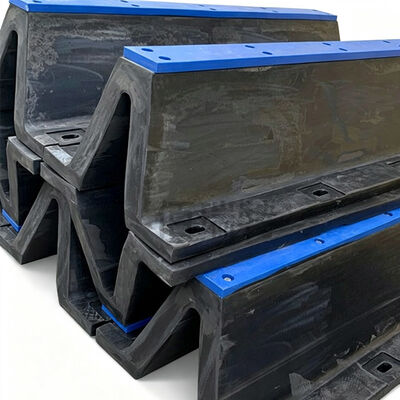
V Type Fender is an engineered rubber compression fender used to protect vessels and marine structures from impact loads generated during berthing, docking, maneuvering, and controlled vessel contact. Its V-shaped geometry allows the rubber body to deform progressively under compression, converting part of the vessel's kinetic energy into elastic deformation while controlling the reaction force transmitted to the supporting structure.
Case Study: V Type Fender Upgrade for a Mediterranean Shipyard Repair Berth
A shipyard on the Mediterranean coast operated a repair berth serving medium-sized container vessels, offshore support vessels, and general cargo ships. The berth was approximately 180 meters long and had originally been equipped with an aging rubber fender arrangement. Continuous docking operations, frequent vessel repositioning, and high summer temperatures had resulted in surface wear and localized permanent deformation of several fender sections.
A V Type Fender arrangement was selected based on the existing mounting geometry and the operational characteristics of the berth. The rubber profile was specified according to the required compression range, while steel contact panels with low-friction facing were incorporated in the primary vessel contact areas.
Technical Specifications
| Product Name |
V Type Fender |
| Material |
High Performance Natural Rubber |
| Standard |
HGT2866-2016, PIANC2002 |
| Shape |
V Type |
| Feature |
Easy Replacement Firm for Installation |
| Part |
Dock Bumper |
| Usage |
Dock Port Wharf Boat Ship |
| Surface |
Matte/Smooth |
| Packing |
Pallet or Wooden Case |
| Keywords |
Arch Rubber Fender/V Rubber Fender |
Dimensional Specifications
| Model |
A [mm] |
D [mm] |
E [mm] |
F [mm] |
H [mm] |
K [mm] |
M [mm] |
R x Q [mm] |
Lmax [mm] |
| HM-VTF150 |
50 |
240 |
326 |
98 |
150 |
16 - 20 |
108 |
20 × 40 |
3000 |
| HM-VTF200 |
50 |
320 |
422 |
130 |
200 |
18 - 25 |
142 |
25 × 50 |
3000 |
| HM-VTF250 |
62.5 |
400 |
500 |
163 |
250 |
20 - 30 |
164 |
28 × 56 |
3500 |
| HM-VTF300 |
75 |
480 |
595 |
195 |
300 |
25 - 32 |
194 |
28 × 56 |
3500 |
| HM-VTF400 |
100 |
640 |
808 |
260 |
400 |
25 - 32 |
266 |
35 × 70 |
3500 |
| HM-VTF500 |
125 |
800 |
981 |
325 |
500 |
25 - 32 |
318 |
42 × 84 |
3500 |
| HM-VTF600 |
150 |
960 |
1160 |
390 |
600 |
28 - 40 |
373 |
48 × 96 |
3000 |
| HM-VTF800 |
200 |
1300 |
1550 |
520 |
800 |
41 - 50 |
499 |
54 × 108 |
3000 |
| HM-VTF1000 |
250 |
1550 |
1850 |
650 |
1000 |
50 - 62 |
580 |
54 × 108 |
3000 |
Note: Other sizes can be customized according to the requirements.
Key Features
Progressive Compression Geometry
The V-shaped cross-section is designed to provide progressive deformation as compression increases. Instead of relying on a rigid contact surface, the rubber body changes shape under vessel loading and develops a controlled reaction force.
This deformation mechanism allows the fender to absorb energy progressively. At lower contact loads, the rubber provides initial compliance, while greater compression produces increased resistance. The resulting load-deflection relationship can be matched to the energy absorption requirements and allowable reaction force of the berth.
Reinforced Rubber Material System
The rubber compound represents a major part of the fender's mechanical performance. V Type Fender can be manufactured using reinforced rubber formulations designed for marine environments and repeated mechanical deformation.
The material must withstand compression while maintaining sufficient elastic recovery. It must also resist tearing and abrasion when exposed to vessel contact and occasional sliding movement. Appropriate hardness selection influences the stiffness and deformation characteristics of the complete fender.
Low-Friction Contact System Integration
V Type Fender can be integrated with steel contact panels and low-friction materials when the vessel is expected to slide along the berth. This configuration separates the energy absorption function from the sliding contact function.
The rubber body provides elastic deformation, while the steel panel distributes contact pressure. A UHMW-PE or equivalent facing material can then provide a low-friction surface between the vessel hull and the fender assembly.
Adaptable Mounting Configuration
V Type Fender can be manufactured for different structural mounting conditions. Length, profile dimensions, mounting hole positions, end configurations, steel plates, brackets, and fastening arrangements can be adapted according to project requirements.
This flexibility is particularly valuable for refurbishment projects. Existing berth structures frequently contain non-standard mounting dimensions resulting from previous modifications or historical construction practices.
Applications
Shipyards and Dry Dock Approaches
Shipyards require reliable protection around repair berths, outfitting quays, dry dock entrances, and vessel positioning areas. Vessels may approach the same structures repeatedly under controlled but varying speeds and angles.
V Type Fender provides a resilient contact interface that can absorb impact while maintaining manageable reaction forces. When combined with low-friction contact panels, it can also accommodate longitudinal vessel movement during docking and positioning.
Ferry and Ro-Ro Berthing Facilities
Ferry and Ro-Ro terminals experience frequent vessel arrivals and departures, resulting in high numbers of berthing cycles. The fender system must therefore tolerate repeated compression and environmental exposure while maintaining stable contact conditions.
Offshore Support and Industrial Marine Facilities
Offshore support bases and industrial marine terminals may accommodate supply vessels, construction vessels, workboats, and specialized service vessels. These vessels can generate variable contact conditions because of wind, current, wave action, and operational maneuvering.
Why Choose Hongruntong Marine
Integrated Rubber Manufacturing Experience
Hongruntong Marine has more than 30 years of manufacturing experience in marine rubber products and related ship equipment. This experience covers the practical requirements associated with rubber formulation, molding, vulcanization, dimensional control, and marine application conditions.
Project-Based Product Configuration
Marine fender requirements differ according to vessel type, berth structure, operating frequency, and environmental conditions. Hongruntong Marine can develop V Type Fender configurations according to specific project parameters rather than applying a single standard arrangement to every berth.
Controlled Material and Dimensional Inspection
The physical characteristics of rubber directly influence fender performance. Hardness, tensile strength, elongation, tear resistance, abrasion resistance, and other specified properties can be checked according to the agreed technical requirements.
International Supply and Technical Coordination
Marine fender projects often involve international customers, engineering contractors, shipyards, port authorities, and installation teams. Technical information must remain consistent from initial inquiry through production and delivery.
Frequently Asked Questions
1. What rubber properties should be considered when selecting a V Type Fender?
Important properties include rubber hardness, tensile strength, elongation, tear resistance, abrasion resistance, fatigue behavior, and resistance to environmental exposure. The appropriate specification depends on vessel loading, operating frequency, climate, and installation conditions.
2. Can V Type Fender accommodate repeated lateral vessel movement?
Yes. When the system is combined with a suitable steel contact panel and low-friction facing material, it can accommodate controlled sliding between the vessel and berth. The complete arrangement should be selected according to expected movement, contact pressure, and sliding frequency.
3. What vessels can use V Type Fender systems?
V Type Fender can be applied to a wide range of vessels including bulk carriers, container vessels, general cargo ships, ferries, Ro-Ro vessels, tugboats, workboats, offshore support vessels, and service craft. The required size and configuration depend on the vessel and berth conditions.
4. How should V Type Fender be stored before installation?
Rubber fenders should be stored in a clean, dry, and well-ventilated area away from direct sunlight, ozone-generating equipment, oils, solvents, and sharp objects. They should not be exposed to unnecessary deformation during long-term storage.
5. Can the fender length and mounting holes be customized?
Yes. V Type Fender sections can be manufactured according to specified length, cross-sectional dimensions, mounting hole positions, rubber properties, and associated steel components. Existing drawings or verified measurements should be provided to ensure installation compatibility.


 Your message must be between 20-3,000 characters!