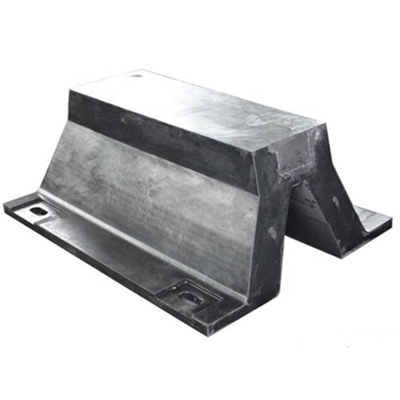
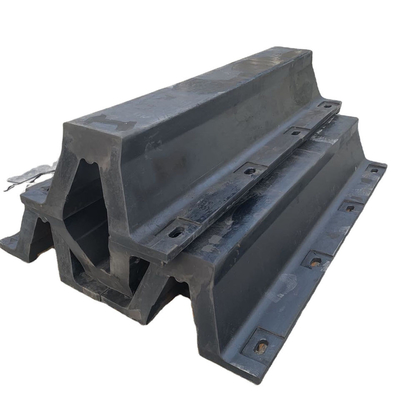
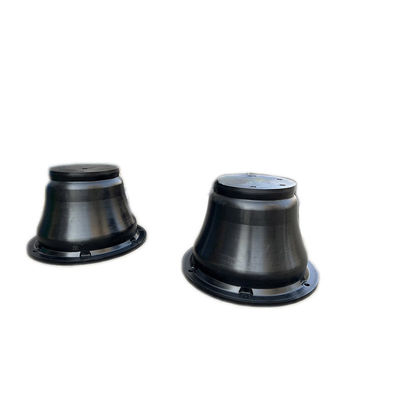
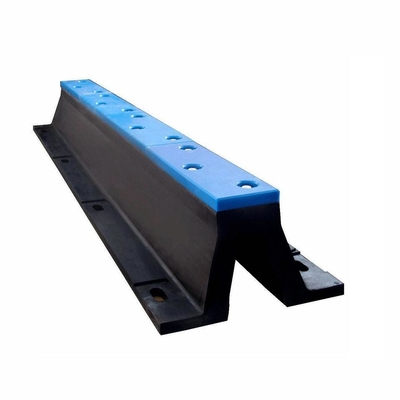
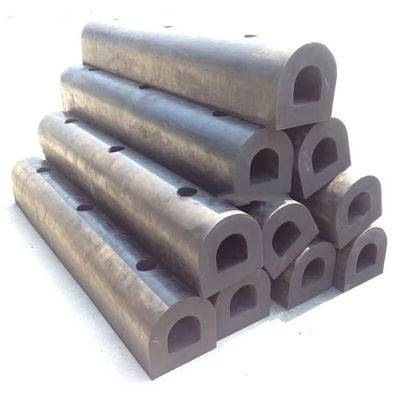
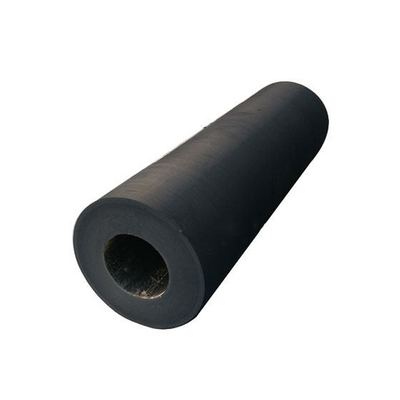
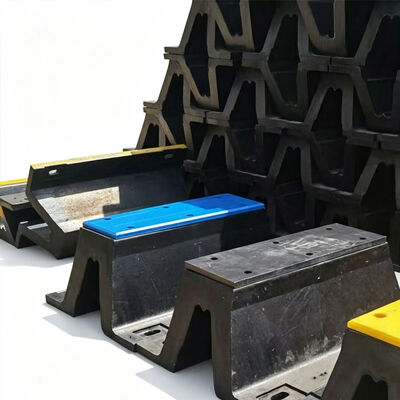
V Type Fender is a compression-type marine rubber fender designed to provide controlled protection between vessels and fixed marine structures during berthing, docking, maneuvering, and repeated contact operations. Its primary engineering function is to absorb a defined portion of vessel berthing energy through elastic deformation while controlling the reaction force transmitted to the supporting structure.
A bulk cargo terminal in Northern Europe required rehabilitation of its quay protection system serving bulk carriers and general cargo vessels between approximately 25,000 and 55,000 DWT. The existing fender arrangement showed surface abrasion, permanent deformation, and localized deterioration.
A V Type Fender system was selected after reviewing vessel operating conditions, estimated berthing energy, and structural limitations. The replacement fenders were manufactured according to the existing structural interface, while steel contact panels were incorporated to improve load distribution.
After commissioning, the berth achieved more consistent contact response during normal vessel berthing operations. The project demonstrated the practical repeatability of a V Type Fender rehabilitation strategy for existing heavy-duty quay infrastructure.
| Product Name | V Type Fender |
|---|---|
| Material | High Performance Natural Rubber |
| Standard | HGT2866-2016, PIANC2002 |
| Shape | V Type |
| Feature | Easy Replacement Firm for Installation |
| Part | Dock Bumper |
| Usage | Dock Port Wharf Boat Ship |
| Surface | Matte/Smooth |
| Packing | Pallet or Wooden Case |
| Keywords | Arch Rubber Fender/V Rubber Fender |
| Model | A [mm] | D [mm] | E [mm] | F [mm] | H [mm] | K [mm] | M [mm] | R x Q [mm] | Lmax [mm] |
|---|---|---|---|---|---|---|---|---|---|
| HM-VTF150 | 50 | 240 | 326 | 98 | 150 | 16 - 20 | 108 | 20 × 40 | 3000 |
| HM-VTF200 | 50 | 320 | 422 | 130 | 200 | 18 - 25 | 142 | 25 × 50 | 3000 |
| HM-VTF250 | 62.5 | 400 | 500 | 163 | 250 | 20 - 30 | 164 | 28 × 56 | 3500 |
| HM-VTF300 | 75 | 480 | 595 | 195 | 300 | 25 - 32 | 194 | 28 × 56 | 3500 |
| HM-VTF400 | 100 | 640 | 808 | 260 | 400 | 25 - 32 | 266 | 35 × 70 | 3500 |
| HM-VTF500 | 125 | 800 | 981 | 325 | 500 | 25 - 32 | 318 | 42 × 84 | 3500 |
| HM-VTF600 | 150 | 960 | 1160 | 390 | 600 | 28 - 40 | 373 | 48 × 96 | 3000 |
| HM-VTF800 | 200 | 1300 | 1550 | 520 | 800 | 41 - 50 | 499 | 54 × 108 | 3000 |
| HM-VTF1000 | 250 | 1550 | 1850 | 650 | 1000 | 50 - 62 | 580 | 54 × 108 | 3000 |
Note: Other sizes can be customized according to the requirements.
V Type Fender absorbs part of the vessel's berthing energy through controlled rubber deformation and reduces the direct reaction load transferred to the supporting marine structure. The final performance depends on the fender profile, rubber properties, compression, spacing, and installation conditions.
Selection should consider vessel displacement, berthing velocity, approach angle, contact position, allowable reaction force, structural capacity, fender spacing, required energy absorption, and available installation space. Engineering calculations should be performed for projects with defined load and energy requirements.
Yes. Steel front panels can distribute contact pressure over a larger area of the vessel hull, while UHMW-PE or equivalent low-friction facing materials can be used where longitudinal sliding occurs. The complete configuration should be selected according to vessel movement and structural design.
Regular inspection should cover rubber cracking, cuts, abrasion, permanent deformation, exposed reinforcement, loose fasteners, corrosion of steel components, and abnormal contact marks. Inspection intervals should be determined according to vessel traffic, environmental conditions, and operating frequency.
Yes. Product dimensions, length, mounting holes, rubber specification, steel panels, brackets, and other components can be customized according to verified drawings or site measurements. Existing fender samples and photographs can also be used as technical references for replacement projects.