logo

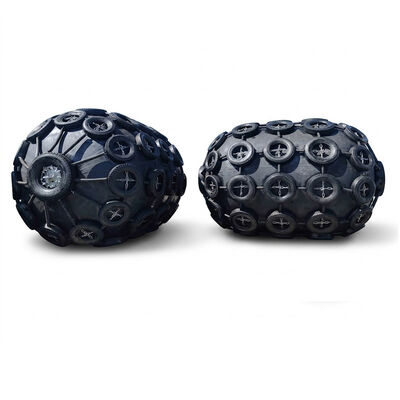
ISO17357-1: 2014 Standard Pneumatic Rubber Fender with 50kPa Pressure and Customized Size for Marine Safety

1
MOQ
USD19-USD163
Price
ISO17357-1: 2014 Standard Pneumatic Rubber Fender with 50kPa Pressure and Customized Size for Marine Safety
Features Gallery Product Description Request A Quote
Features
Specifications
Standard: ISO17357-1: 2014, PIANC2002
Product Name: Pneumatic Rubber Fender
Material: NR
Pressure: 50kPa, 80kPa
Usage: Protect Boat
Color: Black Or Customized
Size: Customized
Feature: Flexible Operation
Service Life: 10~15 Years
Highlight:

ISO17357-1 pneumatic rubber fender

,

marine safety rubber fender

,

customized size pneumatic fender

Basic Infomation
Place of Origin: China
Brand Name: Hongruntong Marine
Certification: ISO, BV, ABS, DNV, LR, SGS, CCS, RMRS
Model Number: HM-PRF16
Payment & Shipping Terms
Packaging Details: Pallet, Wooden Box
Delivery Time: 10-20 Days
Payment Terms: L/C,D/A,D/P,T/T,Western Union,MoneyGram
Supply Ability: 1580 Pcs/Month
Product Description
Superior Protection Marine Fender Heavy Duty Performance Reliable Dock Safety
Product Overview

Pneumatic Rubber Fender is an engineered marine impact absorption system designed for dynamic vessel berthing operations, constructed through a reinforced elastomer structure integrated with high tensile synthetic cord layers and a sealed pneumatic chamber filled with compressed air, enabling controlled deformation under external loading conditions.

The operating principle is based on pneumatic compression mechanics, where external impact energy from vessel contact is distributed through internal air volume compression and structural membrane deformation. This mechanism reduces instantaneous load concentration by transforming kinetic impact forces into gradual pressure displacement within the enclosed chamber, ensuring reduced reaction force transmitted to both ship hull and docking infrastructure.

From a structural engineering perspective, the fender system is designed to maintain mechanical stability under repeated cyclic compression, with reinforcement layers engineered to resist tensile stress propagation and localized deformation fatigue. The system ensures consistent performance under variable docking velocities, vessel displacement differences, and hydrodynamic influence factors.

The product is engineered for industrial marine environments requiring controlled energy dissipation, structural protection integrity, and operational reliability under continuous high frequency berthing cycles.

Case Study

A large scale multipurpose port facility in Southeast Asia handling Panamax and Post Panamax vessels experienced operational challenges related to inconsistent docking impact distribution, resulting in localized structural stress concentration on quay wall segments and increased maintenance intervention frequency.

The engineering objective was to implement a marine fender system capable of stabilizing berth impact loads while improving docking alignment efficiency under high humidity, high temperature, and high traffic operational conditions.

Hongruntong Marine supplied Pneumatic Rubber Fender systems designed with enhanced reinforcement cord density and optimized air chamber pressure stability. The installation was conducted across multiple berthing zones to standardize impact absorption behavior and ensure consistent vessel interface response during docking operations.

Following implementation, the port recorded improved impact load distribution uniformity, reduced structural stress accumulation on berth infrastructure, and enhanced vessel docking precision. Operational downtime related to berth maintenance was reduced, and overall terminal handling efficiency improved under continuous heavy traffic conditions.

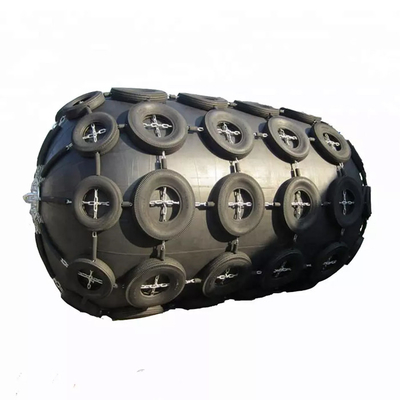
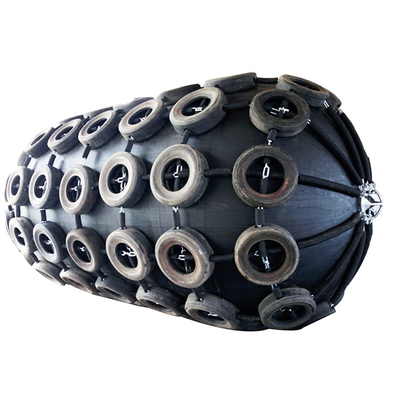
Marine fender installation at port facility Close-up view of pneumatic rubber fender
Specifications
Place of Origin China
Brand Name Pneumatic Rubber Fender
Material Natural Rubber
Color Black
Application In Ports with Extreme Tidal Variations Ship-to-Ship Lightering Operations Oil Gas (Typically FSRU) Temporary Berthing
Feature Heat Resistance
Sample Usually Free
Production Method Moulding
Temperature -40℃~300℃
Packing Pallets
Lead time 7-14 days
Performance Data
Diameter x Length [mm] 50kPa Performance Data 80kPa Performance Data
Hull Pressure at GEA / kN / m² Reaction Force / kN Energy Absorption / kNm Hull Pressure at GEA / kN / m² Reaction Force / kN Energy Absorption / kNm
1000 x 1500 122 182 32 160 239 45
1000 x 2000 132 257 45 174 338 63
1200 x 2000 126 297 63 166 390 88
1350 x 2500 130 427 102 170 561 142
1500 x 3000 153 579 153 174 761 214
1700 x 3000 128 639 191 168 840 267
2000 x 3500 128 875 308 168 1150 430
2500 x 4000 137 1381 663 180 1815 925
2500 x 5500 148 2019 943 195 2653 1317
3300 x 4500 130 1884 1175 171 2476 1640
3300 x 6500 146 3015 1814 191 3961 2532
3300 x 10600 158 5257 3067 208 6907 4281
4500 x 9000 146 5747 4752 192 7551 6633
* Other sizes can be produced following client's requirements.
Key Features
Controlled Pneumatic Compression Structure

The system utilizes a sealed air chamber designed to respond to external impact forces through controlled volumetric compression. This allows gradual energy dissipation during vessel contact, reducing peak force transfer and stabilizing docking impact dynamics. The engineering value lies in its ability to convert sudden kinetic loading into regulated internal pressure variation.

High Tensile Reinforced Structural Matrix

The internal body is reinforced with multiple layers of synthetic cord fabric embedded within elastomeric rubber compounds. This composite structure distributes stress across multiple load paths, preventing localized structural failure and enhancing fatigue resistance under repetitive compression cycles in marine environments.

Multi Condition Load Adaptation Capability

The system maintains stable performance under varying operational conditions including different vessel tonnages, approach angles, tidal fluctuations, and wave induced motion. This adaptability ensures consistent energy absorption efficiency across diverse marine engineering scenarios.

Long Term Environmental Stability Design

The external elastomer layer is formulated for resistance against saltwater corrosion, ultraviolet degradation, and hydrothermal aging. This ensures sustained mechanical performance and material integrity in long term offshore exposure conditions.

Applications
  • High Traffic Commercial Port Operations: Used in large scale container and bulk cargo terminals where continuous vessel berthing requires stable energy absorption systems capable of maintaining consistent structural protection under repetitive impact cycles.
  • Industrial Ship Repair and Maintenance Facilities: Applied in dry dock and repair yard environments where vessels undergo frequent docking and undocking operations requiring controlled contact force management to prevent hull surface damage.
  • Offshore Logistics and Transfer Systems: Implemented in offshore cargo transfer operations where vessels maintain proximity positioning during material exchange, requiring flexible and adaptive energy absorption systems for safe operational interface control.
Why Choose Hongruntong Marine
  • Integrated Marine Manufacturing System: Hongruntong Marine operates a vertically integrated production system covering raw material processing, reinforcement fabrication, pneumatic chamber assembly, and structural testing to ensure consistent engineering quality across all production stages.
  • Application Driven Engineering Design: The company develops fender systems based on real operational data including vessel impact behavior, berth structural response, and environmental load conditions, ensuring engineering accuracy in product design and performance optimization.
  • Project Based Custom Engineering Capability: We provide technical customization based on detailed project parameters such as vessel class, docking energy requirements, and port infrastructure geometry to ensure system compatibility and operational efficiency.
  • International Project Supply Experience: Our products have been applied in multiple global marine engineering projects, supported by standardized quality control systems and technical verification procedures aligned with international industrial requirements.
Frequently Asked Questions
1. How is impact energy controlled in Pneumatic Rubber Fender systems?

Impact energy is controlled through internal air compression which converts kinetic vessel contact force into regulated pressure displacement, reducing peak load transmission to structural components.

2. Is the system suitable for continuous high frequency berthing operations?

Yes, the reinforced structural design is engineered for repeated cyclic compression, making it suitable for high frequency port operations with stable performance retention.

3. What maintenance procedures are required during operation?

Routine inspection of pressure stability and external surface condition is recommended to ensure optimal performance and long term operational reliability.

4. Can the system handle different vessel sizes within the same installation?

Yes, the adaptive pneumatic structure allows accommodation of varying vessel displacements while maintaining stable energy absorption characteristics.

5. Is the product suitable for tropical marine environments?

The material system is designed for high humidity and high temperature conditions with resistance to environmental degradation and long term operational stress.

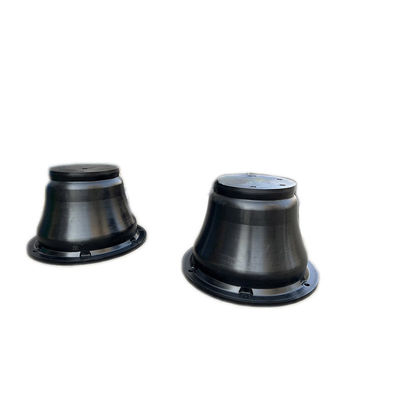
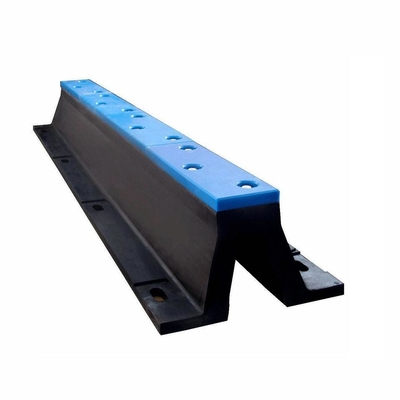
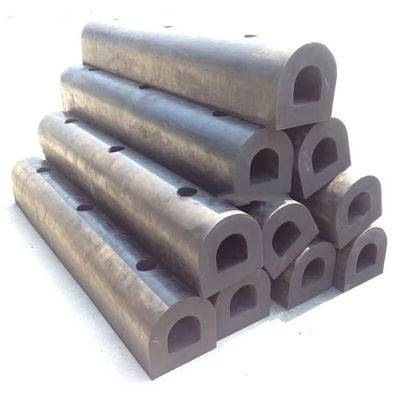
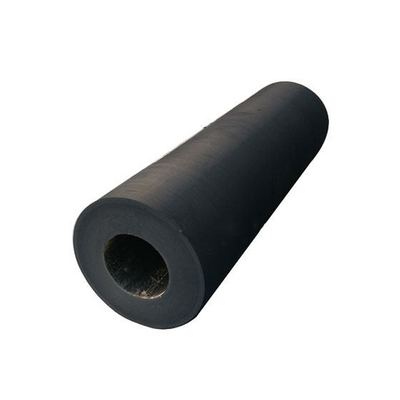
Pneumatic rubber fender in operational marine environment Marine fender system installation detail Industrial marine fender application Hongruntong Marine fender product showcase
Recommended Products
Get in touch with us
Contact Person : Mr. William Lau
Tel : +8618910539783
Fax : 86-10-8946-1910
Characters Remaining(20/3000)