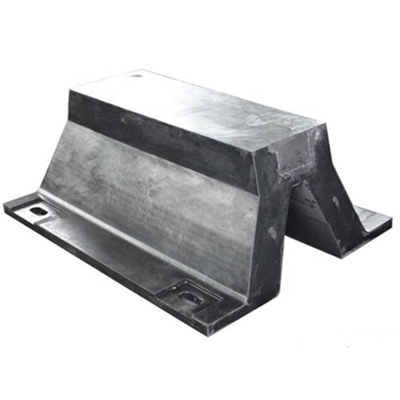
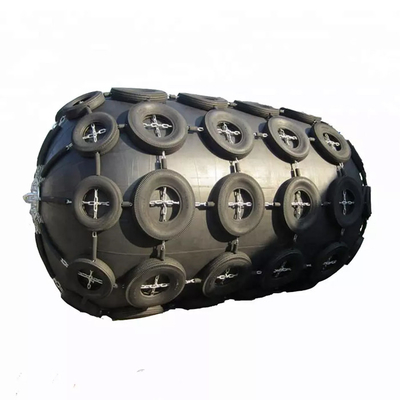
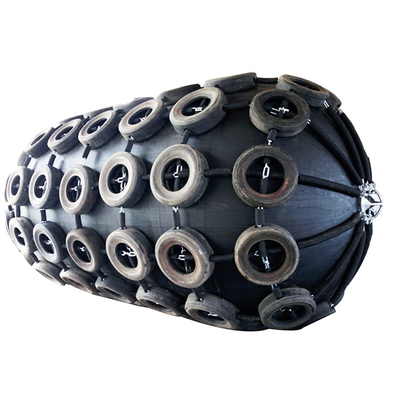
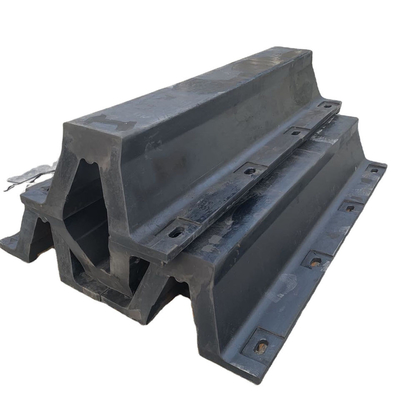
Cell Rubber Fender High Energy Absorption Low Reaction Force Long Service Life
Description
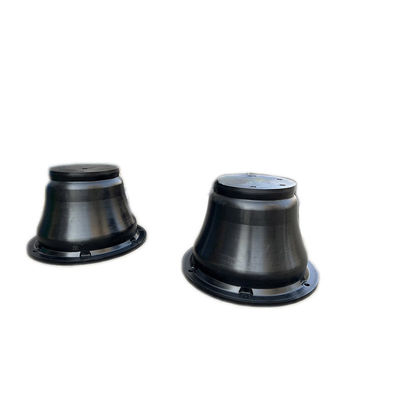
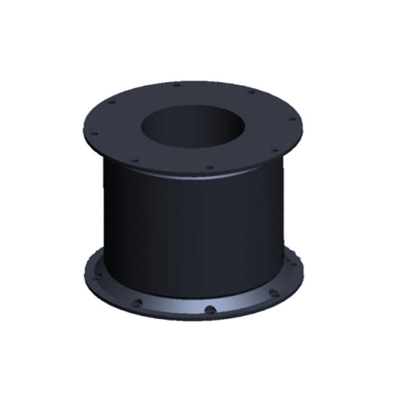
Cell Rubber Fenders represent one of the most reliable and mechanically stable energy-absorbing solutions in today’s marine engineering field. Their circular, hollow-cell structure enables the fender body to compress uniformly under berthing forces while maintaining a smooth, predictable reaction curve. Compared with cone-type or cylindrical-type fenders, the cell structure distributes stress more evenly around the circumference, preventing excessive localized shear that may lead to premature cracking. The geometry ensures excellent load transfer to both the frontal panel and the quay structure. As a result, Cell Rubber Fenders are particularly suitable for ports where consistency, repeatability, and long-term deformation stability are essential.
The material composition is engineered from marine-grade natural and synthetic rubber blends, supplemented with anti-aging agents, ozone-resistant additives, and structural reinforcing fillers. This formulation enables the fender to maintain its elasticity after thousands of compression cycles in harsh marine conditions. Even under long-term exposure to salt spray, humidity, UV radiation, and temperature fluctuations, the rubber maintains a stable hardness and low permanent compression set. Furthermore, the fender’s integrated steel flanges, produced using high-strength steel plates and protected by corrosion-resistant coatings, allow secure bolting to the hull-facing frontal panel and the quay wall.
Case Study
A large bulk cargo terminal in the Middle East faced severe challenges with its previous fender system. The port handled Capesize and post-Panamax vessels arriving with significant variations in approach velocity due to seasonal sandstorms and crosswinds. The existing cone fenders experienced uneven compression and localized stress peaks, resulting in rubber fatigue, cracking, and unpredictable reaction forces. The terminal needed a solution that offered more stable energy absorption and superior durability in an abrasive, sand-laden marine environment.
Hongruntong Marine conducted a full berthing-energy simulation using vessel parameters, tidal variations, and approach-velocity envelopes. Engineers recommended a series of large Cell Rubber Fenders paired with reinforced frontal panels equipped with ultra-thick UHMW-PE face pads. The cell design, with its symmetric compression behavior, demonstrated significantly improved stability under both normal and off-center berthing conditions. After installation, real-time hull-pressure mapping revealed an 18% reduction in peak reaction forces and a more uniform distribution of contact pressure across the vessel hull.
During the first two years of operation, the fenders showed no signs of rubber delamination, flange deformation, or compression instability—even with frequent sand abrasion. Maintenance inspections reported a 30% reduction in required on-site checks, and the port recorded zero unplanned downtime related to the fender system. The project ultimately confirmed that well-engineered Cell Rubber Fenders can substantially enhance berthing safety and reduce maintenance costs in demanding bulk-cargo environments.
Specifications
| Product Name |
Cell Rubber Fender |
| Brand Name |
Hongruntong Marine |
| Material |
High Quality Natural Rubber |
| Reaction Force |
29-4626KN |
| Energy Absorption |
4-6102KNM |
| Hardness |
≤82 Shore A |
| Standard |
PIANC2002, HGT2866-2016 |
| Processing Service |
Moulding, Cutting |
| Lifespan |
15-20 Years |
| Service |
OEM or ODM |
| Features |
Strong, Robust, Well Proven Design |
| Application |
Port, Dock, Quay, etc |
| Model |
H |
h |
D1 |
D2 |
n-t |
| Cell |
[mm] |
[mm] |
[mm] |
[mm] |
[mm] |
| CF-C400H |
400 |
25 |
650 |
550 |
30 |
| CF-C500H |
500 |
25 |
650 |
550 |
32 |
| CF-C630H |
630 |
30 |
840 |
700 |
39 |
| CF-C800H |
800 |
30 |
1050 |
900 |
40 |
| CF-C1000H |
1000 |
35 |
1300 |
1100 |
47 |
| CF-C1150H |
1150 |
40 |
1500 |
1300 |
50 |
| CF-C1250H |
1250 |
45 |
1650 |
1450 |
53 |
| CF-C1450H |
1450 |
47 |
1850 |
1650 |
61 |
| CF-C1600H |
1600 |
50 |
2000 |
1800 |
61 |
| CF-C1700H |
1700 |
55 |
2100 |
1900 |
66 |
| CF-C2000H |
2000 |
55 |
2200 |
2000 |
74 |
| CF-C2250H |
2250 |
60 |
2550 |
2300 |
74 |
| CF-C2500H |
2500 |
70 |
2950 |
2700 |
90 |
| CF-C3000H |
3000 |
75 |
3350 |
3150 |
90 |
Features
Stable and Predictable Reaction Curve
The circular cell body ensures uniform radial compression across the full deflection range. This leads to exceptionally stable mechanical behavior, meaning the fender maintains predictable reaction forces even under variable berthing velocities, angled contacts, or repeated compression sequences. For ports prioritizing operational safety, this predictable performance minimizes the risk of vessel hull damage, bulkhead overstress, and unexpected structural loading. Unlike some traditional fenders, the cell design effectively reduces stress concentrations by dispersing the load symmetrically, preventing premature rubber fatigue.
High Energy Absorption with Reduced Hull Pressure
Cell Rubber Fenders achieve an optimal ratio between energy absorption and reaction force. This ensures that vessels—including large displacement ships—experience minimal hull pressure during berthing. The wide-body geometry of the cell increases the contact area when paired with a frontal panel, resulting in lower localized stress. This feature is especially beneficial for vessels with sensitive hull coatings, LNG carriers with painted surfaces, and bulk carriers that require controlled berthing envelopes.
Reinforced Steel Flange for Structural Reliability
The integrated steel flanges are manufactured with precise flatness tolerances and high-strength marine-grade steel. Through optimized vulcanization, the rubber and steel form a strong, cohesive bond that prevents separation under heavy loads. Finite-element analysis is applied during the design stage to verify the stress distribution across the flange ring, ensuring long-term reliability in both static and dynamic berthing scenarios. Anti-corrosion coatings further enhance durability in environments with high salinity and humidity.
Superior Aging, Ozone, and UV Resistance
The rubber compound is formulated using advanced antioxidant and anti-ozone additives. This allows the fender to maintain its mechanical properties even after years of exposure to strong sunlight, high temperatures, or ozone-rich air. The low permanent compression set ensures that the fender retains its shape and energy-absorbing performance throughout its service life, reducing the need for replacement or frequent maintenance.
Applications
High impact berths with fluctuating approach velocities
Ports that handle vessels arriving under variable weather conditions require fenders with stable reaction curves. Cell fenders maintain consistency even under irregular velocities.
Terminals affected by tidal variations
Facilities with large tidal differences benefit from the predictable force output, which ensures safer berthing over a wide range of draft conditions.
Harsh or abrasive marine environments
Locations with sand, suspended sediment, or strong UV exposure rely on the fender’s aging resistance and abrasion-optimized rubber composition.
Why Choose Hongruntong Marine
Hongruntong Marine stands out as a global supplier of engineered fender solutions due to its integrated design, manufacturing, testing, and engineering capabilities. The company develops its own rubber compounds, continuously refining carbon-black ratios, curing agents, antioxidants, and reinforcing fillers to achieve exceptional mechanical performance. This R&D capability allows Hongruntong to tailor rubber formulas to meet the specific needs of different climates and environmental conditions.
Every Cell Rubber Fender undergoes finite-element modeling to verify deformation behavior, shear strain distribution, and flange load paths before mold production. This engineering-driven approach ensures that each model performs reliably in both standard and extreme berthing conditions. Hongruntong’s manufacturing facilities utilize automated vulcanization systems that precisely control temperature gradients, curing time, and pressure levels. This results in consistent rubber hardness, structural integrity, and dimensional accuracy across all production batches.
Quality control follows stringent PIANC and ISO 17357 guidelines. Third-party inspection agencies—including CCS, ABS, and BV—conduct witness tests for tensile strength, hardness, elongation, compression performance, and bonding quality. Each fender is traceable through a serialized manufacturing record that documents raw-material mixing, rubber sheet preparation, mold curing, and final inspection steps.
Hongruntong also provides comprehensive engineering support. Services include berthing-energy calculations, quay structural analysis, fender-panel design, steel-structure fabrication, and on-site installation guidance. For complex upgrades or new-build terminals, the company performs layout optimization, mooring simulations, and long-term deformation forecasting. Global after-sales support ensures that operators receive timely inspection, maintenance recommendations, and performance audits.
FAQ
Q1: Will Cell Rubber Fenders permanently deform after heavy impacts?
A: No. The rubber compound is engineered with a low compression set, allowing full elastic recovery within the rated compression range.
Q2: Can the fender flange bolts be reused after installation?
A: Reuse is not recommended. Bolts should be replaced during major overhauls to ensure accurate preload and long-term structural stability.
Q3: Are customized fender heights or diameters available?
A: Yes. Hongruntong offers customized molds and dimensions to match specific berthing-energy requirements.
Q4: How is product performance verified before shipment?
A: Each fender undergoes compression testing according to PIANC guidelines, along with hardness, tensile, elongation, and bonding tests.
Q5: What is the recommended inspection interval?
A: Typically every 6–12 months, depending on berth conditions, vessel frequency, and environmental exposure.


 Your message must be between 20-3,000 characters!