Reinforced Rubber Construction and Structural Integrity
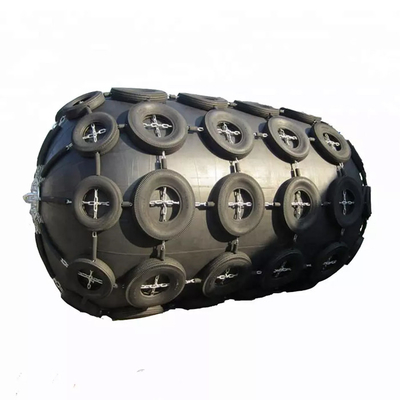
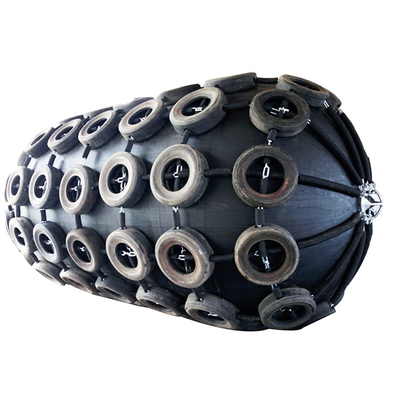
The reinforced rubber body is a primary load-bearing component of a hydro-pneumatic Submarine Fender. It must withstand internal pressure, repeated compression, marine environmental exposure, and the mechanical stresses associated with handling and installation. The material system must retain sufficient flexibility to absorb contact energy while maintaining structural integrity throughout the specified operating range.
Multiple layers of synthetic tire-cord reinforcement can improve tensile strength, dimensional stability, and resistance to excessive expansion. The reinforcement architecture, rubber thickness, bonding process, and end construction must be designed as an integrated system. Inadequate bonding or inconsistent reinforcement placement may affect pressure retention, deformation behavior, and long-term reliability. Manufacturing controls should therefore address material preparation, reinforcement positioning, rubber curing, dimensional tolerances, and inspection of critical interfaces.
The external rubber compound should be selected according to the expected marine environment. Relevant considerations include seawater exposure, ultraviolet radiation, temperature variation, surface abrasion, and contact with the berth structure. Where the submarine has sensitive external coatings, the compatibility and condition of the fender's contact surface should also be considered. Rubber formulation and surface condition can influence how contact loads are distributed, although actual hull pressure depends on the complete fender design and installation geometry.
End fittings and attachment interfaces require particular attention because they transfer loads between the fender body and the supporting arrangement. Their geometry, reinforcement, and connection method should be consistent with the approved design. For demanding installations, the procurement specification can identify material documentation, dimensional inspection, pressure testing, and other acceptance criteria.
Regular inspections should focus on cuts, cracking, abnormal bulging, exposed reinforcement, deterioration around fittings, and other signs of structural damage. Any repair must follow an approved procedure that is suitable for the material and pressure requirements. Reinforced rubber construction provides the basis for reliable marine service, while actual durability depends on operating conditions, loading history, material quality, and maintenance.
Hydro-Pneumatic Design and Adjustable Working Draft
The hydro-pneumatic design combines compressed air, partial water filling, and a ballast arrangement to establish the required floating position and underwater contact height. This configuration is particularly relevant when a vessel's main contact region is below the waterline and conventional surface-mounted fenders cannot provide the required protection.
The water-filling ratio affects the internal air volume, buoyancy distribution, and deformation behavior. Internal pressure also influences the fender's load response, while the ballast weight helps control its vertical orientation and working draft. These variables must be evaluated together because changing one parameter can influence both positioning and performance.
The design process begins with verified vessel dimensions and an assessment of the underwater hull profile. The intended contact region must be identified, including any areas where contact is prohibited or requires special protection. The operating water depth and tidal range are then considered to establish the necessary working-draft range. Based on these inputs, the fender dimensions, water-filling ratio, pressure settings, ballast configuration, and attachment arrangement can be specified.
Installation stability is equally important. A hydro-pneumatic fender normally requires a suitable supporting frame or backing arrangement and a restraint system to limit unwanted movement. The frame must transfer loads appropriately, while the restraints must keep the fender aligned without creating interference with the vessel or restricting its intended response. The complete arrangement should be reviewed under the expected operating conditions.
Pressure-control components should be accessible for inspection and servicing. Operating procedures should define approved filling and inflation methods, pressure limits, working-draft checks, and any adjustments permitted during service. Operators should not change pressure or water content simply to improve alignment without considering the resulting performance changes.
This adjustable configuration can help accommodate different specified operating conditions, but it does not eliminate the need for engineering verification. Correct performance depends on an approved configuration, accurate installation, and continued compliance with the manufacturer's operating instructions.
Controlled Energy Absorption and Low Hull Contact Pressure
submarine fender must provide sufficient energy absorption without generating excessive reaction force or unacceptable local contact pressure. These parameters are related but distinct. Energy absorption describes the work performed as the fender deforms under load, while reaction force describes the load transmitted through the fender at a particular deformation. Contact pressure additionally depends on the effective contact area and the geometry of the hull and fender.
The required performance should be established from the berthing scenario. Relevant inputs include effective berthing mass, approach velocity, berthing angle, eccentricity, vessel movement, and the available deformation space. The design must also account for the stiffness and strength of the supporting berth structure.
For submarine applications, the contact arrangement must be evaluated against the vessel's allowable loading conditions. Acoustic tiles, specialized coatings, and external appendages may require restrictions on contact location or pressure. A suitable fender configuration should maintain the required clearance and distribute the load over the intended hull region. Fender spacing, diameter, length, and installation height all contribute to the resulting contact behavior.
Where hydro-pneumatic construction is used, internal pressure and the air-water ratio influence the fender's response. The engineering assessment should therefore use performance data corresponding to the actual proposed configuration rather than relying on a generic rating. The specified reaction force and energy absorption must be evaluated together at the relevant deformation and operating conditions.
The final design should document the assumptions used, the performance requirements, and the applicable acceptance criteria. Where the project requires factory testing or independent verification, the testing scope should be agreed before production. This approach helps the purchaser determine whether the fender is suitable for the intended berth and supports a more consistent basis for technical acceptance.
Marine Hardware, Installation Stability and Maintenance Accessibility
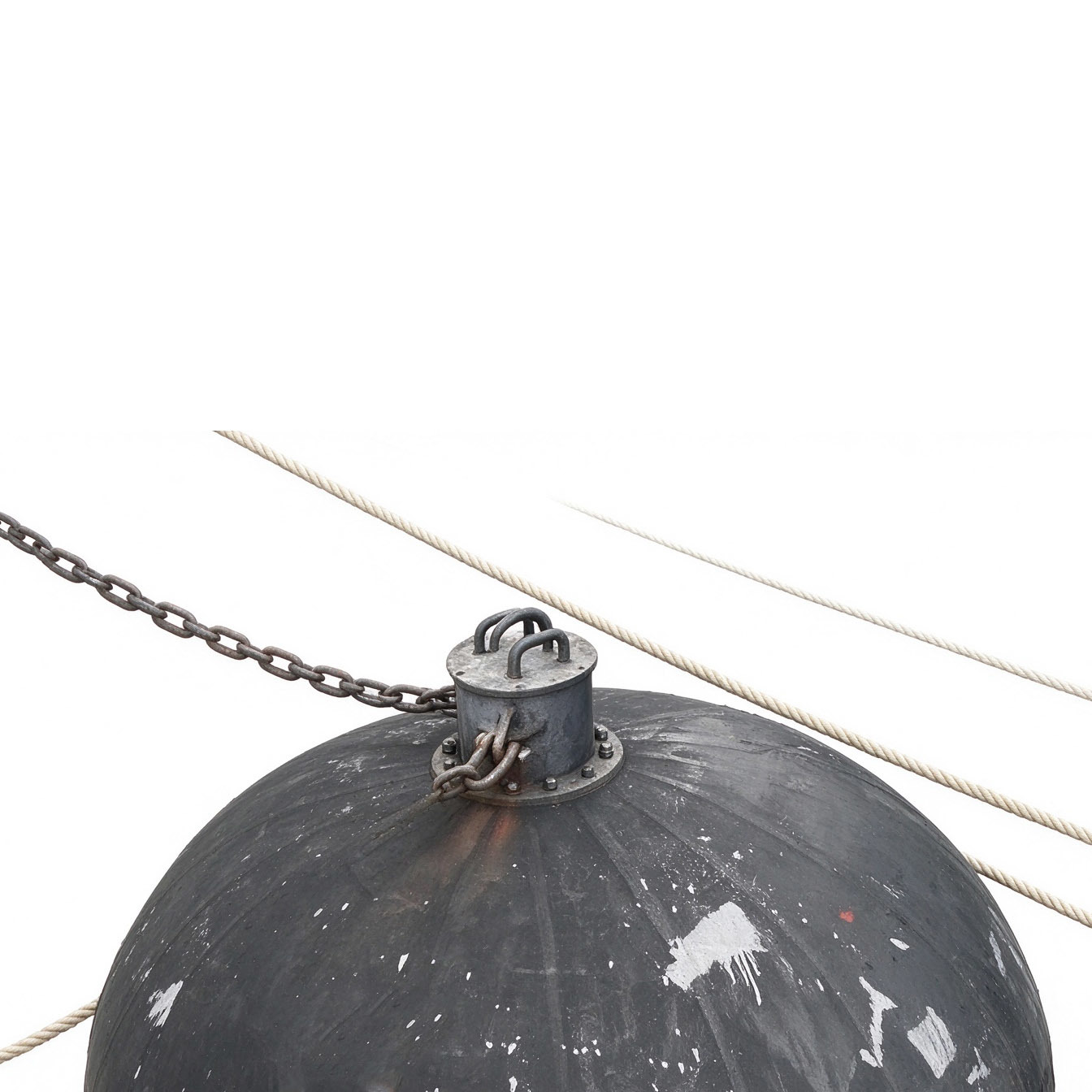
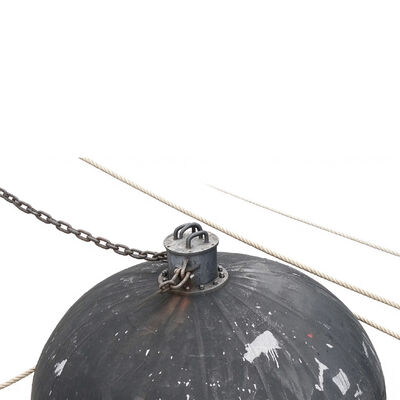
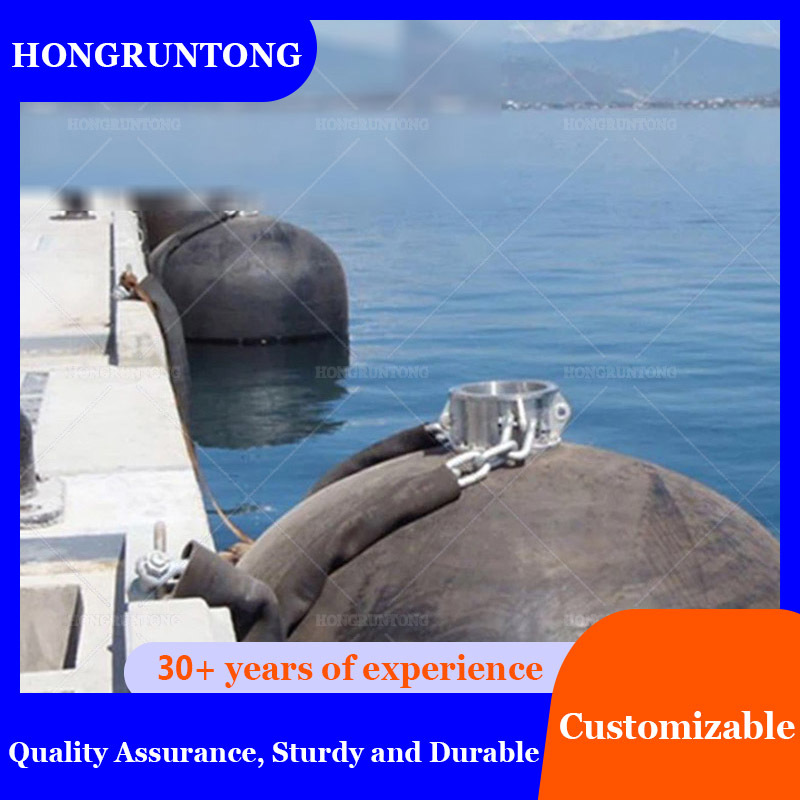
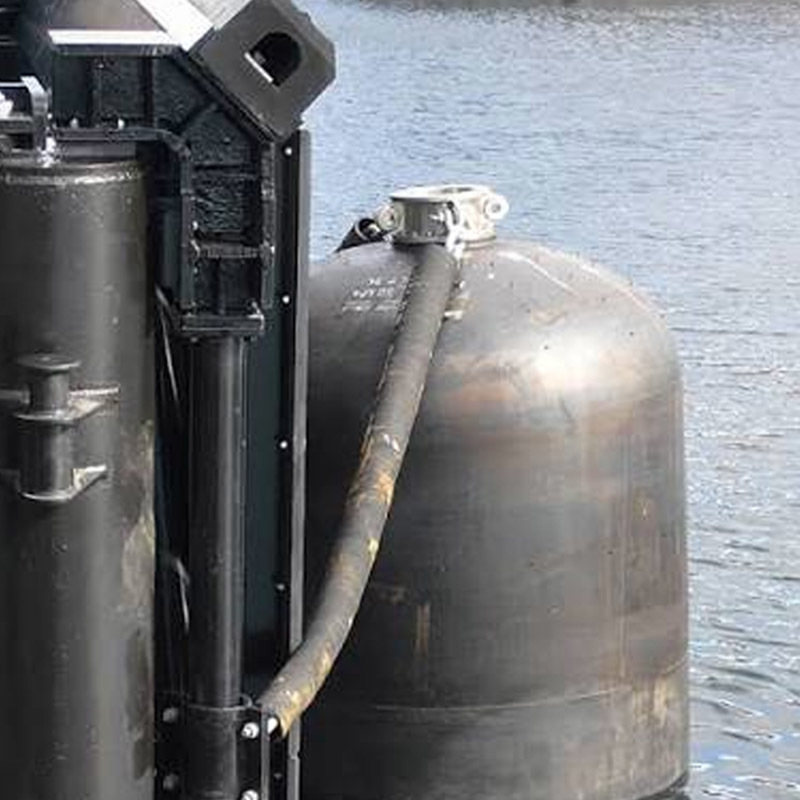
The complete fender assembly includes more than the reinforced rubber body. Depending on the configuration, it may incorporate ballast weights, chains, shackles, valves, end fittings, restraint lines, and a supporting frame. These components influence the fender's working position, load transfer, and maintainability.
Hardware selection should reflect the specified working loads, corrosion exposure, connection geometry, and expected service conditions. Marine-grade materials and suitable protective coatings can be considered where appropriate. The choice of hardware should account for strength, corrosion resistance, compatibility between dissimilar metals, and the possibility of wear at moving interfaces.
The installation plan should define handling points, lifting procedures, attachment locations, fender spacing, restraint geometry, and the sequence for positioning the assembly. Before the fender is placed into service, the supporting structure and connections should be checked against the approved drawings. For hydro-pneumatic units, commissioning should also verify the water-filling ratio, internal pressure, ballast position, and resulting working draft.
Maintenance accessibility should be considered during the design stage. Pressure valves, connection points, and inspection areas should be positioned so that personnel can conduct checks without unnecessary dismantling. The operating documentation should identify inspection items, acceptable operating limits, and procedures for responding to abnormal conditions.
A practical inspection program may include checks for rubber deterioration, leakage, pressure variation, damaged hardware, abnormal fender movement, and changes in contact alignment. The frequency of these checks should reflect operating intensity, environmental exposure, manufacturer recommendations, and the criticality of the installation. Properly specified hardware and accessible service components can simplify maintenance planning and help reduce avoidable operational interruptions.
Applications
Naval Submarine Bases and Dedicated Berthing Facilities
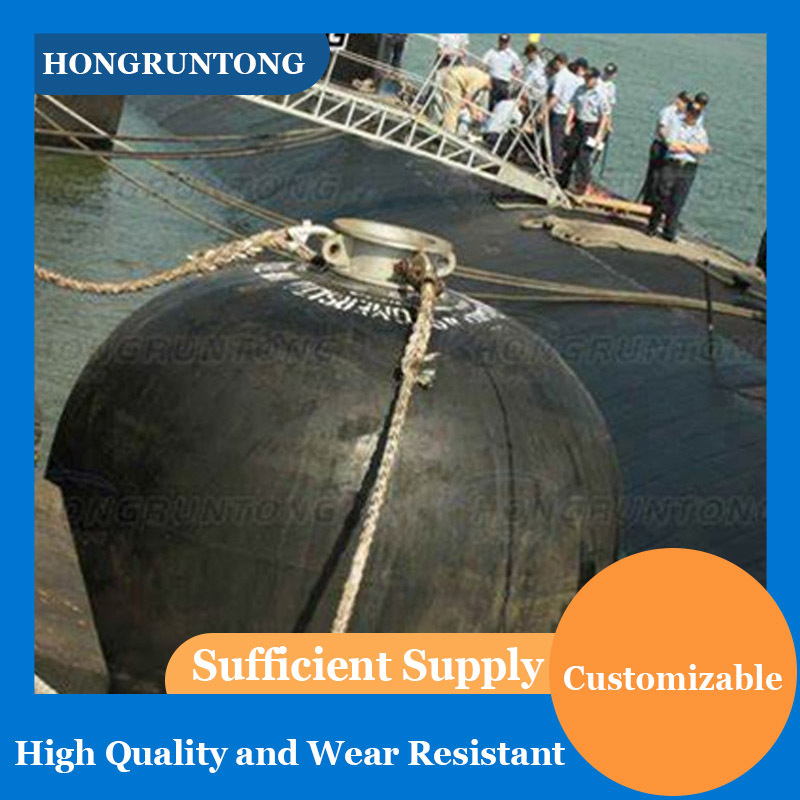
Naval submarine bases require fendering arrangements that protect underwater hull surfaces during approach, positioning, and stationary berthing. Hydro-pneumatic Submarine Fenders can be configured to maintain the intended contact region below the waterline while accommodating specified tidal variation. Their dimensions, water-filling ratio, pressure settings, and ballast arrangement must be matched to the vessel class and berth geometry.
The installation design should consider maximum beam, underwater hull profile, external appendages, allowable contact loading, and the structural capacity of the quay. Fender spacing and restraint geometry are important because the assembly must remain correctly positioned throughout the defined operating range. Engineering verification should address expected vessel movement and confirm that the arrangement does not create unwanted contact at sensitive hull locations.
Submarine Shipyards, Repair Berths and Maintenance Facilities
Shipyards and repair facilities may use Submarine Fenders during routine inspections, external maintenance, equipment servicing, and other scheduled alongside operations. The system must provide appropriate hull protection while allowing personnel to access the intended maintenance areas. Fender dimensions and contact positions should therefore be coordinated with the vessel configuration and the facility's maintenance procedures.
For replacement or refurbishment projects, existing installation dimensions can provide useful reference information, but the suitability of the original design should be reassessed. Changes in vessel configuration, operating water levels, berth structure, or maintenance practices may require a revised arrangement. Clear installation drawings and inspection procedures help personnel position the fenders consistently and identify conditions that require adjustment or repair.
Selected Offshore and Specialized Marine Support Operations
Hydro-pneumatic fenders may also be evaluated for selected applications involving semi-submersible structures, specialized low-freeboard vessels, and marine assets requiring controlled contact below the waterline. Suitability depends on the hull geometry, expected relative movement, environmental loads, support arrangement, and allowable forces at the contact interface.
Offshore projects require particular attention to current, wind, wave-induced movement, installation depth, attachment loads, and inspection access. The fender system must be assessed against the actual operating envelope rather than assumed to be suitable for every offshore condition. For installations involving fixed platforms or complex support structures, the connection arrangement and structural load path should be reviewed as part of the overall engineering design.
Why Choose Hongruntong Marine
Manufacturing Experience and Marine Product Knowledge
Hongruntong Marine has more than 30 years of manufacturing experience, providing a foundation for understanding the material, construction, and quality-control requirements associated with industrial and marine products. Submarine Fender projects require particular attention to reinforced rubber construction, pressure-retaining integrity, connection reliability, and the relationship between product dimensions and installation conditions.
Manufacturing experience is valuable when translating project requirements into a practical product specification. The supplier must understand that the nominal diameter and length do not independently determine suitability. Pressure requirements, water-filling ratio, ballast configuration, attachment geometry, and contact conditions also influence performance. A technically appropriate product must be considered as part of the complete fendering arrangement.
Hongruntong Marine can discuss these parameters with the purchaser during the technical clarification stage. The project specification can identify required dimensions, material construction, connection hardware, performance criteria, inspection methods, and documentation. Clarifying these details before production helps establish a consistent understanding of the product to be supplied.
For specialized marine equipment, manufacturing capability should also be evaluated against the complexity of the approved design. Reinforcement placement, rubber bonding, molding or forming processes, end construction, and final inspection all affect the finished product. The agreed quality plan should define which production records and inspections are necessary to demonstrate conformity with the contract.
This manufacturing-oriented approach supports procurement decisions based on defined technical requirements rather than general product descriptions alone.
Customized Dimensions and Application-Specific Engineering
Submarine berths vary in vessel geometry, operating water depth, tidal range, berth layout, and required contact conditions. A standard fender size may not provide the appropriate working draft, reaction force, or contact area for every installation. Hongruntong Marine can evaluate customized dimensions and configuration requirements according to the information supplied by the purchaser and the available product design options.
The technical review should begin with the submarine's principal dimensions, maximum beam, underwater hull profile, and locations of vulnerable external components. The berth layout, support structure, expected berthing conditions, and operating water levels should also be documented. These inputs help determine whether the proposed fender dimensions and arrangement are compatible with the intended application.
For hydro-pneumatic systems, the review may include internal pressure, water-filling ratio, ballast weight, working draft, and restraint arrangement. The relationship between these variables must be considered carefully because a change in working position may also affect contact behavior. Where a project requires defined energy absorption, reaction force, or contact pressure limits, these values should be included in the approved technical specification.
Customization can also address connection hardware, valve arrangements, protective coatings, lifting provisions, and project-specific documentation. However, any change affecting the pressure boundary, reinforcement, or performance characteristics must be reviewed against the design requirements before manufacture.
For replacement projects, Hongruntong Marine can use existing drawings, measurements, and equipment records as reference information. The customer should confirm whether the replacement is expected to reproduce the existing configuration or improve upon its performance. This distinction helps prevent the automatic repetition of an unsuitable legacy design.
Material Selection and Quality Assurance
Material selection is a central factor in Submarine Fender performance. The rubber compound must accommodate repeated deformation and marine exposure, while the reinforcement system must withstand the specified internal pressure and structural loads. Connection components must provide the required strength and corrosion resistance for the intended service environment.
Hongruntong Marine can coordinate material and inspection requirements with the purchaser before order confirmation. Depending on the project specification, these may include material documentation, dimensional checks, visual inspection, pressure testing, and other agreed factory acceptance procedures. The exact inspection scope should be recorded in the purchase documentation.
Quality assurance should address the complete product rather than only the external appearance. Relevant inspection points may include reinforcement integrity, rubber bonding, end fittings, valve installation, sealing surfaces, and dimensional conformity. For pressure-retaining products, the test method and acceptance criteria must correspond to the approved design and specified operating limits.
The documentation package should identify the supplied configuration and the inspection activities actually completed. If a purchaser requires independent inspection, specific certification, or witness testing, these requirements should be agreed before production. Certification should not be assumed merely because a product is described as a submarine fender or a hydro-pneumatic fender.
This process provides the customer with a defined basis for reviewing the supplied equipment and helps align manufacturing output with the intended technical requirements.
Technical Support and Long-Term Maintenance Coordination
Submarine Fender performance depends on correct installation, commissioning, and ongoing inspection. Hongruntong Marine can coordinate technical information concerning handling, connection arrangements, pressure requirements, working draft, and routine maintenance within the agreed supply scope. Clear documentation helps installation teams understand the intended configuration and gives maintenance personnel a consistent reference for future inspections.
Before delivery, the purchaser and supplier should confirm the installation responsibilities, required accessories, operating instructions, and acceptance procedures. For hydro-pneumatic products, the documentation should address approved pressure limits, water-filling requirements, ballast configuration, and the checks necessary to establish the intended working position.
After installation, inspection should cover the rubber body, fittings, restraints, valves, and any supporting structure included in the system. Abnormal deformation, pressure changes, leakage, damaged hardware, or movement away from the intended position should be investigated before continued operation. Maintenance and repair must follow the manufacturer's instructions and the applicable site safety procedures.
Long-term maintenance planning should distinguish routine inspection from pressure-system servicing, structural repair, and replacement of damaged components. Records of inspection findings and corrective actions can help the operator identify recurring problems and make better-informed maintenance decisions.
For procurement teams managing several berths or replacement cycles, a consistent documentation and spare-parts process can also simplify equipment identification and maintenance planning. Actual service life and maintenance cost depend on the specified design, operating environment, loading history, and maintenance practices; these should be evaluated using product documentation and service records rather than unsupported guarantees.
FAQ
1. What is the difference between a Submarine Fender and a conventional pneumatic fender?
A Submarine Fender, typically designed as a hydro-pneumatic system, is configured to provide contact protection below the waterline. It is partially filled with water and pressurized with air, with ballast used to maintain the intended vertical position. A conventional pneumatic fender may be designed primarily for surface-level contact and may not provide the required working draft or contact geometry for a submarine. The appropriate type depends on the vessel's hull profile, allowable contact loading, and berth conditions.
2. How are the diameter and length of a Submarine Fender determined?
The dimensions are selected according to the vessel's displacement and geometry, expected berthing energy, allowable reaction force, required contact area, operating water depth, and installation arrangement. For hydro-pneumatic designs, the water-filling ratio, internal pressure, and ballast configuration also affect the working position and performance. Final dimensions should be confirmed through engineering assessment using the actual project requirements.
3. Can the fender be reused at different berths or for different vessel classes?
Reuse may be possible if the fender remains in acceptable condition and its dimensions, performance, pressure limits, working draft, and attachment arrangement are suitable for the new application. The new berth and vessel geometry must be reviewed before relocation. A change in ballast, water-filling ratio, or pressure should only be made within an approved configuration. Inspection and any required testing should be completed before the fender returns to service.
4. What inspections should be carried out before installation?
The purchaser should verify the product dimensions, rubber condition, reinforcement integrity where inspectable, end fittings, valves, connection hardware, and supplied documentation. For hydro-pneumatic products, the specified pressure limits, water-filling requirements, ballast arrangement, and relevant factory test records should be checked. The supporting structure and attachment points must also be suitable for the intended loads. Any discrepancy should be resolved before commissioning.
5. Which standards and certificates should be specified when purchasing Submarine Fenders?
The applicable requirements depend on the fender design and project specification. ISO 17357-1:2014 may be relevant to qualifying floating pneumatic rubber fenders, but compliance should be confirmed for the exact product construction and procurement requirements. The purchaser should specify any required material records, dimensional inspection, pressure-test reports, performance verification, certificate of conformity, or third-party inspection. Required documents and acceptance criteria should be agreed before production rather than assumed to be standard inclusions.


 Your message must be between 20-3,000 characters!