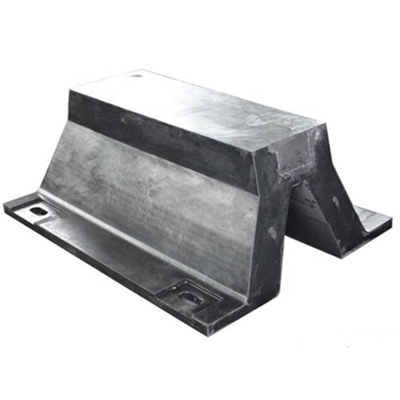
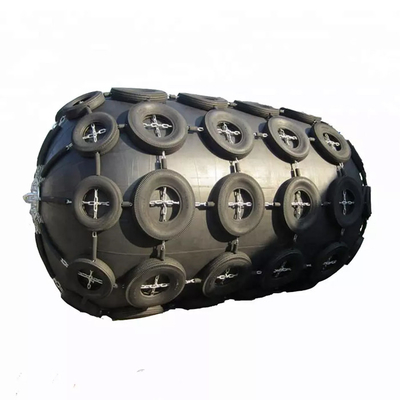
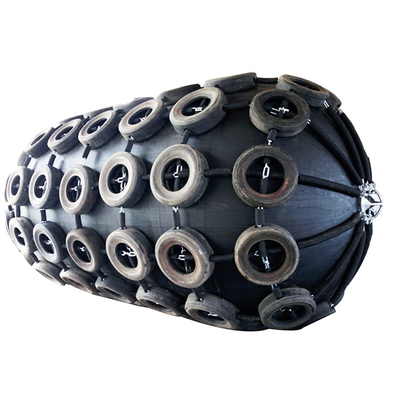
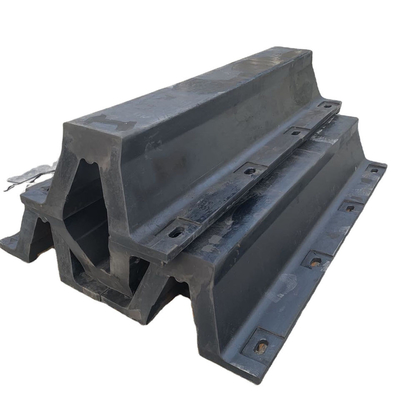
Hydro Pneumatic Submarine Fenders — High Energy Absorption for Submarine Berthing
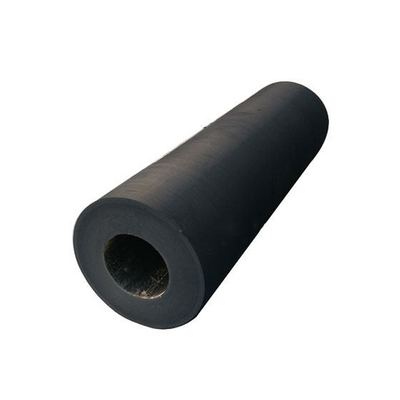
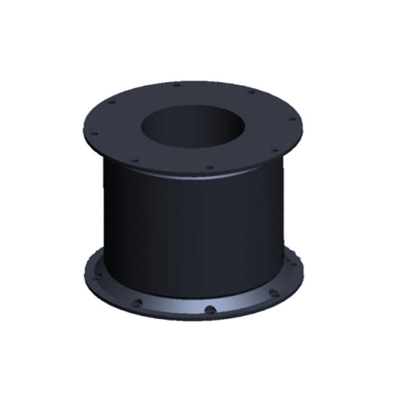
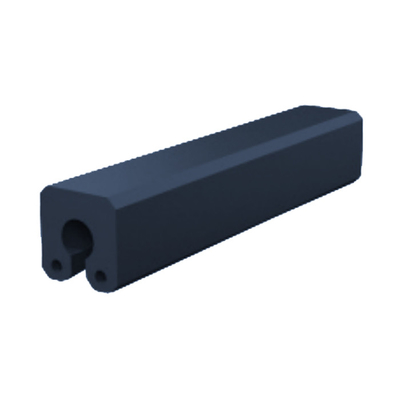
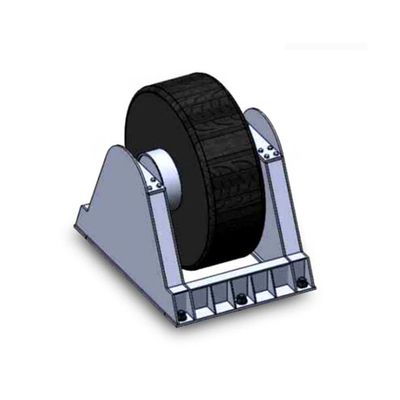
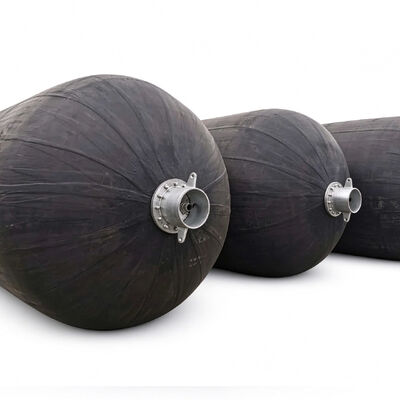
Hongruntong Marine hydro pneumatic submarine fenders are heavy-duty marine energy absorption systems engineered to protect submarines, ferries, oil rigs, and other large vessels during berthing and mooring operations. Constructed from high-grade SBR and NR rubber compounds, these fenders deliver reliable performance under the most demanding marine conditions, combining exceptional energy absorption capacity with low reaction force to safeguard both vessel hulls and docking structures.
Available in sizes up to 3.3 × 10.6 meters, each fender unit is precision-manufactured to meet stringent quality standards. The fender body features a tensile strength of ≥18 MPa, elongation ≥400%, and tear strength ≥400 N/cm, ensuring structural integrity through repeated compression cycles. The vulcanized rubber compound exhibits outstanding resistance to fuel, oil, lubricating oil, cutting oil, and dilute hydrochloric acid, making it suitable for the most chemically aggressive marine environments.
The hydro pneumatic design utilizes an internal air-water ratio to achieve optimal energy absorption characteristics. With guaranteed energy absorption values ranging from 131 kJ to 2,819 kJ depending on model and initial internal pressure, these fenders effectively dissipate berthing impact energy while maintaining hull pressure within safe limits. The ship radius ranges from 3,000 mm to 6,000 mm, accommodating a wide variety of vessel sizes and berthing configurations.
Specifications
| Product Name |
Submarine Fenders |
| Material |
SBR, NR |
| Size Available |
3.3 × 10.6 M |
| Tensile Strength |
≥ 18 MPa |
| Density |
90 ± 5 |
| Colour |
Black |
| Application |
Submarine, ferry, oil rigs, and other marine berthing applications |
| Hardness |
40–70 Shore A |
| Elongation |
≥ 400% |
| Tear Strength |
≥ 400 N/cm |
| Breaking Strength |
> 310 |
| Chemical Resistance |
Fuel A: No deterioration
Oil 3: No deterioration
Lubricating oil: No deterioration
Cutting oil: No deterioration
Dilute HCL: No deterioration |
Performance Data — Energy Absorption & Reaction Force
| Diameter × Length (mm × mm) |
Initial Internal Pressure (kPa) |
Ship Radius (mm) |
Water Ratio (%) |
Guaranteed Energy Absorption (kJ) |
Reaction Force at GEA (kN) |
Hull Pressure at GEA (kPa) |
Deflection at GEA (%) |
| 1500 × 6100 |
50 |
3000 |
60% |
131 |
562 |
140 |
51% |
| 1500 × 6100 |
80 |
3000 |
60% |
186 |
754 |
188 |
51% |
| 1700 × 7200 |
50 |
4000 |
65% |
167 |
682 |
137 |
47% |
| 1700 × 7200 |
80 |
4000 |
65% |
239 |
918 |
184 |
47% |
| 2000 × 6000 |
50 |
4000 |
70% |
135 |
544 |
131 |
41% |
| 2000 × 6000 |
80 |
4000 |
70% |
194 |
736 |
177 |
41% |
| 2500 × 5500 |
50 |
4500 |
65% |
225 |
769 |
135 |
41% |
| 2500 × 5500 |
80 |
4500 |
65% |
322 |
1035 |
182 |
41% |
| 2500 × 7700 |
50 |
4500 |
70% |
326 |
1016 |
136 |
41% |
| 2500 × 7700 |
80 |
4500 |
70% |
470 |
1368 |
183 |
41% |
| 3300 × 6500 |
50 |
4500 |
75% |
307 |
887 |
127 |
35% |
| 3300 × 6500 |
80 |
4500 |
75% |
442 |
1203 |
173 |
35% |
| 3300 × 10600 |
50 |
5000 |
65% |
1003 |
2137 |
142 |
47% |
| 3300 × 10600 |
80 |
5000 |
65% |
1429 |
2863 |
190 |
47% |
| 4500 × 9000 |
50 |
5000 |
60% |
1439 |
2401 |
138 |
46% |
| 4500 × 9000 |
80 |
5000 |
60% |
2059 |
3228 |
185 |
46% |
| 4500 × 12000 |
50 |
6000 |
65% |
1977 |
3198 |
141 |
46% |
| 4500 × 12000 |
80 |
6000 |
65% |
2819 |
4277 |
189 |
46% |
Key Characteristics
High-Pressure Multi-Layer Steel Wire Spiral Reinforcement Structure
The reinforcement framework of the submarine fender adopts a multi-layer high-strength steel wire spiral winding structure, precision engineered to resist internal hydraulic pressure, torsional force, and alternating bending loads generated during berthing operations. Each steel wire layer is arranged at an optimized winding angle to balance pressure-bearing capacity and flexibility, avoiding excessive rigidity that restricts movement while preventing over-flexibility that accelerates fatigue crack initiation. Under impulse pressure and continuous compression, the spiral reinforcement shares load uniformly across the fender wall, preventing concentrated stress damage. This structural design maintains dimensional stability under rated working pressure, limits fender ballooning and elongation, and preserves structural integrity through thousands of pressure cycles. The steel wire material undergoes anti-corrosion pretreatment before embedding into the rubber matrix to slow internal oxidation under long-term marine service.
Abrasion and Chemical Resistant Inner Rubber Liner
The seamless inner liner is compounded with specially modified rubber polymer to deliver high resistance against abrasive solid particles, alkaline additives, oil contaminants, and corrosive brine in the marine environment. Unlike conventional general rubber which wears rapidly under high-velocity impact, this liner material reduces particle cutting and surface erosion, extending service life under continuous compression cycles. The liner maintains stable physical properties within a wide temperature range and prevents medium permeation toward reinforcement layers, avoiding steel wire corrosion caused by water penetration. Continuous extrusion forming eliminates seam defects that are vulnerable to stress cracking and fluid penetration. The material formula is validated through laboratory erosion testing and compatibility testing with common marine chemicals, ensuring no swelling, softening, or degradation during long-term contact with complex media.
Marine-Grade Weather Resistant Outer Rubber Cover
The outer rubber cover is formulated for long-term exposure to offshore deck and splash zone environments, with engineered resistance to seawater splashing, ozone aging, ultraviolet radiation, mechanical scraping, and minor impact loads. The outer rubber matrix maintains its tensile properties and crack resistance under alternating hot and humid tropical marine climates, preventing surface hardening, chapping, and delamination. This outer layer protects internal steel wire reinforcement from external environmental corrosion and physical damage during vessel movement, fender handling, and deck storage. The compound does not degrade rapidly under intermittent salt spray exposure, reducing surface inspection frequency for field maintenance teams. All raw rubber batches are tested for aging retention rate before production to guarantee consistent outer cover performance across batch deliveries.
Vulcanized Bonded Forged Steel End Coupling Assembly
Each submarine fender unit is equipped with forged high-strength steel end couplings, connected through vulcanized bonding or precision crimping processes to form an integrated fender assembly. The coupling body is machined with standard thread or flange interfaces compatible with international marine mooring connection specifications. Vulcanized bonding creates a continuous transition between the rubber fender body and metal coupling, reducing stress discontinuity at the connection section, which is the primary failure location for ordinary fender products. The metal coupling can be treated with corrosion-resistant coating to mitigate saltwater corrosion on offshore platforms. All finished assemblies undergo hydrostatic pressure holding tests and torsion inspections before delivery to verify connection reliability. The modular coupling design allows on-site disassembly and inspection, simplifying component assessment during periodic dock maintenance.
Applications
Offshore Jack-Up and Fixed Platform Berthing Operations
Hydro pneumatic submarine fenders act as the primary energy absorption interface between vessels and offshore jack-up rigs, fixed production platforms, and submarine docking structures. In these installations, the fender accommodates vessel approach, tidal variation, and angular deflection while absorbing high-impact berthing energy. It withstands salt spray, deck mechanical impact, and continuous 24-hour operation for supply vessel mooring, submarine berthing, and offshore personnel transfer operations, supporting safe vessel approach and structural protection. This product meets relevant marine safety management and asset inspection standards.
Floating Drilling Unit and Floating Production Workover System
For floating drilling vessels and floating workover units, hydro pneumatic submarine fenders are deployed to handle dynamic displacement induced by wave motion and vessel heave, maintaining safe berthing interface under variable marine conditions. The flexible structure absorbs relative movement between the vessel and the docking structure, preventing rigid connection damage under marine dynamic loads. It is applicable for deepwater and shallow water floating well intervention, well repair, and sidetrack drilling projects, with performance matched to variable vessel motion parameters.
Onshore Land Rig and Well Workover Service
Onshore marine terminals, ferry berths, and submarine docking facilities require high-energy absorption fendering for vessel protection. The fender assembly absorbs impact energy while tolerating tidal variation, field rock scraping, and wide ambient temperature fluctuation. It is widely used for submarine berthing, ferry docking, oil rig supply operations, and marine maintenance activities in coastal, river, and lake environments, providing reliable protection under harsh working conditions.
Case Study: Southeast Asia Offshore Jack-Up Rig Submarine Fender Upgrade Project
An offshore energy contractor operating jack-up drilling platforms in Southeast Asia encountered frequent premature failure of existing submarine fenders. Original fenders suffered inner liner abrasion and coupling loosening under high solid-content marine conditions, with leakage incidents occurring during deep well drilling. Each failure required rig shutdown, lifting, and fender replacement, leading to non-productive time and additional offshore lifting service expense. The platform operated with maximum working pressure of 35 MPa, continuous marine exposure carrying quartz sand and alkaline chemical additives, and the fender assembly endured repeated compression and bending during 24-hour nonstop operations in a tropical high-humidity splash zone.
Hongruntong Marine supplied customized hydro pneumatic submarine fenders with enhanced abrasion-resistant inner liner and high-fatigue steel wire reinforcement. Factory hydrostatic pressure tests, torsion tests, and impulse pressure tests were completed before shipment, together with coupling torque verification documentation. After installation on the jack-up rig, the fender assemblies sustained continuous marine exposure under design pressure and abrasive conditions. No leakage, wire layer damage, or coupling disconnection was recorded over 14 months of continuous operation. The unplanned downtime related to fender failure was eliminated, cutting offshore maintenance labor and replacement component expenditure substantially. The operator verified stable structural performance under tropical marine atmospheric corrosion and periodic storm surge environments, and extended the same fender specification to three additional jack-up rigs within the regional drilling fleet.
Why Choose Hongruntong Marine
Professional Marine Fender Engineering and Design Capability
Hongruntong Marine maintains an independent rubber fender R&D team focused on high-energy absorption solutions for the marine industry. Our engineers conduct structural simulation for pressure impulse, compression, and bending fatigue before formal production. Each fender specification is designed in accordance with relevant marine industrial standards, and calculation documents for energy absorption, reinforcement layout, and connection strength can be supplied for client engineering review. We carry rich project experience cooperating with offshore contractors and energy operators for both offshore and onshore marine berthing systems, familiar with technical specification and third-party witness test requirements of global marine tender projects.
Customized Specification Matching Site Operating Parameters
We provide fully customized submarine fender solutions according to client operating parameters including working pressure, required size, assembly length, medium composition, and environmental conditions. Adjustments to steel wire reinforcement layers, inner liner rubber formula, and metal coupling material or surface treatment can be implemented for special working conditions such as extra abrasive marine environments, low-temperature operation, or high-torsion frequency. Custom marking, test report packages, and project-specific material certification can be prepared for offshore project audits. Our factory owns a complete fender extrusion, wire winding, and vulcanization production line to control the entire manufacturing workflow internally.
Full Process Raw Material Inspection and Multi-Stage Pressure Testing
All raw materials including rubber compound and steel wire reinforcement receive lab physical performance testing before entering the production process. Each production phase from rubber extrusion, steel wire winding, vulcanization, to coupling assembly is recorded and inspected. Every finished fender assembly must pass mandatory hydrostatic pressure holding tests and visual inspection. Random sampling impulse pressure tests and torsion fatigue tests are executed periodically to validate long-term structural performance. Defective units with leakage, bonding defects, or dimensional deviation are rejected directly to guarantee batch consistency and reduce on-site operational risk for marine assets.
Complete Technical Documentation and Global Project After-Sales Support
Hongruntong Marine provides a full set of technical documentation including datasheets, material certificates, factory test reports, and installation guidance with each shipment. Our technical team supports pre-order parameter confirmation and engineering consultation for fender system layout. We can offer remote technical guidance for fender installation, torque setting, and periodic inspection procedures. Under normal operating conditions, the product warranty covers manufacturing defects for 24 months. After the warranty period expires, we continue to supply technical consultancy and spare coupling components for asset maintenance. Our team can assist clients to establish a periodic inspection checklist for fender assemblies to schedule preventive replacement and avoid unexpected dock downtime.
Frequently Asked Questions
1. Which standard governs Hongruntong submarine fenders?
Our submarine fenders are manufactured and inspected following relevant marine fender specifications. Additional third-party witness test certificates can be arranged upon client request, and raw material reports, factory hydrostatic test records, and dimension inspection documents are available for review.
2. Can the fender assembly withstand continuous compression load during vessel berthing?
Yes. The multi-layer spiral steel wire reinforcement and optimized coupling bonding structure are engineered to sustain repeated compression loads generated by vessel berthing. Our factory conducts compression performance tests to verify structural integrity under rated operating conditions. Service life will reduce under excessive compression beyond design limits.
3. What is the estimated service life of a submarine fender under normal operating conditions?
Service life depends on working pressure, solid content of the marine environment, compression frequency, and medium chemical properties. Under rated operating parameters and regular inspection, typical service life ranges from 6 months to 2 years. High abrasive conditions or frequent pressure impulses will shorten the usable cycle.
4. Is it possible to customize coupling type and surface anti-corrosion treatment?
Customization is available. We can supply threaded, flanged, or hammer union couplings, and implement different anti-corrosion coatings for metal couplings according to site environment such as offshore salt spray or land corrosive soil.
5. What inspection items should be carried out during routine maintenance?
Operators should inspect the outer cover surface for cracks, blisters, and abrasion damage, check coupling connections for loosening or corrosion, and monitor fluid leakage at the fender body and coupling joint. Pressure testing is recommended during dock overhaul to assess residual structural performance.


 Your message must be between 20-3,000 characters!