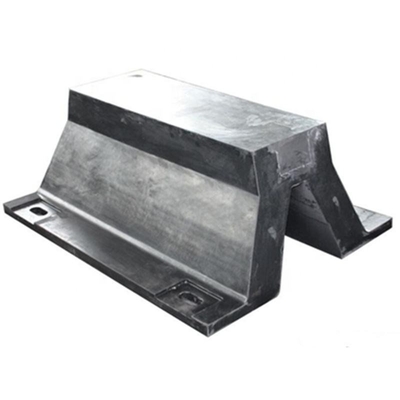
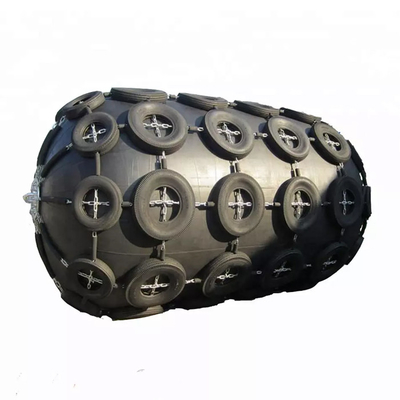
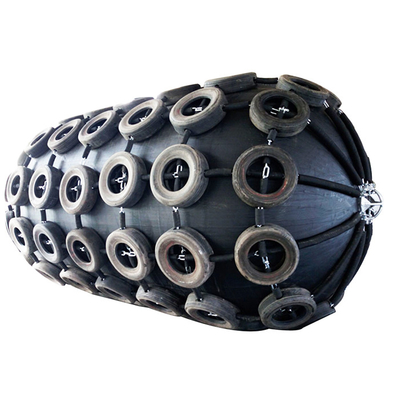
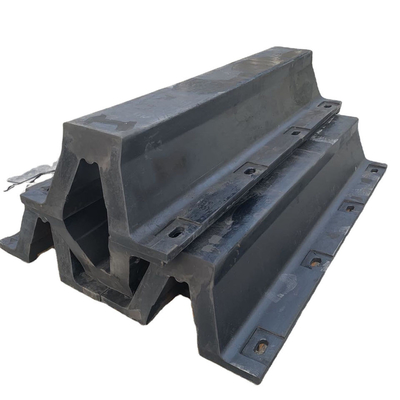
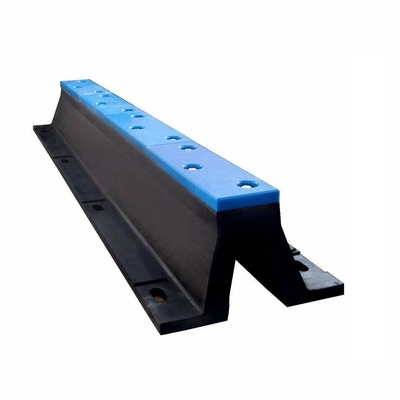
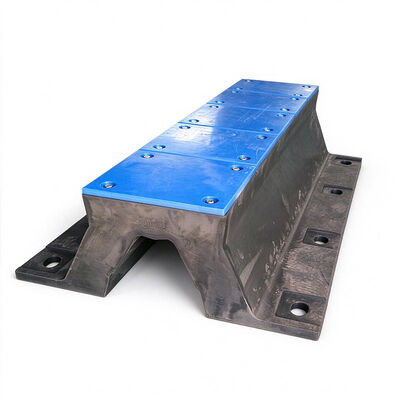
V Fenders are industrial marine rubber fenders engineered to deliver dependable cushioning and impact protection for vessels, docks, quay walls, and offshore structures. Their reinforced V-shaped cross-sectional profile combines structural strength, elastic deformation, and installation flexibility — making them a practical choice for marine facilities that require reliable, low-maintenance protection under repeated vessel contact.
Manufactured from high-quality natural or synthetic rubber compounds, V Fenders maintain suitable elasticity and mechanical strength under repeated compression. The rubber material resists abrasion, tearing, and environmental exposure, supporting long-term operation in demanding marine conditions. Different rubber hardness specifications can be selected to match project requirements and expected loading conditions.
The V-shaped structure deforms under vessel contact and absorbs impact energy through controlled compression. During berthing, the rubber body acts as a cushioning interface between the vessel and the supporting structure, helping reduce direct impact stress. Its compact profile makes it a practical solution where reliable contact protection is required in limited installation space.
V Fenders are available in a range of dimensions, lengths, and mounting configurations. Specifications can be customized to vessel characteristics, berth layouts, installation space, and engineering drawings. Depending on project requirements, suitable anchor bolts, fixing plates, and mounting accessories can be incorporated into the installation design.
Maintenance is straightforward: the rubber body can be visually inspected for cracks, surface damage, abnormal deformation, and signs of material deterioration. Individual units can be replaced when necessary, reducing the need for extensive reconstruction of the complete fender system.
V Fenders are widely applied in commercial ports, shipyards, ferry terminals, industrial docks, and marine construction facilities. Their combination of mechanical durability, compact construction, and adaptable installation makes them a practical choice for protecting marine infrastructure and supporting safe vessel berthing operations.
Case Study: Ferry Terminal Berth Protection Upgrade
A regional ferry terminal required an improvement to its existing berth protection system after several years of intensive passenger vessel operations. The facility handled passenger and vehicle ferries with displacements ranging from approximately 2,000 to 6,000 tons. Vessels operated on fixed schedules, resulting in frequent berthing and departure cycles throughout the day.
The original fender arrangement had experienced considerable surface wear due to continuous vessel contact. Some sections had developed cracks and permanent deformation, while protection coverage was insufficient at several contact positions. The terminal operator needed a replacement solution that could accommodate frequent berthing operations without requiring major changes to the existing concrete structure.
Hongruntong Marine was asked to provide a suitable V Fender solution. The engineering and production teams reviewed the available berth drawings, existing fixing positions, vessel contact areas, and installation dimensions. Based on these details, customized V Fenders were selected to match the existing structure and operational requirements.
Particular attention was given to the rubber material specification and product dimensions because the terminal operated under frequent loading cycles and varying tidal conditions. The mounting arrangement was also coordinated with the existing installation structure to simplify replacement work.
The new V Fenders were installed along the designated vessel contact areas. Following installation, the terminal reported improved consistency in the cushioning interface during routine berthing. The replacement system helped reduce direct impact on the quay structure and provided more dependable protection for the vessel contact areas.
The maintenance team also found the new arrangement easier to inspect. Individual fender sections could be examined and maintained without removing the entire protection system, supporting more efficient maintenance planning.
This project demonstrated the importance of considering operational frequency, vessel contact positions, and installation compatibility when upgrading ferry terminal fender systems. The same approach can be applied to passenger terminals, vehicle ferry berths, and other facilities with frequent vessel movements.
Features
Reinforced V-Shaped Profile for Efficient Load Distribution
The V-shaped cross-sectional design supports controlled deformation under external loading. When a vessel contacts the fender, the rubber body compresses and distributes the applied force through its structural profile.
This geometry establishes a stable cushioning interface between the vessel and the berth. The fender absorbs impact energy while generating a reaction force according to its dimensions and rubber properties. Correct structural selection is essential to ensure the resulting forces remain within the allowable limits of the supporting structure.
Cross-sectional dimensions can be adjusted to accommodate different vessel contact conditions and installation spaces, allowing the product to be incorporated into various berth protection arrangements without unnecessarily complicated structural configurations.
For engineering projects, the relationship between fender geometry, compression performance, and mounting conditions should be evaluated together. Proper coordination improves the effectiveness of the fender system and supports dependable operation under normal berthing conditions.
Excellent Elasticity and Compression Recovery
Elasticity is one of the most important characteristics of marine rubber fenders. During vessel contact, V Fenders undergo compression and absorb impact energy through deformation of the rubber material. After the external load is removed, the rubber recovers toward its original shape within the intended operating range.
High-quality rubber compounds help maintain suitable elasticity during repeated berthing cycles. The material formulation can be adjusted according to the required hardness, tensile strength, elongation, and compression behavior.
Compression recovery is particularly important for terminals where vessels berth several times a day. Consistent material properties help the fender maintain its intended cushioning function and reduce the risk of permanent deformation under normal operating conditions.
Rubber hardness should be selected based on the required energy absorption and reaction force. An appropriate balance between flexibility and mechanical strength contributes to stable performance and reduces unnecessary stress on the supporting structure.
Weather Resistance and Long-Term Material Stability
Marine fenders are exposed to changing environmental conditions throughout their service life. Saltwater, sunlight, humidity, temperature fluctuations, and surface friction can gradually affect rubber materials.
V Fenders manufactured from suitable rubber compounds are designed to resist environmental deterioration and maintain mechanical properties during normal marine service. Material selection considers resistance to abrasion, tearing, cracking, and repeated mechanical stress.
The rubber formulation can be adjusted according to the installation environment. Facilities exposed to strong sunlight or significant temperature changes may require particular attention to material durability and environmental resistance.
A stable rubber structure helps reduce premature deterioration and supports predictable inspection and maintenance planning. Combined with correct installation and regular inspection, appropriate material selection contributes to a longer and more dependable service life.
Customized Dimensions and Practical Installation Design
Different marine facilities have different structural layouts and vessel contact requirements. V Fenders can be manufactured in customized dimensions to suit specific installation conditions.
Available customization options include overall length, cross-sectional height, width, rubber hardness, mounting hole positions, and fixing arrangements. These specifications can be coordinated with customer drawings to improve installation compatibility.
For existing berths, customized production helps address dimensional differences between replacement products and original mounting structures, reducing additional drilling, cutting, or modification work during installation.
For new projects, fender dimensions can be coordinated with structural drawings during the design stage. Proper consideration of anchor positions, mounting surfaces, and inspection accessibility helps improve installation efficiency and long-term maintenance convenience.
Why Choose Hongruntong Marine
More Than 30 Years of Manufacturing Experience
Hongruntong Marine has more than 30 years of experience in marine product manufacturing. This experience provides an established understanding of marine equipment requirements, rubber material characteristics, and the practical operating conditions encountered in ports, shipyards, and offshore facilities.
V Fender production requires careful attention to several interconnected factors. The rubber compound must provide appropriate mechanical properties, while the structural dimensions must match the required compression behavior and installation conditions. Manufacturing processes must also maintain consistent product quality across different production batches.
Hongruntong Marine focuses on these technical requirements throughout the manufacturing process. Experience in marine rubber product production helps the company understand the importance of dimensional accuracy, material stability, and structural consistency.
For customers involved in port construction, berth renovation, or marine equipment procurement, manufacturing experience is valuable when evaluating product specifications and coordinating technical requirements. The company can discuss product dimensions, rubber properties, and mounting arrangements based on individual project needs.
Customized Production Based on Customer Drawings
Standard products do not always meet the requirements of every marine installation. Different quay structures, vessel contact areas, and engineering specifications may require customized fender dimensions and mounting arrangements.
Hongruntong Marine supports customized V Fender production according to customer drawings, technical specifications, and confirmed project requirements. Customers can specify overall dimensions, cross-sectional profiles, rubber hardness, mounting hole positions, and other relevant details.
For replacement projects, original product drawings or physical samples can be used as references during specification confirmation. This helps reduce dimensional discrepancies and supports compatibility with existing mounting structures.
For new construction projects, customers can provide preliminary structural drawings and berth information. The product configuration can then be discussed according to available installation space and expected operating conditions.
This customized manufacturing approach is particularly useful for international engineering contractors and port operators who require products adapted to specific project specifications rather than standard catalog dimensions.
Quality-Oriented Rubber Material and Production Management
Material quality is a major factor affecting the durability and mechanical performance of V Fenders. Unsuitable rubber formulations may lead to excessive wear, reduced elasticity, cracking, or premature deterioration during service.
Hongruntong Marine pays attention to rubber compound selection and production process management. Material properties are considered according to product specifications, including hardness, tensile strength, elongation, and resistance to mechanical wear.
The production process includes rubber preparation, mixing, molding, and vulcanization. Proper process management helps establish the required rubber properties and maintain the intended product geometry.
Dimensional checks and relevant quality inspections help verify that manufactured products correspond to the confirmed specifications. Where required, material testing and additional inspection arrangements can be discussed with customers before production.
For large projects requiring multiple fender units, consistent manufacturing quality is important for maintaining installation alignment and coordinated performance. Attention to material and production consistency helps customers manage equipment procurement with greater confidence.
Comprehensive Technical Communication and Service Support
International marine projects frequently involve coordination between equipment suppliers, engineering companies, construction contractors, and end users. Differences in drawings, technical terminology, measurement systems, and installation practices can create challenges during procurement.
Hongruntong Marine provides technical communication support from the initial inquiry stage through production and delivery. Customers can discuss product dimensions, material requirements, installation details, quantities, and inspection specifications before confirming an order.
The company can assist with reviewing product drawings and confirming important manufacturing details. This helps establish a clear technical basis for production and reduces the possibility of misunderstandings.
Delivery coordination and relevant product documentation can also be arranged according to order requirements. After delivery, customers can receive guidance concerning installation, inspection, and routine maintenance.
By maintaining communication throughout the procurement process, Hongruntong Marine aims to support efficient project execution and establish long-term cooperation with marine equipment distributors, port operators, and engineering contractors.


 Your message must be between 20-3,000 characters!