Product Overview
Marine Rubber Fender — High Abrasion Resistance, Long Service Life, Stable Energy Absorption
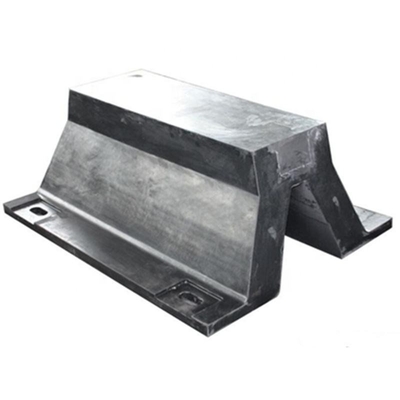
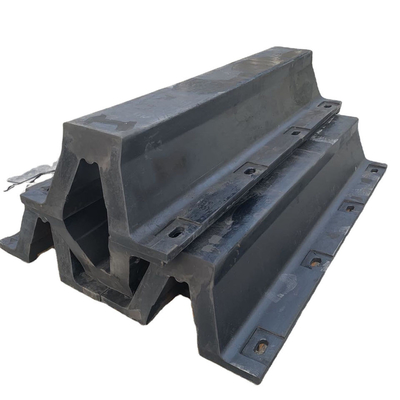
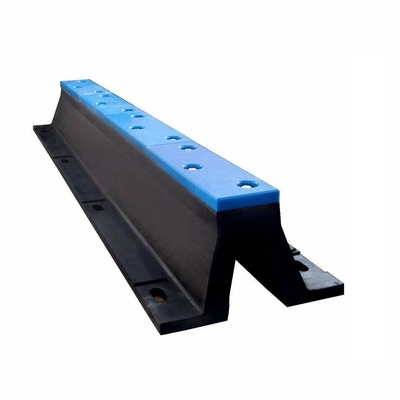
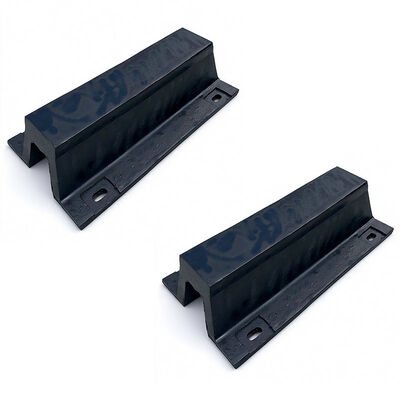
V Fenders are heavy-duty marine rubber fenders designed to provide reliable impact protection for vessels, docks, quay walls, and other marine structures. Their distinctive V-shaped cross-section combines structural stability with effective compression performance, making them suitable for berthing environments where consistent energy absorption and dependable reaction force are required. The compact structure allows V Fenders to be installed in different configurations according to the available mounting space and operational requirements.
Manufactured from high-quality natural and synthetic rubber compounds, V Fenders are engineered to withstand repeated compression, mechanical stress, abrasion, and exposure to demanding marine environments. The rubber formulation can be adjusted according to operating conditions, including temperature variations, contact frequency, and expected impact loads. A reinforced structural design helps maintain the fender profile during repeated berthing cycles while reducing the risk of premature deformation.
During vessel contact, the V-shaped body compresses progressively and absorbs part of the impact energy. This deformation helps reduce the force transferred to the protected structure and provides a cushioning interface between the vessel and the berth. Depending on the selected dimensions and rubber properties, V Fenders can accommodate different vessel sizes and berthing conditions.
V Fenders are available in various lengths, widths, heights, and rubber hardness specifications. Mounting holes, fixing plates, and other installation details can be customized to suit different structural requirements. Their practical design makes them suitable for commercial ports, shipyards, offshore facilities, tugboat berths, and industrial terminals.
With a relatively simple construction, strong load-bearing characteristics, and convenient maintenance requirements, V Fenders provide a practical solution for marine impact protection. Their adaptability and resistance to repeated compression make them particularly valuable in facilities requiring reliable protection under regular vessel movement and changing berthing conditions.
Case Study: Shipyard Repair Quay Upgrade
A commercial shipyard operating along a coastal industrial area required an upgraded fender system for its repair quay. The facility regularly accommodated bulk carriers and general cargo vessels ranging from approximately 8,000 to 25,000 DWT. Existing rubber protection had experienced surface deterioration and uneven compression after extended operation, resulting in inconsistent contact conditions during vessel berthing.
The shipyard selected customized V Fenders manufactured by Hongruntong Marine to replace the damaged units. Before production, the engineering team reviewed the quay dimensions, available fixing positions, vessel contact areas, and expected berthing conditions. The selected fender dimensions were coordinated with the mounting structure to ensure adequate contact coverage and installation compatibility.
During installation, the V Fenders were positioned along the primary berthing areas where vessels frequently made contact with the quay. Their structural profile provided stable support while allowing controlled rubber deformation under compression. The installation arrangement also considered maintenance accessibility and the need to replace individual units without extensive modification to the existing quay structure.
After commissioning, the shipyard reported more consistent cushioning performance during routine vessel berthing. The new fender arrangement helped reduce direct contact stress on the quay and improved protection at frequently used berthing positions. Maintenance personnel also found the modular installation arrangement convenient for inspection and replacement.
The project demonstrated the importance of selecting fender dimensions and rubber properties according to actual operating conditions rather than relying solely on standard dimensions. The same engineering approach can be applied to other shipyards and commercial terminals with similar vessel profiles and quay configurations.
Specifications
| Product Name |
Dock Rubber Fender |
| Material |
Natural rubber, Silicone rubber |
| Colour |
Black, or customized |
| Surface |
Smooth |
| Size — Height |
200–1000 mm |
| Size — Length |
1000–3500 mm |
| Customization |
All sizes can be customized |
| Polymer Content |
100% virgin |
| Working Temperature |
-50℃ ~ 240℃ |
| Tensile Strength |
≥16 MPa |
| Density |
90 ± 5 per 100 mm in |
| Hardness |
50–70 (Shore A) |
| Elongation |
≥400% |
| Features |
- High temperature resistance
- Excellent tear resistance, oil resistance, and aging resistance
- Resistant to industrial acid & alkali with good elasticity
- Built as per PIANC 2002
|
| Application |
Multi-purpose terminals, RoRo ramps, passenger vessel terminals, barges |
Model Dimensions (mm)
| Model |
W [mm] |
B [mm] |
F [mm] |
C [mm] |
H [mm] |
| HM-DRF200H |
400 |
320 |
145 |
128 |
200 |
| HM-DRF250H |
500 |
410 |
175 |
160 |
250 |
| HM-DRF300H |
600 |
490 |
225 |
196 |
300 |
| HM-DRF400H |
800 |
670 |
300 |
260 |
400 |
| HM-DRF500H |
1000 |
840 |
375 |
325 |
500 |
| HM-DRF600H |
1200 |
1010 |
450 |
390 |
600 |
| HM-DRF800H |
1600 |
1340 |
600 |
520 |
800 |
| HM-DRF1000H |
2000 |
1680 |
750 |
650 |
1000 |
Key Features
V-Shaped Structural Design for Stable Compression Performance
The defining characteristic of V Fenders is their distinctive cross-sectional geometry. The V-shaped structure provides a practical balance between deformation capacity, structural support, and installation stability. When subjected to vessel contact, the rubber body compresses progressively, allowing impact energy to be absorbed through controlled deformation.
Compared with some simple solid rubber profiles, the V-shaped configuration provides a different distribution of material and compression space. This structural arrangement helps the fender maintain its functional shape under repeated loading when correctly selected for the operating conditions. It is particularly suitable for berthing positions where the available installation space is limited but reliable cushioning performance remains essential.
The structural dimensions — including height, width, wall thickness, and overall length — can be selected according to the required energy absorption and reaction force. Engineering selection should consider vessel displacement, approach speed, berthing angle, and the strength of the supporting structure.
High-Quality Rubber Compound with Excellent Durability
V Fenders are manufactured using carefully selected rubber compounds designed for long-term marine service. Natural rubber and synthetic rubber can be combined according to the required mechanical properties and environmental conditions. The formulation is developed to provide suitable elasticity, tensile strength, tear resistance, and resistance to repeated compression.
Marine installations are continuously exposed to moisture, ultraviolet radiation, saltwater, temperature fluctuations, and mechanical friction. These factors can gradually affect rubber performance if unsuitable materials are selected. High-quality rubber compounds help reduce surface cracking, excessive hardening, and premature material deterioration during normal operation.
Rubber hardness can be adjusted according to specific project requirements. This allows the fender to achieve an appropriate balance between flexibility and structural support. Material selection is particularly important for terminals with frequent berthing activities, where repeated deformation places continuous demands on the rubber structure.
Effective Energy Absorption and Reaction Force Control
The primary function of V Fenders is to absorb impact energy and reduce the force transferred to vessels and supporting marine structures. During compression, the rubber body undergoes elastic deformation and generates a reaction force that gradually increases according to its material properties and structural dimensions.
Properly selected V Fenders help establish a controlled contact interface between the vessel and the berth. This is important for reducing localized impact stress, protecting quay surfaces, and limiting damage to vessel hull coatings. Their performance can be evaluated through energy absorption and reaction force characteristics under specified compression conditions.
Different projects require different performance parameters. Small workboat berths, commercial terminals, and industrial docks may have significantly different vessel displacement and berthing energy requirements. Therefore, fender selection should be based on engineering calculations and actual operating conditions rather than appearance or dimensions alone.
Flexible Installation and Convenient Maintenance
V Fenders feature a practical structure that can be adapted to different mounting arrangements. Depending on the project design, they can be secured using anchor bolts, fixing plates, mounting brackets, or other suitable fastening systems. Their relatively compact profile makes them useful for quay walls, vessel contact surfaces, and industrial marine structures where installation space needs to be carefully managed.
Customized dimensions and mounting configurations allow the fender system to match existing structural conditions. This is particularly useful for renovation projects where the original concrete structure or steel support system needs to remain unchanged.
Routine maintenance generally involves visual inspection of the rubber surface, checking fastening components, and confirming that the fender remains securely positioned. Individual units can be replaced when necessary, helping reduce maintenance interruptions and avoid unnecessary reconstruction of the entire fender system.
Applications
Commercial Ports and Cargo Terminals
V Fenders are widely used at commercial ports where cargo vessels regularly approach and leave berthing positions. They provide cushioning protection between vessel hulls and quay structures, helping reduce impact damage during routine docking operations. Their structural adaptability allows them to be installed along different sections of concrete or steel quay walls.
Shipyards and Vessel Repair Facilities
Shipyards require dependable fender systems to accommodate vessels of different sizes during maintenance, inspection, and repair operations. V Fenders provide a practical contact surface for vessels approaching repair berths and working platforms. Their replaceable installation arrangement also supports routine maintenance planning.
Tugboat Berths and Industrial Marine Facilities
Tugboats frequently operate in confined waterways and industrial ports where berthing positions may experience repeated contact. V Fenders offer a durable cushioning solution for these operating environments. They can also be installed at industrial docks, service piers, and offshore support facilities where reliable vessel protection is required.
Why Choose Hongruntong Marine
More Than 30 Years of Marine Manufacturing Experience
Hongruntong Marine has more than 30 years of manufacturing experience in marine rubber products and related marine equipment. This manufacturing background provides an established foundation for understanding the material, structural, and operational requirements of marine fender systems.
V Fenders require more than basic rubber molding. Their performance depends on the relationship between rubber formulation, cross-sectional geometry, dimensional accuracy, and the expected compression conditions. Manufacturing experience helps the production team understand how these factors influence product consistency and service performance.
Through accumulated manufacturing experience, Hongruntong Marine can support customers in selecting suitable product configurations for different berthing environments. The company focuses on practical engineering requirements, including installation compatibility, material durability, and long-term maintenance considerations.
Customized Dimensions and Engineering Solutions
Different ports and shipyards have different structural layouts and vessel operating conditions. Standard V Fender dimensions may not always match the actual requirements of a project. Hongruntong Marine supports customized production according to customer drawings, technical specifications, and installation requirements.
Customization can include overall length, cross-sectional dimensions, rubber hardness, mounting hole positions, and fixing arrangements. For replacement projects, the original fender dimensions and installation conditions can be reviewed to help ensure compatibility with existing structures.
For new installations, customers can provide information about vessel types, displacement, berthing conditions, and available mounting space. These details help establish a more appropriate product configuration. This project-oriented approach reduces unnecessary modifications during installation and improves coordination between the fender supplier and the construction team.
Material Selection and Manufacturing Quality Control
Rubber quality directly affects the compression behavior, mechanical strength, and durability of V Fenders. Hongruntong Marine places importance on raw material selection and production consistency to support stable product performance.
The manufacturing process involves attention to rubber formulation, mixing, molding, curing, and dimensional control. Appropriate process management helps maintain the required product profile and reduce dimensional deviations between production batches.
Depending on project requirements, material properties and product dimensions can be evaluated through relevant inspection procedures. Customers may specify technical requirements for rubber hardness, tensile strength, elongation, and other applicable performance indicators.
Consistent manufacturing quality is particularly important for projects involving multiple fender units. Differences in dimensions or rubber properties may affect installation alignment and the overall behavior of the fender arrangement. Quality control therefore supports both product reliability and project coordination.
Technical Communication and After-Sales Support
Marine fender projects often involve several parties, including shipowners, port operators, engineering contractors, procurement departments, and installation teams. Clear technical communication is essential to ensure that the supplied products match the actual project requirements.
Hongruntong Marine provides support during product selection, specification confirmation, production coordination, and delivery preparation. Technical drawings and product information can be discussed before manufacturing to reduce misunderstandings regarding dimensions and mounting arrangements.
After delivery, customers can receive guidance concerning installation, inspection, and routine maintenance. For replacement projects, relevant product information can also help maintenance teams identify suitable replacement specifications in the future.
This service approach supports the complete procurement process, from initial technical inquiry to product delivery and subsequent maintenance coordination.
Frequently Asked Questions
1. What are V Fenders mainly used for?
V Fenders are primarily used to protect vessels, quay walls, docks, and other marine structures from berthing impacts. They provide cushioning through controlled rubber compression and help reduce direct contact damage.
2. Can V Fenders be manufactured in customized dimensions?
Yes. V Fenders can be manufactured in different lengths, widths, heights, and rubber hardness specifications. Mounting holes and fixing arrangements can also be customized according to project drawings and installation requirements.
3. What rubber materials are used in V Fenders?
They are generally manufactured using natural rubber, synthetic rubber, or suitable rubber blends. The material formulation depends on the required elasticity, tensile strength, wear resistance, and operating environment.
4. How should V Fenders be inspected and maintained?
Regular inspections should include checking for surface cracks, excessive deformation, material damage, loose bolts, and abnormal displacement. Any damaged fastening components should be repaired or replaced promptly.
5. Can V Fenders be used for different vessel sizes?
Yes. Different V Fender dimensions and rubber specifications can accommodate different vessel types and berthing conditions. However, the appropriate model should be selected according to vessel displacement, berthing energy, reaction force limitations, and installation conditions.


 Your message must be between 20-3,000 characters!