Product Overview
Yokohama Rubber Fender is a heavy-duty pneumatic marine fender developed for vessel berthing protection, shipyard operations, temporary docking arrangements, and marine construction projects. It provides a flexible cushioning interface between vessels and marine structures, helping absorb impact energy and reduce the risk of structural damage during berthing and repositioning.
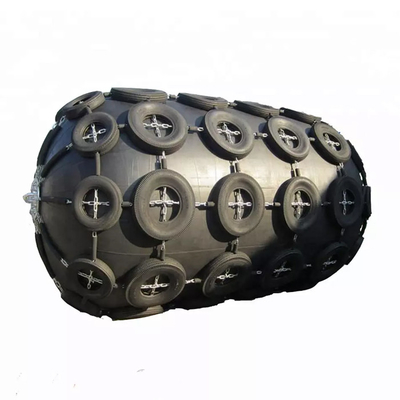
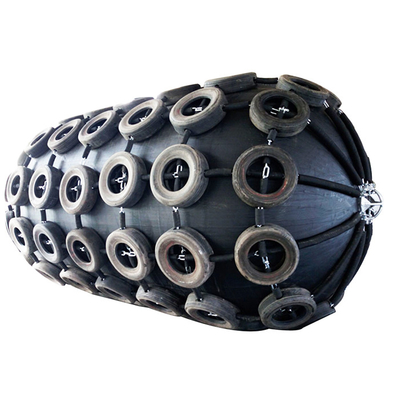
The product features a cylindrical inflatable rubber body reinforced with multiple layers of high-strength synthetic tyre-cord fabric. The reinforced construction provides tensile strength and pressure resistance, while the outer rubber covering protects the internal structure against seawater, abrasion, weathering, and ultraviolet exposure. The internal air chamber creates the pneumatic cushioning effect, allowing the fender to compress under external loading and recover its original shape after the load is released, provided that it operates within its specified limits.
Yokohama Rubber Fenders are available in different diameters, lengths, and initial pressure configurations. Common pressure options include P50 and P80, corresponding to nominal initial pressures of 50 kPa and 80 kPa. Sling-type and chain-and-tire-net configurations are available to accommodate different handling and protection requirements. The chain-and-tire-net version provides additional external protection, while the sling type offers a simpler arrangement for installations where a protective net is not necessary.
A major advantage of this product is its adaptability to different vessel dimensions and docking conditions. Shipyards frequently handle vessels with varying displacement, hull geometry, draft, and freeboard. The floating fender can adjust to changing water levels and vessel positions, helping maintain an appropriate contact area throughout docking and maintenance operations.
The product is suitable for ship repair yards, dry-dock approaches, floating docks, commercial ports, offshore service bases, and temporary marine construction facilities. It can be deployed as a movable protection unit and repositioned when operational requirements change. This flexibility makes it particularly useful in facilities where fixed fender systems cannot accommodate every vessel type or docking arrangement.
With suitable pressure management, correct installation, and regular inspection, Yokohama Rubber Fenders provide a reusable protection solution for marine facilities. Their reinforced construction and flexible deployment characteristics help improve docking safety, protect vessel hull coatings, and reduce maintenance requirements associated with repeated mechanical contact.
Case Study: Ship Repair Facility Floating Dock
A ship repair facility handling medium and large commercial vessels required a flexible fender arrangement for its floating repair dock. The facility regularly received cargo ships, bulk carriers, and offshore support vessels for hull maintenance, mechanical repairs, and underwater inspection.
One of the main challenges involved accommodating vessels with different hull profiles and freeboard heights. The existing fixed protection equipment did not provide sufficient flexibility for every docking operation. During vessel positioning, contact pressure could become concentrated at certain points, increasing the possibility of damage to protective coatings and dock-side structures.
The project involved a bulk carrier with an approximate deadweight of 45,000 DWT that required scheduled hull maintenance and mechanical inspection. The shipyard needed temporary floating protection that could be installed quickly, adjusted to the vessel's position, and reused for subsequent repair projects.
After reviewing the dock arrangement, vessel dimensions, and docking procedures, the engineering team selected Yokohama Rubber Fenders with suitable diameter and length specifications. The units were supplied with chain-and-tire-net protection to improve resistance to external abrasion during repeated contact.
The fenders were positioned along designated docking areas using appropriate connection accessories. During vessel approach, the floating units adjusted to the water level and maintained contact with the hull as the vessel moved into its assigned position. Their pneumatic structure absorbed part of the impact energy and reduced direct contact between the vessel and the floating dock.
After the vessel was secured, the fenders remained in position to provide additional protection during maintenance activities. The shipyard's maintenance personnel conducted routine inspections of internal pressure, rubber surface condition, chains, shackles, and protective net components.
Following the docking operation, the fenders were removed, inspected, and prepared for subsequent deployment. Their movable design allowed the shipyard to adjust the protection arrangement for different vessels without requiring permanent modifications to the dock structure.
The project improved the flexibility of docking operations and reduced the need for additional fixed protection equipment. It also provided a more standardized approach to temporary fender deployment, inspection, and storage.
The shipyard considered the reusable configuration beneficial for recurring repair projects involving vessels of different dimensions. The actual service life and performance of each unit remain dependent on operating loads, maintenance procedures, storage conditions, and inspection results.
Specifications
| Place of Origin |
China |
| Brand Name |
Yokohama Rubber Fender |
| Material |
Natural Rubber |
| Color |
Black |
| Application |
Ports with extreme tidal variations; ship-to-ship lightering operations; oil & gas (typically FSRU); temporary berthing |
| Feature |
Heat Resistance |
| Sample |
Usually free |
| Production Method |
Moulding |
| Temperature Range |
-40℃ ~ 300℃ |
| Packing |
Pallets |
| Lead Time |
7–14 days |
Performance Data
Diameter × Length
[mm] |
50 kPa Performance Data |
80 kPa Performance Data |
Hull Pressure at GEA
/ kN/m² |
Reaction Force
/ kN |
Energy Absorption
/ kNm |
Hull Pressure at GEA
/ kN/m² |
Reaction Force
/ kN |
Energy Absorption
/ kNm |
| 1000 × 1500 |
122 |
182 |
32 |
160 |
239 |
45 |
| 1000 × 2000 |
132 |
257 |
45 |
174 |
338 |
63 |
| 1200 × 2000 |
126 |
297 |
63 |
166 |
390 |
88 |
| 1350 × 2500 |
130 |
427 |
102 |
170 |
561 |
142 |
| 1500 × 3000 |
153 |
579 |
153 |
174 |
761 |
214 |
| 1700 × 3000 |
128 |
639 |
191 |
168 |
840 |
267 |
| 2000 × 3500 |
128 |
875 |
308 |
168 |
1150 |
430 |
| 2500 × 4000 |
137 |
1381 |
663 |
180 |
1815 |
925 |
| 2500 × 5500 |
148 |
2019 |
943 |
195 |
2653 |
1317 |
| 3300 × 4500 |
130 |
1884 |
1175 |
171 |
2476 |
1640 |
| 3300 × 6500 |
146 |
3015 |
1814 |
191 |
3961 |
2532 |
| 3300 × 10600 |
158 |
5257 |
3067 |
208 |
6907 |
4281 |
| 4500 × 9000 |
146 |
5747 |
4752 |
192 |
7551 |
6633 |
Other sizes can be produced according to client requirements.
Key Features
Recoverable Pneumatic Structure for Repeated Operations
Yokohama Rubber Fenders are designed to undergo repeated compression and recovery during normal marine operations. When a vessel makes contact, the internal air chamber compresses and the reinforced rubber body deforms to absorb impact energy. Once the external load is removed, the fender can recover its original configuration when it has been operated within its specified working limits. This characteristic makes the product suitable for shipyards, floating docks, and marine facilities where the same equipment may be deployed for multiple docking operations. Correct initial pressure, operating deflection, and load conditions are essential for maintaining reliable performance. Excessive compression or operation beyond the specified limits can accelerate material fatigue and reduce service life.
Abrasion Resistance and External Protection
The outer rubber covering is designed to withstand repeated contact with vessel hulls, dock structures, and other marine equipment. In shipyards, fenders may experience friction during vessel positioning and adjustments, making surface durability an important product consideration. The rubber compound helps protect the reinforced internal structure from environmental exposure and mechanical wear. For applications requiring additional protection, a chain-and-tire-net arrangement can be installed around the fender body. This configuration provides an additional protective layer and helps reduce direct abrasion against external surfaces. Regular examination of rubber thickness, cuts, cracks, and net components is recommended to identify wear before it develops into more serious damage.
Flexible Dimensions and Installation Arrangements
Different docking facilities require different fender configurations depending on available space, vessel dimensions, and installation methods. Yokohama Rubber Fenders are available in multiple diameters and lengths, with customized specifications available for specific projects. The floating design allows the fender to move vertically with changes in water level, helping maintain an appropriate contact position. End fittings, lifting arrangements, chains, and shackles can be configured according to the installation requirements. This flexibility is particularly valuable for ship repair yards and floating docks that handle different vessel types throughout the year. Proper engineering evaluation ensures that the selected arrangement provides sufficient energy absorption and maintains acceptable reaction force.
Pressure Management and Maintainable Construction
Internal pressure is a key factor influencing the energy absorption and reaction force characteristics of a pneumatic fender. The product is designed with an accessible inflation arrangement that allows maintenance personnel to check and adjust pressure according to the manufacturer's requirements. Routine maintenance should include pressure verification, valve inspection, external surface examination, and checks of end fittings and protective accessories. For long-term storage, the fender should be kept in suitable conditions away from sharp objects, excessive heat, and unnecessary mechanical loading. A documented inspection program helps operators monitor product condition, identify abnormal pressure loss, and determine whether a unit is suitable for continued service.
Applications
Ship Repair Yards and Floating Docks
Yokohama Rubber Fenders provide flexible protection for ship repair facilities handling cargo ships, bulk carriers, offshore vessels, and other commercial vessels. They can be positioned between vessel hulls and floating dock structures to reduce berthing impact and protect hull coatings during docking and maintenance. Their floating design is especially useful where vessels with different drafts and freeboard heights use the same facility.
Temporary Berthing and Marine Maintenance Facilities
Temporary berthing arrangements often require protection equipment that can be installed, removed, and repositioned according to project schedules. Yokohama Rubber Fenders can be deployed at temporary docking areas, maintenance pontoons, and marine service facilities. Their reusable structure supports repeated installation, provided that the fenders are inspected and maintained according to operating requirements.
Port Renovation and Marine Construction Projects
During port renovation, quay reinforcement, and marine construction, existing fixed fender systems may be temporarily unavailable or unsuitable for changing project conditions. Pneumatic fenders can provide temporary impact protection for construction vessels, work barges, and service ships. Their flexible installation arrangements allow contractors to modify the protection layout as work progresses and vessel access requirements change.
Why Choose Hongruntong Marine
Established Manufacturing Experience in Marine Rubber Products
Hongruntong Marine has more than 30 years of manufacturing experience in marine rubber products and related equipment. Our experience covers the manufacturing requirements of products used in ports, shipyards, offshore facilities, and marine construction projects. Yokohama Rubber Fenders require careful coordination of rubber formulation, reinforcement fabric, vulcanization, pressure resistance, and structural dimensions. These factors directly influence product performance under repeated compression and environmental exposure. Our manufacturing background helps us understand the relationship between material characteristics and actual operating conditions, allowing us to provide products designed around practical marine requirements rather than dimensions alone.
Customized Production for Different Docking Conditions
Shipyards and marine engineering contractors frequently handle vessels with different displacement, hull geometry, and docking requirements. Hongruntong Marine can provide customized fender dimensions, pressure configurations, protective net arrangements, and connection accessories according to project specifications. During product selection, important parameters include vessel displacement, berthing velocity, available installation space, tidal variation, and expected contact conditions. For facilities handling multiple vessel types, we can also assist in evaluating whether a standardized fender configuration or several different sizes would provide a more practical solution. This customization approach helps customers coordinate product specifications with actual installation conditions.
Manufacturing Quality and Material Consistency
Pneumatic fender reliability depends on the quality of the materials and the consistency of the production process. Hongruntong Marine focuses on reinforcement fabric selection, rubber material preparation, structural forming, and vulcanization control. The bonding between rubber layers and internal reinforcement is particularly important because the fender must maintain its structural integrity under repeated pressure changes. Finished products can undergo dimensional checks, appearance inspections, and pressure testing according to the agreed technical specifications. Appropriate quality documentation and inspection arrangements can also be discussed for projects with specific procurement or engineering requirements.
Practical Technical Support and Product Lifecycle Service
A reliable fender solution should consider more than initial delivery. Installation, inflation, handling, inspection, storage, and maintenance all influence long-term product performance. Hongruntong Marine provides technical assistance during product selection and can help customers confirm the required dimensions, initial pressure, external protection, and connection arrangements. We can also provide relevant product information and maintenance recommendations to support safe operation. For shipyards and port operators managing multiple fenders, consistent product specifications and inspection procedures help simplify equipment management. Our after-sales support focuses on helping customers understand product condition, identify potential maintenance requirements, and maintain the equipment for continued use within its specified operating limits.
Frequently Asked Questions
1. Can Yokohama Rubber Fenders be used for different vessel sizes?
Yes. They are available in different diameters and lengths to accommodate different vessel dimensions and operating requirements. For facilities handling several vessel types, the selection should consider vessel displacement, berthing energy, freeboard, and installation conditions.
2. Can the fender be customized for a floating dock?
Yes. Dimensions, initial pressure, protective net configuration, end fittings, and connection accessories can be customized according to floating dock design and operational requirements. Installation conditions should be confirmed before production.
3. Does the fender require regular inflation?
The fender does not require continuous inflation under normal conditions, but internal pressure should be checked periodically. Inflation or pressure adjustment should follow the manufacturer's specified procedures and limits.
4. How should Yokohama Rubber Fenders be stored when not in use?
They should be stored in a clean, dry, and ventilated area, away from sharp objects, excessive heat, direct damaging exposure, and chemicals that may deteriorate rubber. Suitable handling and storage arrangements help prevent unnecessary deformation and surface damage.
5. What information is required to obtain a quotation?
Customers should ideally provide the required diameter, length, initial pressure, quantity, protective net type, application, and any special certification requirements. Vessel dimensions and operating conditions are also helpful for technical selection. Hongruntong Marine can then prepare a suitable product proposal and quotation.


 Your message must be between 20-3,000 characters!