Product Overview
Yokohama Rubber Fender is a pneumatic marine protection device designed to absorb berthing energy and minimize impact loads during ship-to-ship operations and vessel-to-structure contact. It is particularly suitable for offshore terminals, oil transfer operations, floating production facilities, and marine transportation projects where vessels operate under changing sea conditions.
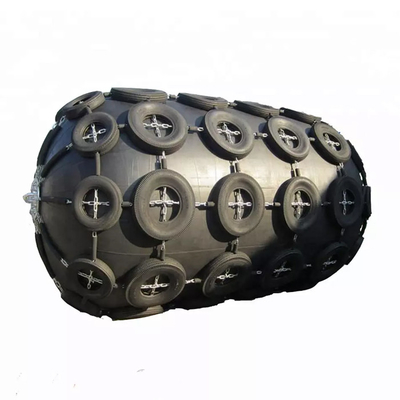
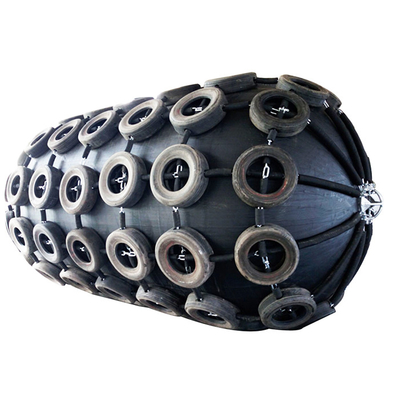
The fender consists of a cylindrical rubber body reinforced with multiple layers of high-strength synthetic tyre-cord fabric. Its internal chamber is filled with compressed air, allowing the structure to deform under external pressure and absorb impact energy. The outer rubber layer provides protection against seawater, ultraviolet radiation, abrasion, and repeated mechanical contact. Reinforced end fittings provide secure connections for lifting, positioning, and installation.
The pneumatic design offers a balance between energy absorption and reaction force. During vessel contact, the internal air pressure increases as the fender is compressed, allowing it to absorb berthing energy while limiting the force transmitted to the vessel hull. This characteristic is particularly important during ship-to-ship transfer, where two vessels may experience relative movement caused by waves, wind, currents, and differences in loading conditions.
Yokohama Rubber Fenders are available in different diameters, lengths, and pressure configurations, including commonly used P50 and P80 models. The external protection can be supplied in sling-type or chain-and-tire-net configurations. Product dimensions and technical parameters can be customized according to vessel displacement, berthing velocity, operating environment, and installation requirements.
Compared with fixed fender systems, the floating structure provides greater flexibility in maintaining contact between vessels with different freeboard heights. It can move with tidal changes and accommodate variations in vessel positioning, making it suitable for offshore operations where fixed installation systems may be less practical.
With suitable material selection, manufacturing quality control, and regular pressure inspection, Yokohama Rubber Fenders provide a reusable marine protection solution for demanding offshore applications. Their combination of flexibility, structural strength, and impact absorption helps improve operational safety and reduce the possibility of hull damage during repeated vessel interaction.
Case Study: Offshore Oil Transfer Project
An offshore oil transfer project required a reliable fender arrangement between a crude oil tanker and a floating storage vessel. The operation involved a crude oil tanker with an approximate capacity of 150,000 DWT and a floating storage vessel operating in an offshore transfer area.
The two vessels needed to maintain a safe separation during cargo transfer. However, changing sea conditions caused continuous relative movement between the vessels. Wave action, wind pressure, and variations in loading conditions created intermittent contact pressure, increasing the risk of hull coating damage and excessive local loading.
The project engineering team evaluated the vessel dimensions, freeboard differences, transfer frequency, and environmental conditions before selecting Yokohama Rubber Fenders. Large-diameter pneumatic fenders with chain-and-tire-net protection were selected to provide sufficient contact area and additional external protection.
Several fenders were positioned between the vessels according to the planned mooring arrangement. Their floating characteristics allowed them to adjust to changes in water level and vessel position. During transfer operations, the fenders compressed under contact pressure and absorbed part of the relative movement energy.
The reinforced rubber body maintained its structural integrity during repeated compression, while the protective tire net helped reduce direct abrasion against the surrounding surfaces. The installation arrangement also allowed the crew to inspect the fenders and associated connection components during routine operational checks.
Following implementation, the vessel operators reported improved contact stability and reduced concerns about direct hull-to-hull contact. The floating fender arrangement also provided greater flexibility when vessel drafts changed during cargo transfer.
From a maintenance perspective, the reusable structure allowed the equipment to remain available for subsequent transfer operations after pressure verification and routine inspection. This reduced the need for frequent replacement of temporary protection materials and supported more consistent offshore operating procedures.
The project demonstrated the practical value of pneumatic fender systems in ship-to-ship transfer operations. For similar projects, the number, dimensions, positioning, and performance ratings of fenders should be determined through a complete engineering assessment of vessel movement and environmental loading.
Specifications
| Place of Origin |
China |
| Brand Name |
Yokohama Rubber Fender |
| Material |
Natural Rubber |
| Color |
Black |
| Application |
Ports with extreme tidal variations; ship-to-ship lightering operations; oil & gas (typically FSRU); temporary berthing |
| Feature |
Heat Resistance |
| Sample |
Usually free |
| Production Method |
Moulding |
| Temperature |
-40℃ ~ 300℃ |
| Packing |
Pallets |
| Lead Time |
7–14 days |
Performance Data
Diameter × Length
[mm] |
Hull Pressure at GEA
/ kN/m² |
Reaction Force
/ kN |
Energy Absorption
/ kNm |
Hull Pressure at GEA
/ kN/m² |
Reaction Force
/ kN |
Energy Absorption
/ kNm |
| 1000 × 1500 |
122 |
182 |
32 |
160 |
239 |
45 |
| 1000 × 2000 |
132 |
257 |
45 |
174 |
338 |
63 |
| 1200 × 2000 |
126 |
297 |
63 |
166 |
390 |
88 |
| 1350 × 2500 |
130 |
427 |
102 |
170 |
561 |
142 |
| 1500 × 3000 |
153 |
579 |
153 |
174 |
761 |
214 |
| 1700 × 3000 |
128 |
639 |
191 |
168 |
840 |
267 |
| 2000 × 3500 |
128 |
875 |
308 |
168 |
1150 |
430 |
| 2500 × 4000 |
137 |
1381 |
663 |
180 |
1815 |
925 |
| 2500 × 5500 |
148 |
2019 |
943 |
195 |
2653 |
1317 |
| 3300 × 4500 |
130 |
1884 |
1175 |
171 |
2476 |
1640 |
| 3300 × 6500 |
146 |
3015 |
1814 |
191 |
3961 |
2532 |
| 3300 × 10600 |
158 |
5257 |
3067 |
208 |
6907 |
4281 |
| 4500 × 9000 |
146 |
5747 |
4752 |
192 |
7551 |
6633 |
* Other sizes can be produced according to client requirements.
Key Features
Flexible Pneumatic Energy Absorption
The pneumatic working structure enables the fender to absorb impact energy through controlled compression of its internal air chamber. Unlike rigid contact protection, the rubber body can deform progressively as external pressure increases, helping distribute impact loads across a relatively large contact surface. This is especially important in offshore ship-to-ship operations, where vessel movement is not always predictable and contact conditions may change continuously. The balance between energy absorption and reaction force helps protect vessel hull structures, external coatings, and supporting equipment. Different pressure configurations can be selected to meet specific performance requirements, with technical parameters verified against the manufacturer's performance data.
High-Strength Internal Reinforcement
The internal structure uses multiple layers of synthetic tyre-cord fabric embedded within rubber compounds. These reinforcement layers provide tensile strength and help the fender maintain its shape under repeated loading. The arrangement of reinforcement fabric is a critical manufacturing factor because uneven distribution or insufficient bonding can affect pressure resistance and structural durability. Hongruntong Marine focuses on the coordination of reinforcement placement, rubber forming, and vulcanization to support consistent product quality. This construction is designed for demanding marine environments where the fender must withstand repeated compression, handling loads, and prolonged exposure to moisture and saltwater.
Marine-Grade Outer Rubber Protection
The outer rubber layer is formulated to withstand environmental exposure commonly encountered in ports and offshore areas. It helps resist seawater, ozone, ultraviolet radiation, weathering, and surface abrasion. During ship-to-ship operations, the fender may experience repeated contact with hull coatings, protective structures, and other marine equipment. The rubber covering provides an additional protective barrier for the internal reinforcement layers. Depending on the application, an external chain-and-tire-net arrangement can be added to provide further protection against mechanical wear. Regular inspection remains important for identifying cuts, abnormal deformation, surface deterioration, and other signs of damage.
Adaptable Floating and Connection Design
The floating configuration enables the fender to maintain a suitable contact position as vessel drafts and water levels change. This is particularly valuable for offshore terminals, oil transfer vessels, and floating storage facilities where different vessel types may use the same operational area. Sling-type and chain-and-tire-net configurations provide different installation options. The connection arrangement can incorporate end fittings, lifting components, chains, and shackles selected according to the project's operating requirements. Customized dimensions and accessory configurations help integrate the fender into different mooring arrangements without requiring a completely fixed protection structure.
Applications
Offshore Oil and Gas Transfer
Yokohama Rubber Fenders are suitable for offshore crude oil transfer, floating storage operations, and tanker-to-tanker cargo handling. Installed between two vessels, they provide a protective buffer that absorbs impact energy and reduces direct hull contact. Their floating characteristics accommodate changes in vessel draft and water level, supporting more flexible transfer operations.
Floating Production and Storage Facilities
Floating production, storage, and offloading facilities frequently receive supply vessels, shuttle tankers, and other support ships. Yokohama Rubber Fenders can be installed at designated contact areas to reduce impact loads during vessel approach and positioning. Their reinforced rubber construction and available external protection configurations make them suitable for repeated marine contact.
Marine Construction and Offshore Support Operations
Offshore construction projects involve frequent vessel movements, including the positioning of workboats, barges, crane vessels, and support ships. Pneumatic fenders can provide temporary or reusable protection between vessels and marine structures. Their flexibility allows project operators to reposition the equipment as construction requirements change, provided that the installation arrangement is properly designed for the operating loads.
Why Choose Hongruntong Marine
More Than 30 Years of Specialized Manufacturing Experience
Hongruntong Marine has accumulated more than 30 years of manufacturing experience in marine rubber products and related industrial equipment. This background provides a solid understanding of reinforced rubber structures, pneumatic pressure systems, marine material requirements, and production process control. Manufacturing Yokohama Rubber Fenders requires more than producing a rubber outer shell. The internal reinforcement, rubber bonding, end fittings, pressure resistance, and overall structural dimensions must work together to meet the intended operating conditions. Our manufacturing experience supports the coordination of these technical factors and helps customers select suitable configurations for different vessel protection requirements.
Project-Based Product Configuration
Offshore projects often involve different vessel sizes, environmental conditions, and operational procedures. A standard product dimension may not be appropriate for every installation. Hongruntong Marine can evaluate customer requirements and provide customized dimensions, pressure configurations, protective net arrangements, and connection accessories. For ship-to-ship operations, important considerations include vessel displacement, freeboard, relative movement, berthing energy, and the number and positioning of fenders. For port applications, tidal range, berth geometry, and vessel traffic frequency also influence product selection. Our project-based approach helps ensure that the supplied configuration is compatible with the intended application.
Reinforced Materials and Controlled Production Processes
Material quality directly affects the structural performance and service life of pneumatic fenders. Hongruntong Marine emphasizes the use of suitable rubber compounds and high-strength reinforcement fabric to support pressure resistance, flexibility, and environmental durability. Production involves several coordinated stages, including material preparation, reinforcement arrangement, rubber forming, vulcanization, fitting installation, and finished-product inspection. Particular attention is given to the bonding between rubber and reinforcement layers because separation or internal defects can compromise the fender's pressure-holding capability. Inspection procedures can include dimensional verification, appearance inspection, and pressure testing according to the agreed product specification.
International Project Support and After-Sales Assistance
Marine equipment procurement often involves technical communication between shipowners, engineering contractors, port operators, and purchasing departments. Hongruntong Marine supports customers throughout product selection and procurement by providing technical specifications, dimensional information, configuration recommendations, and relevant manufacturing documentation. For international projects, clear communication helps customers confirm technical requirements before production and reduce potential installation misunderstandings. After delivery, customers can receive guidance regarding inflation pressure, handling, installation, storage, and routine inspection. Spare accessories and replacement components can also be discussed according to the selected product configuration and maintenance requirements.
Frequently Asked Questions
1. Can Yokohama Rubber Fenders be used between two large oil tankers?
Yes. They are commonly used for ship-to-ship operations involving oil tankers and floating storage vessels. The required dimensions, pressure rating, quantity, and positioning must be determined according to vessel displacement, freeboard, operating conditions, and engineering calculations.
2. What materials are used in the fender body?
The main structure generally consists of high-strength synthetic tyre-cord reinforcement and specialized rubber compounds. The external surface is designed to resist seawater exposure, abrasion, weathering, and ultraviolet radiation.
3. Is a chain-and-tire-net configuration necessary for offshore applications?
Not in every case. A chain-and-tire-net configuration provides additional external protection against mechanical abrasion and is often selected for demanding operating environments. Sling-type configurations may be suitable where a simpler installation is preferred.
4. How frequently should pneumatic pressure be checked?
Inspection frequency depends on operating conditions, manufacturer recommendations, and project maintenance procedures. Pressure should be checked before operation and periodically during service. Abnormal pressure loss requires investigation before the fender returns to operation.
5. Can the fender be reused after repeated offshore operations?
Yes. Yokohama Rubber Fenders are designed for repeated use when operated within their specified performance limits. Reuse depends on pressure integrity, rubber condition, reinforcement integrity, and the condition of connection accessories. Damaged units should be evaluated before further deployment.
Technical Reference: The engineering descriptions are consistent with published pneumatic fender guidance concerning floating characteristics, synthetic tyre-cord reinforcement, pressure control, and energy absorption at specified deflection.


 Your message must be between 20-3,000 characters!