logo

Air Tight Good Elasticity Anti Tear Yokohama Rubber Fender Pneumatic Marine Fender for Dock Protection

1
MOQ
US$36-US$579
Price
Air Tight Good Elasticity Anti Tear Yokohama Rubber Fender Pneumatic Marine Fender for Dock Protection
Features Gallery Product Description Request A Quote
Features
Specifications
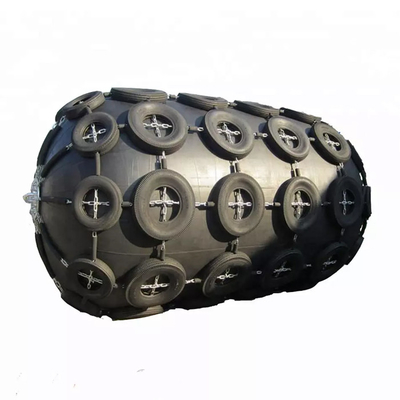
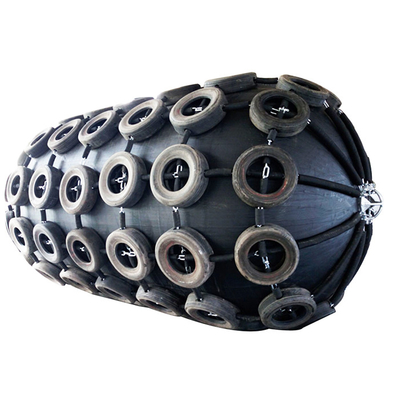
Accessories: Tyres, Steel Chain, Hang Ring
Diameter: 500mm-4500mm
Length: 1000mm-12000mm
Usage: Protect Boat
Warranty: 24 Months
Material: NR
Feature: Excellent Horizontal Stability
Standard: ISO17357-1:2014, PIANC2002
Product Name: Yokohama Rubber Fender
Color: Black Or Customized
Highlight:

Air Tight Yokohama Rubber Fender

,

Good Elasticity Pneumatic Marine Fender

,

Anti Tear Pneumatic Rubber Fender

Basic Infomation
Place of Origin: China
Brand Name: Hongruntong Marine
Certification: ISO, BV, ABS, DNV, LR, SGS, CCS, RMRS
Model Number: HM-YR18
Payment & Shipping Terms
Packaging Details: Wooden Pallet, Wooden Case
Delivery Time: 5-6 Days
Payment Terms: T/T,L/C,D/A,D/P,Western Union,
Supply Ability: 1526 Pcs Per Month
Product Description
Product Overview

Yokohama Rubber Fender is a pneumatic marine fender designed to provide reliable impact protection during ship berthing, ship-to-ship operations, and offshore vessel transfers. Its cylindrical structure is manufactured from reinforced rubber layers with a high-strength synthetic tire-cord fabric framework. The internal air pressure provides controlled deformation under external loading, allowing the fender to absorb berthing energy while reducing the reaction force transferred to the contacting vessels or structures.

The fender is designed for demanding marine environments where vessels may experience wave-induced movement, changing tidal levels, and repeated contact during berthing operations. Its pneumatic structure offers flexible contact performance and can accommodate different vessel sizes and operating conditions through appropriate selection of diameter, length, and internal pressure. Compared with fixed solid fender systems, Yokohama Rubber Fenders can be repositioned, relocated, and deployed in different operating areas, making them suitable for both permanent and temporary marine protection requirements.

The outer rubber layer provides resistance to abrasion, seawater exposure, and environmental aging. Reinforcement layers help maintain structural stability under repeated compression and pressure loading. Depending on the application, the fender can be supplied with a protective tire-and-chain net to reduce direct wear on the rubber body and improve resistance to external mechanical damage. End fittings, lifting arrangements, and connection accessories can be configured according to the installation method and operational requirements.

Yokohama Rubber Fenders are available in different pressure ratings and dimensions to accommodate various vessel classes and berthing conditions. Proper selection should consider vessel displacement, berthing velocity, approach angle, available clearance, and the required energy absorption performance. With suitable design and routine inspection, the fender provides a flexible and reusable solution for marine impact protection.

Case Study: Adaptable Fendering for a Coastal Shipyard

A coastal shipyard required a temporary fendering system for maintenance operations involving medium-sized cargo vessels and offshore service boats. The existing solid fender arrangement offered limited flexibility when vessels with different hull dimensions needed to approach the same floating repair platform. The shipyard also needed a solution that could be relocated as maintenance activities moved between berthing positions.

Yokohama Rubber Fenders were selected for their pneumatic cushioning characteristics and adaptable installation arrangement. The fender dimensions and pressure configuration were determined according to the vessels' operating conditions and the available clearance between the platform and the approaching hulls. Protective tire nets were fitted to reduce surface abrasion during repeated contact.

During operation, the fenders provided a compliant interface between the vessels and the floating platform. Their flexible structure accommodated moderate changes in relative vessel position caused by water movement, helping reduce direct contact and localized impact loading. When the maintenance area changed, the fenders could be disconnected and transferred to another position without rebuilding the entire protection system.

The arrangement improved the shipyard's flexibility in handling different vessel types and reduced the need for fixed fender installations at every working location. This representative application demonstrates how pneumatic fenders can support adaptable vessel protection in shipyards and floating maintenance facilities.

Yokohama pneumatic rubber fender deployed at a coastal shipyard floating repair platform
Pneumatic marine fender with protective tire-and-chain net protecting a vessel hull during berthing
Specifications
Place of Origin China
Brand Name Yokohama Rubber Fender
Material Natural Rubber
Color Black
Application Ports with extreme tidal variations; ship-to-ship lightering operations; oil & gas (typically FSRU); temporary berthing
Feature Heat Resistance
Sample Usually free
Production Method Moulding
Temperature -40℃ ~ 300℃
Packing Pallets
Lead Time 7–14 days
Performance Data
Diameter × Length
[mm]
50 kPa Performance Data 80 kPa Performance Data
Hull Pressure at GEA
/ kN/m²
Reaction Force
/ kN
Energy Absorption
/ kNm
Hull Pressure at GEA
/ kN/m²
Reaction Force
/ kN
Energy Absorption
/ kNm
1000 × 1500 122 182 32 160 239 45
1000 × 2000 132 257 45 174 338 63
1200 × 2000 126 297 63 166 390 88
1350 × 2500 130 427 102 170 561 142
1500 × 3000 153 579 153 174 761 214
1700 × 3000 128 639 191 168 840 267
2000 × 3500 128 875 308 168 1150 430
2500 × 4000 137 1381 663 180 1815 925
2500 × 5500 148 2019 943 195 2653 1317
3300 × 4500 130 1884 1175 171 2476 1640
3300 × 6500 146 3015 1814 191 3961 2532
3300 × 10600 158 5257 3067 208 6907 4281
4500 × 9000 146 5747 4752 192 7551 6633

* Other sizes can be produced according to client requirements.

Key Features
Reinforced Rubber Construction

The fender body is manufactured using rubber compounds combined with multiple layers of high-strength synthetic tire-cord fabric. The reinforcement structure helps distribute internal pressure and external impact loads throughout the cylindrical body. This construction supports dimensional stability during compression and helps reduce the risk of excessive deformation under specified operating conditions. Rubber compound selection can be adjusted according to environmental exposure, abrasion requirements, and the expected service conditions. The combination of rubber elasticity and fabric reinforcement provides a balance between flexibility, pressure retention, and mechanical strength.

Controlled Energy Absorption

The internal air pressure allows the fender to deform when subjected to vessel impact. During compression, the fender absorbs part of the berthing energy and generates a corresponding reaction force. Its performance depends on the fender dimensions, initial internal pressure, compression ratio, and loading conditions. This pneumatic cushioning mechanism helps reduce the intensity of direct contact between vessels and marine structures. Proper engineering selection is essential to ensure that the energy absorption capacity and reaction force are suitable for the intended vessel and berthing arrangement.

Protective Tire-and-Chain Net

A protective net made from used tires, chains, and connecting accessories can be installed around the fender body according to project requirements. The net helps reduce direct friction between the rubber surface and vessel hulls, quay structures, or other contact points. It also provides an additional protective layer against localized abrasion and mechanical damage. The net configuration can be adjusted to match the fender dimensions and operating environment. Regular inspection of tires, chains, shackles, and connection points helps maintain the integrity of the protective assembly.

Flexible Installation and Reusability

Yokohama Rubber Fenders can be installed using ropes, chains, shackles, or other suitable connection arrangements. Their portable design allows them to be deployed at fixed berths, floating platforms, offshore facilities, and temporary marine work areas. When operational requirements change, the fenders can be relocated or stored for later use. This flexibility is particularly useful for shipyards, marine contractors, and port operators managing multiple vessel types or changing berthing positions. Installation details should be determined according to the local structure, load conditions, and applicable safety requirements.

Applications
Ship-to-Ship Transfer Operations

Yokohama Rubber Fenders are used between vessels during cargo transfer, fuel supply, and offshore service operations. Their pneumatic cushioning structure helps accommodate relative vessel movement and reduce direct hull contact. Fender dimensions and pressure should be selected according to the vessel sizes, displacement, operating clearance, and expected environmental conditions.

Port and Terminal Berthing

Ports and marine terminals use pneumatic fenders to provide flexible protection for vessels during berthing and alongside operations. They can be deployed at suitable berthing positions where vessel dimensions or tidal conditions require adaptable protection. Their movable structure also supports temporary berthing arrangements and maintenance activities.

Shipyards and Offshore Facilities

Shipyards, floating docks, and offshore support facilities use Yokohama Rubber Fenders to protect vessels and working structures during repair, inspection, and service operations. Their repositionable design allows operators to adjust the protection arrangement when vessel types or working locations change.

Why Choose Hongruntong Marine
More Than 30 Years of Manufacturing Experience

Hongruntong Marine has more than 30 years of manufacturing experience in marine rubber products and related engineering equipment. This experience supports the production of pneumatic fenders for different vessel sizes and operating environments. Manufacturing knowledge is applied to material selection, rubber processing, reinforcement arrangement, and product assembly. For Yokohama Rubber Fenders, these factors are important because the finished product must maintain consistent dimensions, air retention, structural strength, and cushioning performance. The company can provide product configurations based on project requirements rather than relying on a single standard arrangement.

Project-Based Product Configuration

Different marine operations involve different berthing conditions, vessel characteristics, and installation limitations. Hongruntong Marine can provide fenders in different dimensions and pressure configurations according to the technical requirements supplied by customers. Protective nets, end fittings, lifting arrangements, and connection accessories can also be considered during product configuration. This approach helps customers select a suitable fender arrangement for ship-to-ship operations, port berthing, shipyard maintenance, or offshore applications. Where necessary, technical details can be reviewed before production to reduce configuration errors and improve installation compatibility.

Manufacturing and Quality Control

Product reliability depends on the consistency of rubber materials, reinforcement layers, bonding processes, and final assembly. Hongruntong Marine applies quality control procedures throughout manufacturing to monitor key production stages. Relevant inspection items may include appearance, dimensions, workmanship, pressure retention, and other project-specified requirements. Inspection arrangements can be coordinated according to the technical agreement and applicable product standards. Consistent manufacturing control helps reduce quality variation and supports dependable performance during service.

Technical Communication and Export Support

Marine projects often require coordination between manufacturers, distributors, shipyards, port operators, and engineering contractors. Hongruntong Marine supports customers by providing product information, dimensional details, configuration recommendations, and export documentation according to order requirements. Technical communication before production helps clarify operating conditions, installation methods, and accessory requirements. This reduces misunderstandings during procurement and helps customers coordinate product delivery with project schedules.

Frequently Asked Questions
1. What is a Yokohama Rubber Fender used for?

It is mainly used for ship-to-ship operations, port berthing, offshore vessel transfer, and shipyard protection. Its pneumatic structure absorbs impact energy and provides a flexible contact interface between vessels and marine structures.

2. What materials are used in Yokohama Rubber Fenders?

The main structure generally consists of rubber layers reinforced with high-strength synthetic tire-cord fabric. The outer rubber compound is selected according to required mechanical properties and environmental conditions.

3. Can the fender be supplied with a protective net?

Yes. A tire-and-chain protective net can be supplied according to project requirements. It helps reduce surface abrasion and provides additional protection against mechanical damage.

4. How should the fender size be selected?

Selection should consider vessel displacement, berthing velocity, berthing angle, available clearance, and required energy absorption. The operating pressure and fender dimensions should be determined through engineering evaluation.

5. How can the service life of a Yokohama Rubber Fender be maintained?

Regularly inspect the rubber surface, inflation pressure, protective net, chains, shackles, and connection points. Avoid sharp-object contact, excessive compression, and operation outside the specified pressure range. Routine maintenance helps identify potential problems before they affect service performance.

Close-up of Yokohama pneumatic rubber fender body showing reinforced rubber construction Pneumatic marine fender with end fittings and lifting arrangement ready for installation 
Yokohama rubber fenders packed on pallets for export shipment
Recommended Products
Get in touch with us
Contact Person : Mr. William Lau
Tel : +8618910539783
Fax : 86-10-8946-1910
Characters Remaining(20/3000)