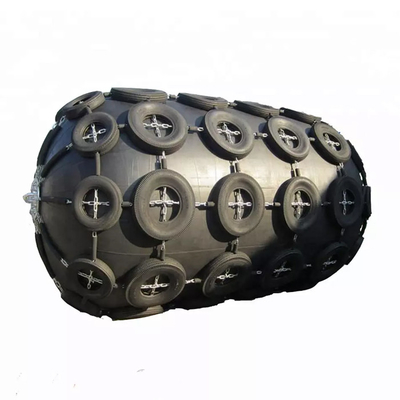
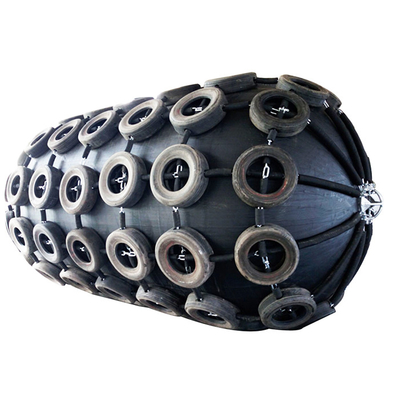
Yokohama Rubber Fender is a high-performance pneumatic marine fender engineered to deliver reliable impact protection during ship berthing, ship-to-ship operations, and port handling activities. Its inflatable cylindrical structure uses compressed air as the cushioning medium, allowing the fender to deform under external pressure, absorb berthing energy, and control the reaction force transferred to the vessel or berthing structure.
The fender is generally manufactured from high-strength synthetic-cord-reinforced rubber with inner and outer rubber layers. The reinforcement structure provides tensile strength, dimensional stability, and resistance to repeated compression. Depending on the selected configuration, the product can be equipped with a protective tire-chain net, lifting accessories, end fittings, and connecting components to meet different operating requirements.
Yokohama Rubber Fenders are available in various diameters and lengths to accommodate different vessel sizes and operating conditions. Common configurations include standard pneumatic fenders and sling-type or net-type arrangements. The appropriate dimensions, initial internal pressure, energy absorption capacity, and reaction force should be determined according to vessel displacement, berthing velocity, installation conditions, and project specifications.
One of the main engineering advantages of pneumatic fenders is their ability to provide flexible contact during vessel movement. Their air-filled construction helps distribute contact pressure over the fender surface, reducing concentrated impact loads. This characteristic is particularly useful in ship-to-ship operations, where vessel movement, relative positioning, and environmental conditions can change during berthing.
The rubber body is designed to withstand marine exposure, repeated deformation, and normal operational wear. Protective netting, when supplied, provides additional external protection against abrasion and localized contact damage. Proper inspection of inflation pressure, rubber condition, connecting components, and protective accessories helps maintain consistent operating performance.
Yokohama Rubber Fenders are widely used in commercial ports, shipyards, offshore support operations, oil terminals, and marine transportation projects. Their flexible installation arrangements and range of available specifications make them suitable for permanent or temporary marine protection systems. With appropriate engineering selection and maintenance, they provide a practical solution for improving berthing safety and protecting valuable marine assets.
Case Study: Shipyard Berthing with Pneumatic Fenders
A coastal shipyard in Southeast Asia was preparing to conduct repeated berthing and outfitting operations for a 35,000 DWT general cargo vessel. During the project, the shipyard needed a temporary fendering arrangement that could accommodate changes in vessel position and water level while providing sufficient cushioning between the vessel and the floating work platform.
The existing solid rubber protection system provided limited flexibility when the vessel approached the platform under changing loading conditions. The shipyard was concerned about localized contact pressure, possible surface damage, and the difficulty of repositioning fixed fender equipment during different construction stages.
Hongruntong Marine reviewed the vessel information, berthing arrangement, available installation space, and required protection conditions. Based on the project requirements, pneumatic Yokohama Rubber Fenders were selected with suitable dimensions and protective net configurations. The installation arrangement allowed the fenders to be positioned along the main contact areas and adjusted when the platform configuration changed.
Before operation, the fenders were inspected for external rubber condition, connection integrity, and internal pressure. The shipyard's technical team also checked the lifting and positioning arrangements to ensure that the fenders remained correctly located during vessel movement.
During subsequent berthing and outfitting operations, the pneumatic fenders provided a flexible cushioning interface between the vessel and the floating platform. Their inflatable structure helped accommodate changes in contact conditions and reduced the risk of direct hard contact. The adjustable arrangement also made it easier for the shipyard to reposition the protection system as work progressed.
The project demonstrated the practical value of pneumatic fender systems in temporary marine engineering applications. The shipyard was able to reuse the fenders during several operating stages after routine inspection and maintenance, reducing the need to prepare separate rigid protection equipment for each stage of the project. The engineering team considered the arrangement suitable for similar floating-platform and shipyard operations, provided that vessel characteristics and berthing conditions were evaluated for each new application.
Specifications
| Place of Origin |
China |
| Brand Name |
Yokohama Rubber Fender |
| Material |
Natural Rubber |
| Color |
Black |
| Application |
Ports with extreme tidal variations; ship-to-ship lightering operations; oil & gas (typically FSRU); temporary berthing |
| Feature |
Heat Resistance |
| Sample |
Usually free |
| Production Method |
Moulding |
| Temperature |
-40℃ ~ 300℃ |
| Packing |
Pallets |
| Lead Time |
7–14 days |
Performance Data by Size and Internal Pressure
Diameter × Length
[mm] |
50 kPa Performance Data |
80 kPa Performance Data |
Hull Pressure at GEA
/ kN/m² |
Reaction Force
/ kN |
Energy Absorption
/ kNm |
Hull Pressure at GEA
/ kN/m² |
Reaction Force
/ kN |
Energy Absorption
/ kNm |
| 1000 × 1500 |
122 |
182 |
32 |
160 |
239 |
45 |
| 1000 × 2000 |
132 |
257 |
45 |
174 |
338 |
63 |
| 1200 × 2000 |
126 |
297 |
63 |
166 |
390 |
88 |
| 1350 × 2500 |
130 |
427 |
102 |
170 |
561 |
142 |
| 1500 × 3000 |
153 |
579 |
153 |
174 |
761 |
214 |
| 1700 × 3000 |
128 |
639 |
191 |
168 |
840 |
267 |
| 2000 × 3500 |
128 |
875 |
308 |
168 |
1150 |
430 |
| 2500 × 4000 |
137 |
1381 |
663 |
180 |
1815 |
925 |
| 2500 × 5500 |
148 |
2019 |
943 |
195 |
2653 |
1317 |
| 3300 × 4500 |
130 |
1884 |
1175 |
171 |
2476 |
1640 |
| 3300 × 6500 |
146 |
3015 |
1814 |
191 |
3961 |
2532 |
| 3300 × 10600 |
158 |
5257 |
3067 |
208 |
6907 |
4281 |
| 4500 × 9000 |
146 |
5747 |
4752 |
192 |
7551 |
6633 |
* Other sizes can be produced according to client requirements.
Key Features
High-Strength Synthetic Cord Reinforcement
The reinforced rubber structure is a critical component of Yokohama Rubber Fender performance. The internal synthetic cord layers are designed to provide tensile strength and maintain the structural integrity of the inflatable body under internal air pressure and external compression. Unlike an unreinforced rubber structure, the reinforced construction helps control dimensional changes and supports repeated deformation during marine operations.
The reinforcement arrangement is integrated with the rubber layers through a controlled manufacturing process. The inner rubber layer provides an air-retaining barrier, while the external rubber layer protects the reinforcement against environmental exposure and mechanical wear. The combination of these materials is intended to maintain the fender's structural stability throughout its service life.
Material selection should consider operating pressure, required dimensions, expected compression cycles, temperature conditions, and exposure to seawater. Proper bonding between rubber and reinforcement is also important because separation between layers may affect structural reliability. Inspection procedures should therefore include checking the outer surface for cuts, abnormal swelling, localized deformation, and other signs of damage.
Controlled Energy Absorption and Reaction Force
Yokohama Rubber Fenders use compressed air to provide cushioning during vessel contact. When a vessel approaches a fender, the cylindrical body deforms and the internal air pressure changes as the fender is compressed. This deformation enables the system to absorb part of the berthing energy and generate a corresponding reaction force.
Energy absorption and reaction force are two essential parameters in marine fender selection. Energy absorption indicates the amount of berthing energy the fender can accommodate under specified conditions, while reaction force represents the force transferred to the contacting vessel or structure. Both values depend on fender dimensions, internal pressure, compression percentage, and applicable test conditions.
The pneumatic design provides flexible contact and can accommodate certain changes in vessel position during berthing. This makes the product suitable for operations where relative vessel movement is expected. For engineering applications, the selected fender model should be evaluated against the vessel's displacement, berthing velocity, approach angle, and allowable structural loads.
Protective Tire Net and External Wear Resistance
Depending on the selected model, Yokohama Rubber Fenders can be equipped with an external protective net made from tires, chains, and connecting components. This arrangement helps protect the rubber body from direct abrasion and localized contact damage during handling and operation.
The tire net distributes external contact over multiple protective elements and provides an additional wear-resistant layer. Its configuration can vary according to fender dimensions, handling requirements, and operating conditions. Connecting chains and fittings must be properly selected to ensure that the protective net remains securely attached.
The protective system also requires periodic inspection. Damaged tires, loose chains, worn connecting rings, and corroded fittings should be identified and addressed before continued operation. Proper maintenance helps preserve the protective function and reduces the likelihood of secondary damage to the main rubber body.
Flexible Installation and Operational Adaptability
Yokohama Rubber Fenders are available in different diameters, lengths, and connection arrangements, allowing engineers to select a configuration suitable for different marine environments. They can be installed between vessels, alongside suitable quay structures, or on floating platforms according to the project design.
Their relatively simple handling arrangement makes them practical for both permanent and temporary applications. Depending on the installation method, lifting accessories, chains, shackles, and other fittings can be configured to support positioning and removal. This flexibility is valuable in shipyards, offshore support projects, and marine construction operations where equipment arrangements may change over time.
The inflatable construction also allows the fender to be stored and transported under controlled conditions when properly prepared according to manufacturer instructions. Before each new deployment, the fender should undergo inspection, pressure verification, and connection checks to confirm that it is suitable for the intended operating conditions.
Applications
Ship-to-Ship Berthing and Offshore Transfer
Yokohama Rubber Fenders are commonly used during ship-to-ship berthing and offshore transfer operations. They provide a cushioning interface between two vessels, helping accommodate relative movement caused by waves, wind, and vessel positioning. The selected dimensions and performance characteristics should be determined according to the displacement of both vessels and the expected berthing conditions.
Commercial Ports and Marine Terminals
At commercial ports, pneumatic fenders can be installed between vessels and suitable berthing structures to reduce direct impact during docking. They are applicable to cargo vessels, bulk carriers, container ships, and other commercial vessels where the fendering arrangement has been properly engineered. Their flexible configuration also supports different berth layouts and operational requirements.
Shipyards and Floating Marine Platforms
Shipyards frequently use pneumatic fenders during vessel repair, outfitting, launching support, and floating-platform operations. Their adjustable installation arrangements allow the protection system to be repositioned as work progresses. They are particularly useful in temporary marine engineering projects where reusable protection equipment can improve operational flexibility.
Why Choose Hongruntong Marine
More Than 30 Years of Manufacturing Experience
Hongruntong Marine has more than 30 years of manufacturing experience in marine and industrial products. This background provides an established understanding of rubber product manufacturing, marine equipment requirements, and the technical considerations involved in supplying products for different operating environments.
Pneumatic fenders require coordinated control of rubber formulation, reinforcement materials, structural dimensions, bonding quality, and air-retaining performance. These factors influence the finished product's reliability and suitability for marine service. Our manufacturing experience supports communication across product design, material selection, production planning, and quality inspection.
For overseas customers, manufacturing experience is also important when dealing with non-standard specifications and project-based requirements. Different ports, shipyards, and offshore operators may have different technical expectations. A supplier familiar with marine product requirements can help review these specifications and identify the information needed before production begins.
Customized Engineering and Product Configurations
Marine projects rarely share exactly the same operating conditions. Vessel dimensions, berthing energy, installation space, operating pressure, and environmental exposure can all influence pneumatic fender selection. Hongruntong Marine supports product configuration according to confirmed customer requirements and applicable engineering conditions.
Customization may involve fender diameter, overall length, protective net arrangement, connecting accessories, and other configuration details. Customers can provide technical drawings, existing equipment information, vessel specifications, or project requirements for preliminary evaluation.
For projects involving special operating conditions, technical communication before production helps reduce misunderstandings regarding dimensions, connection interfaces, and performance expectations. Product drawings and specification documents can be reviewed and confirmed before manufacturing according to the agreed project scope.
Material Selection and Manufacturing Quality Control
The performance of a pneumatic rubber fender depends on the quality and compatibility of its rubber compounds, reinforcement materials, and manufacturing processes. Hongruntong Marine places importance on material selection and production control to support consistent product construction.
The rubber body must provide suitable flexibility, tensile properties, and air-retaining performance. Reinforcement materials must be properly integrated into the rubber structure, while the outer layer must provide protection against normal marine exposure and mechanical contact. These requirements make material preparation, process control, and inspection essential parts of production.
Quality control should cover the relevant stages of manufacturing, including material verification, dimensional checks, appearance inspection, and applicable pressure or performance testing. Inspection scope and documentation can be arranged according to product specifications, customer requirements, and the agreed order conditions.
Technical Communication and After-Sales Support
Reliable technical communication is important when supplying marine equipment to international customers. Hongruntong Marine supports communication throughout product selection, specification confirmation, production coordination, and delivery preparation.
Before quotation, customers can provide product dimensions, operating conditions, vessel information, quantity, and destination port. This information helps clarify the required configuration and avoid selecting a product based only on nominal dimensions.
During order processing, technical documents and production requirements can be confirmed to maintain consistency between the agreed specifications and the supplied products. After delivery, customers can receive guidance on inspection, inflation pressure verification, storage, handling, and routine maintenance according to the applicable product documentation.
This combination of manufacturing experience, configuration support, quality control, and technical communication provides a practical supply framework for shipowners, shipyards, port operators, marine contractors, and equipment distributors.
Frequently Asked Questions
1. What materials are used in Yokohama Rubber Fenders?
Yokohama Rubber Fenders generally use synthetic-cord-reinforced rubber construction, consisting of inner and outer rubber layers with internal reinforcement. The exact rubber formulation and reinforcement specifications depend on the selected model.
2. How do I determine the correct fender diameter and length?
Selection should consider vessel displacement, berthing velocity, required energy absorption, allowable reaction force, and installation space. Engineering evaluation is recommended before confirming the dimensions.
3. Can Yokohama Rubber Fenders be reused in different marine projects?
Yes. They can be reused when their structural condition, internal pressure, connecting components, and protective accessories remain suitable. Inspection should be conducted before every new deployment.
4. What inspection procedures are recommended before operation?
Check the rubber surface, protective net, chains, end fittings, and connecting components. Verify internal pressure according to the specified operating requirements and confirm that the installation arrangement is secure.
5. Can Hongruntong Marine provide certificates and inspection reports?
Available certificates, inspection reports, and technical documents depend on the product model and order requirements. Customers should identify applicable standards and third-party inspection requirements before order confirmation.


 Your message must be between 20-3,000 characters!