Product Overview
D Rubber Fender — Natural Rubber Anti-Collision, CCS Certified
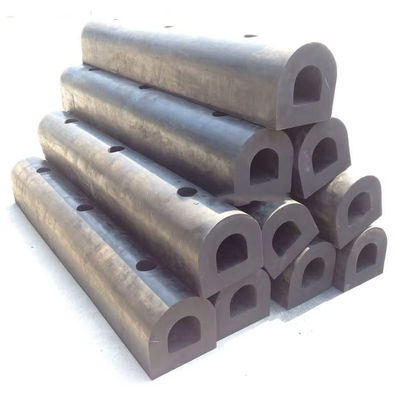
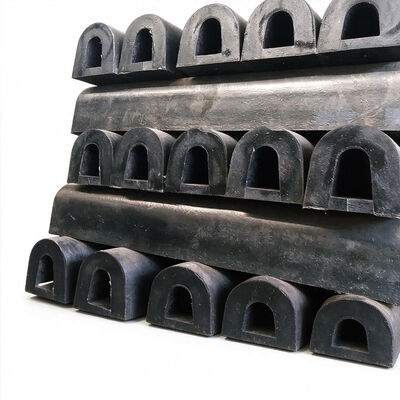
D Fenders are heavy-duty rubber marine protection components designed to reduce impact forces and prevent direct contact damage between vessels and marine structures. Their distinctive D-shaped cross-section combines a flat mounting surface with a rounded external contact face, providing a practical solution for berthing protection in ports, industrial terminals, shipyards, and offshore support facilities.
Manufactured from selected rubber compounds, D Fenders provide elasticity, mechanical strength, abrasion resistance, and resistance to environmental ageing. When a vessel contacts the fender, the rubber body compresses and absorbs part of the impact energy, helping distribute contact pressure and reduce damage to the protected structure. After the external load is removed, the rubber gradually returns toward its original shape, supporting repeated operation within the specified loading limits.
D Fenders are available in different cross-sectional dimensions, lengths, hardness levels, and mounting configurations. Their flat rear surface allows installation on suitable steel plates, concrete walls, timber structures, and other supporting surfaces. Depending on the project, fixing holes and installation details can be customized to match existing infrastructure or new construction drawings.
In industrial marine environments, fender systems must accommodate repeated vessel movement, mechanical friction, environmental exposure, and maintenance requirements. D Fenders provide a relatively simple and adaptable protective arrangement for these conditions. Their compact structure and practical installation characteristics make them suitable for facilities seeking dependable protection with manageable maintenance requirements.
Case Study: Bulk Cargo Terminal Berthing Protection Upgrade
An industrial bulk cargo terminal operating along a coastal waterway required improvements to its vessel protection system. The terminal regularly accommodated approximately 12,000-tonne bulk carriers transporting construction materials and industrial raw materials. During berthing, vessels were positioned alongside a reinforced concrete quay equipped with steel mounting plates and an aging rubber protection system.
Following several years of operation, the existing fenders showed uneven surface wear, localized cracking, and deterioration around some fixing points. The terminal maintenance department also identified several areas where the original fender spacing did not provide adequate contact coverage for vessels with different hull profiles.
The terminal wanted a replacement solution that could use the existing structural arrangement where practical, while improving the consistency of protection along the main berthing area. D Fenders were considered because their flat mounting surface and adaptable dimensions offered a practical option for the available installation space.
The project began with a technical inspection of the quay. Engineers reviewed the condition of the concrete structure, steel mounting plates, fixing locations, and expected vessel contact areas. The required fender dimensions and lengths were then determined according to the installation measurements and project specifications.
The replacement products were manufactured according to the confirmed rubber and dimensional requirements. Before installation, the maintenance contractor removed the deteriorated sections and inspected the supporting surfaces. Damaged or unsuitable fixing components were addressed before the new D Fenders were positioned and secured.
Particular attention was given to alignment and the continuity of the protective contact surface. The installation team checked the fixing points and confirmed that the rubber sections were firmly attached to the prepared mounting structure.
After completion, the terminal introduced a regular inspection procedure covering rubber condition, fixing stability, and structural contact areas. The new installation provided a more consistent protective interface along the designated berthing positions and allowed maintenance personnel to monitor individual sections more efficiently.
The project demonstrated the importance of integrating product selection, structural inspection, and installation planning. The same evaluation procedure could be applied to other industrial berths, provided vessel characteristics, berthing conditions, and structural requirements were independently assessed.
Specifications
| Place of Origin |
China |
| Product Name |
Dock Rubber Fender |
| Type |
D Shape Type |
| Processing Service |
Compression Moulded |
| Color |
Black (More Colors Optional) |
| Material |
Smooth NR |
| Performance |
Excellent chemical and physical properties |
| Logo |
Customer's Request |
| Application |
Port, Dock, Boat |
Dimensional Specifications
| Type |
H |
B |
L |
Holes |
Q |
C |
h |
D |
d |
| D150x150x1000 |
150 |
150 |
1000 |
3 |
350 |
150 |
25 |
40 |
24 |
| D200x200x1000 |
200 |
200 |
1000 |
3 |
353 |
150 |
35 |
55 |
30 |
| D200x200x3000 |
200 |
200 |
3000 |
8 |
400 |
100 |
35 |
55 |
30 |
| D250x250x1000 |
250 |
250 |
1000 |
3 |
350 |
150 |
35 |
60 |
30 |
| D250x250x3000 |
250 |
250 |
3000 |
8 |
400 |
100 |
35 |
60 |
30 |
| D300x300x1000 |
300 |
300 |
1000 |
3 |
350 |
150 |
40 |
65 |
32 |
| D300x300x3000 |
300 |
300 |
3000 |
8 |
400 |
100 |
40 |
65 |
32 |
| D300x360x1000 |
300 |
360 |
1000 |
3 |
350 |
150 |
40 |
65 |
32 |
| D300x360x3000 |
300 |
360 |
3000 |
8 |
400 |
100 |
40 |
65 |
40 |
| D400x400x1000 |
400 |
400 |
1000 |
3 |
400 |
150 |
55 |
80 |
32 |
| D400x400x3000 |
400 |
400 |
3000 |
8 |
400 |
100 |
55 |
80 |
40 |
| D500x500x1000 |
500 |
500 |
1000 |
3 |
350 |
150 |
90 |
97 |
45 |
| D500x500x3000 |
500 |
500 |
3000 |
8 |
400 |
100 |
90 |
97 |
45 |
Technical Data
| Properties |
Test Standard |
Values |
| Compound |
— |
NR / SBR |
| Density (Specific Gravity) |
DIN 53505 |
1200 kg/m³ |
| Tensile Strength |
DIN 53504 |
≥16 MPa |
| Elongation at Break |
DIN 53504 |
≥350% |
| Tear Resistance (23°C) |
DIN 53507 |
≥80 N/cm |
| Abrasion Resistance |
DIN 53516 |
≤100 mm³ |
| Compression Set (24 hrs @ 70°C) |
DIN 53517 |
≤40% |
| Ozone Resistance (ppm 20%, 72 hrs @ 40°C) |
ISO 143/1 |
No cracking visible by eye |
| Change in Hardness |
DIN 53504 |
≤5° |
| Change in Tensile Strength |
DIN 53504 |
≥80% |
| Change in Elongation at Break |
DIN 53504 |
≥80% |
| Minimum Temperature |
— |
-30°C |
| Maximum Temperature |
— |
+70°C |
Key Features
High-Strength Rubber Construction for Industrial Applications
D Fenders are manufactured using rubber compounds selected to provide the mechanical properties required for marine protection. Industrial berthing environments may involve frequent vessel contact, heavy structural loads, and continuous exposure to moisture and weather. The rubber compound must therefore provide an appropriate balance of elasticity, strength, and resistance to mechanical deterioration.
Rubber hardness and formulation influence the deformation behavior of the fender under compression. A suitable compound helps the rubber body maintain its structural integrity during repeated loading while providing the flexibility necessary for impact protection. Material selection should consider the intended contact conditions rather than relying on hardness as the only performance indicator.
For demanding installations, the specification may include requirements relating to tensile strength, elongation, abrasion resistance, ageing resistance, and other relevant material properties. These characteristics should be verified against the applicable product specification and agreed testing criteria. Appropriate material control helps improve manufacturing consistency and supports predictable product performance.
Structural Geometry for Reliable Berthing Protection
The D-shaped cross-section is designed to provide a practical protective interface between vessels and supporting structures. Its rounded external face receives vessel contact, while the flat rear surface provides a stable mounting interface. This geometry allows the fender to be installed along structural edges and selected contact zones without requiring an unnecessarily complicated support arrangement.
Under compression, the rubber profile deforms and helps distribute the applied pressure through the fender body. The amount of deformation and resulting reaction force depend on the profile dimensions, rubber properties, compression level, and loading conditions. Correct selection is essential to ensure that the fender provides suitable protection without transmitting excessive loads to the supporting structure.
The compact profile also makes D Fenders useful in industrial facilities where space limitations affect the design of protective equipment. Their relatively simple geometry supports practical installation and inspection while allowing different lengths and dimensions to be specified according to the structural layout.
Resistance to Wear and Environmental Ageing
Industrial marine fenders are exposed to several deterioration factors, including surface friction, repeated compression, seawater, sunlight, and temperature variation. D Fenders can be manufactured using rubber compounds selected to withstand these conditions and maintain their protective properties during the intended service period.
Abrasion resistance is particularly important in berthing areas where vessels may move laterally against the fender during positioning or changes in water level. Suitable rubber formulation helps reduce material loss caused by repeated friction. The external contact surface should also be inspected regularly for cuts, cracking, and uneven wear.
Environmental ageing can gradually influence the elasticity and surface condition of rubber. Selecting an appropriate compound for the installation environment helps reduce premature deterioration. Where unusual chemical exposure, high temperatures, or particularly severe operating conditions are expected, the material requirements should be reviewed before production.
Adaptable Installation and Long-Term Maintenance
D Fenders offer practical installation flexibility for new construction and replacement projects. Their flat mounting surface allows the fixing arrangement to be coordinated with the supporting structure, while different section lengths can accommodate individual berthing layouts. Depending on the project, customized fixing holes and mounting accessories may also be specified.
Correct installation is important for maintaining the stability of the complete fender system. The mounting substrate must have sufficient strength, and the fixing hardware must be suitable for the anticipated loads and marine exposure. Alignment should be checked to prevent uneven contact and localized loading.
Maintenance requirements are relatively straightforward. Routine inspections should examine the rubber body, fixing hardware, mounting plates, and surrounding structure. Where sectional replacement is permitted by the design, damaged sections can be replaced individually when the supporting structure remains serviceable. Maintaining accurate product drawings and installation records also helps simplify future replacement work.
Applications
Bulk Cargo and Industrial Terminals
D Fenders can be installed along berthing areas used by bulk carriers, material transport vessels, and industrial cargo ships. They provide a protective rubber interface between vessel hulls and quay structures, helping reduce impact-related damage during routine berthing. Product selection should account for vessel displacement, approach velocity, and the structural capacity of the berth.
Industrial Jetties and Loading Platforms
Industrial jetties frequently accommodate vessels involved in transporting raw materials, equipment, and industrial products. D Fenders can protect steel and concrete contact surfaces at designated vessel approach and berthing locations. Their dimensions and mounting configurations can be coordinated with the existing structural arrangement.
Marine Construction and Infrastructure Projects
D Fenders are suitable for selected marine construction projects involving new quay walls, service platforms, docking structures, and vessel access facilities. Customized dimensions and fixing arrangements allow them to be incorporated into different structural designs. Early coordination between the fender specification and civil engineering drawings helps improve installation accuracy.
Why Choose Hongruntong Marine
Over 30 Years of Manufacturing Experience
Hongruntong Marine has more than 30 years of manufacturing experience in marine-related products. This experience provides a strong foundation for understanding the technical and operational requirements of marine protection equipment used in ports, shipyards, industrial terminals, and offshore support facilities.
D Fender projects require coordination between product dimensions, material characteristics, structural conditions, and vessel operating requirements. A suitable product must not only fit the mounting surface but also provide appropriate deformation characteristics under the anticipated contact loads. Understanding these factors is important when preparing specifications for both new installations and replacement projects.
Hongruntong Marine can work with customer drawings, technical descriptions, and application information to clarify the required product configuration. This helps establish a clear manufacturing scope and reduces the possibility of discrepancies between the customer's intended installation and the delivered components.
Material Selection and Product Specification Control
Rubber material selection plays an important role in determining the mechanical performance and durability of D Fenders. Different operating environments may require different combinations of elasticity, hardness, abrasion resistance, and environmental resistance.
Hongruntong Marine can discuss rubber requirements according to the customer's application and agreed technical specification. For industrial terminals with frequent vessel movements, wear resistance and mechanical durability may be important considerations. For exposed coastal installations, environmental ageing resistance may also require particular attention.
The material specification should be confirmed before production, including any required physical properties and inspection criteria. Where customers require particular test reports or material documentation, these requirements can be discussed during order evaluation. This helps establish a more transparent relationship between the requested product properties and the manufacturing acceptance requirements.
Customized Production for Industrial Projects
Industrial marine infrastructure often involves non-standard dimensions and existing structural limitations. Standard D Fender sizes may not always match the required mounting width, projection, or fixing arrangement. Customized manufacturing provides a practical way to coordinate the product with the actual project conditions.
Hongruntong Marine can discuss customization based on customer drawings and confirmed measurements. Requirements may include cross-sectional dimensions, overall length, rubber hardness, fixing-hole positions, and other relevant manufacturing details. For replacement projects, matching the existing mounting arrangement can help reduce additional structural modification and simplify installation.
For larger industrial projects, technical confirmation should include the required quantities, dimensional tolerances, product configuration, inspection requirements, and packing arrangements. Clear communication before production helps ensure that all parties understand the final specification and expected delivery scope.
Quality Inspection and International Supply Capability
Reliable marine fender products require consistent manufacturing and appropriate inspection. Important quality considerations include profile dimensions, rubber surface condition, visible defects, and compliance with agreed material requirements. These checks help identify manufacturing deviations before the products are delivered to the installation site.
Hongruntong Marine can coordinate inspection requirements according to customer specifications and project documentation. Where applicable, customers can discuss material testing, inspection records, and third-party verification arrangements before placing an order. Specific certificates should be confirmed according to the actual product and project requirements.
For international marine projects, product packing and transportation arrangements are also important. D Fenders must be protected against unnecessary damage during handling, storage, and shipment. Hongruntong Marine can coordinate export packing, order documentation, and delivery arrangements according to the destination and transportation requirements.
Frequently Asked Questions
1. What is the main function of a D Fender in industrial ports?
Its main function is to provide a rubber protective barrier between vessels and marine structures. It helps absorb part of the berthing impact energy and reduces direct contact damage to quay walls, steel structures, and vessel surfaces.
2. Can D Fenders be used for large commercial vessels?
Yes, they can be considered for suitable commercial vessel applications. However, the dimensions and configuration must be evaluated against vessel displacement, berthing velocity, contact angle, and structural reaction limits. Larger vessels may require a more comprehensive fender system.
3. What factors influence D Fender performance?
Important factors include rubber formulation, hardness, cross-sectional dimensions, compression level, installation configuration, and actual berthing conditions. Correct product selection should consider all these factors together.
4. Can D Fenders be supplied with inspection reports?
Agreed inspection documentation and relevant material test reports can be discussed before production. Customers should specify the required testing standards, inspection items, and certification requirements during quotation and order confirmation.
5. How should D Fenders be stored before installation?
They should be stored in a clean, dry, and well-ventilated area, away from sharp objects, excessive heat, direct prolonged sunlight, and chemicals that may damage rubber. Avoid placing heavy loads on the profiles or causing permanent deformation during storage.


 Your message must be between 20-3,000 characters!