D Rubber Fender — Natural Rubber Anti-Collision, CCS Certified
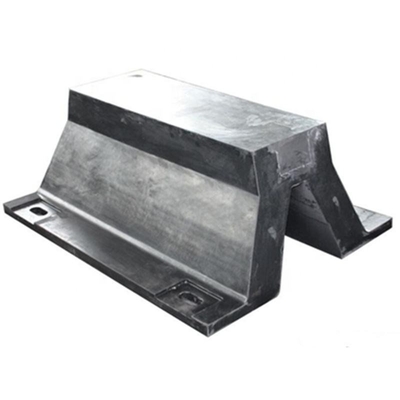
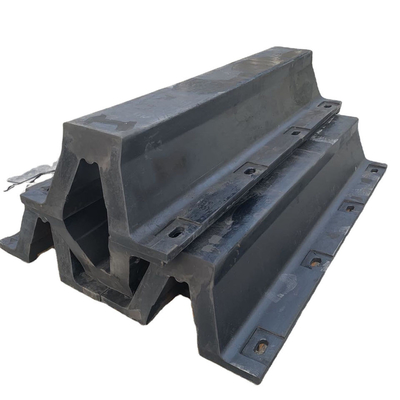
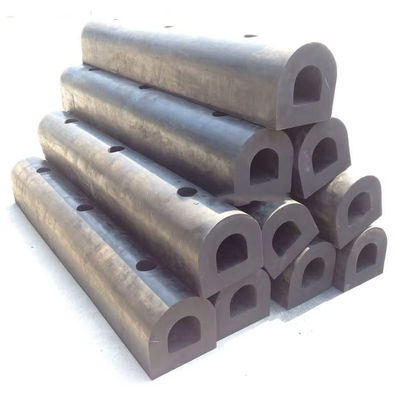
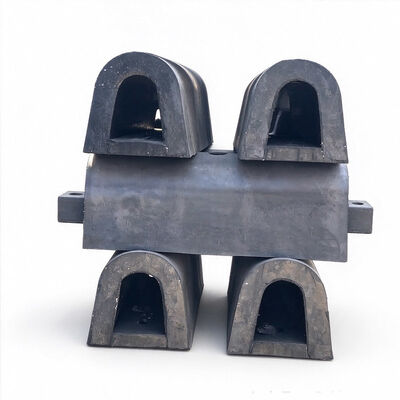
D Fenders are compact marine rubber protection systems designed to absorb berthing impacts and reduce physical damage to vessels, docks, and marine infrastructure. Their characteristic D-shaped cross-section consists of a flat mounting surface and a curved external contact face. This structure provides a practical protective interface for vessels operating in ports, shipyards, industrial terminals, and other marine facilities.
Manufactured from high-quality rubber compounds, D Fenders offer a combination of elasticity, mechanical strength, abrasion resistance, and resistance to environmental exposure. When a vessel makes contact with the fender, the rubber body undergoes controlled compression, helping distribute contact pressure and reduce direct impact against the supporting structure. After unloading, the rubber gradually recovers its original shape, allowing repeated use within the specified operating limits.
D Fenders are particularly suitable for workboats, tugboats, pilot boats, service vessels, and smaller commercial vessels. These vessels frequently maneuver within restricted spaces and may experience repeated contact with quay walls, floating docks, and other structures. The compact D-shaped profile provides practical protection without requiring a complicated installation system.
Available in different dimensions, lengths, and rubber specifications, D Fenders can be adapted to various mounting surfaces and vessel contact requirements. Their straightforward construction also supports inspection, maintenance, and replacement. Properly selected and installed D Fenders help reduce impact-related damage, protect structural coatings, and improve the reliability of daily marine operations.
A regional ship repair facility operated a maintenance quay serving tugboats, harbor service vessels, and coastal cargo ships. Among the vessels regularly using the facility was a 28-meter harbor tug with an approximate displacement of 320 tonnes. During docking and undocking, the tug frequently approached the quay at different angles because of limited maneuvering space and the need to position itself near maintenance equipment.
The existing protection consisted of several worn rubber blocks mounted along the quay edge. Some sections had developed surface cracking and uneven deformation after prolonged use. The maintenance team also identified exposed areas between the blocks where the vessel could make direct contact with the supporting structure.
The facility required a replacement solution that was easy to install and capable of providing more consistent protection along the main contact zones. D Fenders were selected because their compact profile could fit the available mounting area and provide a continuous rubber contact surface.
The project began with an inspection of the existing quay structure. Measurements were taken to determine the required fender height, projection, length, and mounting-hole positions. The replacement configuration was then prepared according to the available steel support plates and the expected contact locations of the tugboat.
During installation, the old rubber blocks were removed and the mounting surfaces were checked for corrosion and structural damage. The new D Fender sections were aligned along the designated contact areas and secured using compatible fixing hardware. Particular attention was given to the joints between sections and the condition of the mounting points.
After installation, the maintenance facility incorporated the fenders into its routine inspection procedures. Tugboat operators and maintenance personnel monitored the contact surfaces during normal berthing activities. The new arrangement provided a more consistent protective interface and made localized inspection easier.
The facility subsequently considered the same profile for additional service berths used by pilot boats and small utility vessels. The project demonstrated how D Fenders can provide practical protection for busy maintenance facilities where vessels frequently maneuver within restricted spaces.
| Place of Origin | China |
|---|---|
| Product Name | Dock Rubber Fender |
| Type | D Shape Type |
| Processing Service | Compression Moulded |
| Color | Black (More Colors Optional) |
| Material | Smooth NR |
| Performance | Excellent chemical and physical properties |
| Logo | Customer's Request |
| Application | Port, Dock, Boat |
| Type | H | B | L | Holes | Q | C | h | D | d |
|---|---|---|---|---|---|---|---|---|---|
| D150x150x1000 | 150 | 150 | 1000 | 3 | 350 | 150 | 25 | 40 | 24 |
| D200x200x1000 | 200 | 200 | 1000 | 3 | 353 | 150 | 35 | 55 | 30 |
| D200x200x3000 | 200 | 200 | 3000 | 8 | 400 | 100 | 35 | 55 | 30 |
| D250x250x1000 | 250 | 250 | 1000 | 3 | 350 | 150 | 35 | 60 | 30 |
| D250x250x3000 | 250 | 250 | 3000 | 8 | 400 | 100 | 35 | 60 | 30 |
| D300x300x1000 | 300 | 300 | 1000 | 3 | 350 | 150 | 40 | 65 | 32 |
| D300x300x3000 | 300 | 300 | 3000 | 8 | 400 | 100 | 40 | 65 | 32 |
| D300x360x1000 | 300 | 360 | 1000 | 3 | 350 | 150 | 40 | 65 | 32 |
| D300x360x3000 | 300 | 360 | 3000 | 8 | 400 | 100 | 40 | 65 | 40 |
| D400x400x1000 | 400 | 400 | 1000 | 3 | 400 | 150 | 55 | 80 | 32 |
| D400x400x3000 | 400 | 400 | 3000 | 8 | 400 | 100 | 55 | 80 | 40 |
| D500x500x1000 | 500 | 500 | 1000 | 3 | 350 | 150 | 90 | 97 | 45 |
| D500x500x3000 | 500 | 500 | 3000 | 8 | 400 | 100 | 90 | 97 | 45 |
| Properties | Test Standard | Values |
|---|---|---|
| Compound | — | NR / SBR |
| Density (Specific Gravity) | DIN 53505 | 1200 kg/m³ |
| Tensile Strength | DIN 53504 | ≥16 MPa |
| Elongation at Break | DIN 53504 | ≥350% |
| Tear Resistance (23°C) | DIN 53507 | ≥80 N/cm |
| Abrasion Resistance | DIN 53516 | ≤100 mm³ |
| Compression Set (24 hrs @ 70°C) | DIN 53517 | ≤40% |
| Ozone Resistance (ppm 20%, 72 hrs @ 40°C) | ISO 143/1 | No cracking visible by eye |
| Change in Hardness | DIN 53504 | ≤5° |
| Change in Tensile Strength | DIN 53504 | ≥80% |
| Change in Elongation at Break | DIN 53504 | ≥80% |
| Minimum Temperature | — | -30°C |
| Maximum Temperature | — | +70°C |
Workboats and service vessels often operate in confined harbor environments where precise positioning is required. Repeated low-speed contact can gradually damage vessel coatings, quay surfaces, and existing protective equipment. D Fenders provide an elastic rubber barrier that helps reduce the severity of these contact events.
The curved external surface creates a defined contact area between the vessel and the structure. When pressure is applied, the rubber deforms and helps distribute the load through the fender body. This reduces the likelihood of direct vessel-to-structure contact when the fender is correctly sized and installed.
For frequently used service berths, the selection process should consider vessel displacement, approach velocity, contact angle, and operating frequency. Although D Fenders are suitable for many general-purpose applications, higher-energy berthing conditions may require a more comprehensive fender system. Reviewing these parameters helps determine whether the proposed D Fender arrangement provides adequate protection.
Many shipyards, floating docks, and service platforms have limited installation space. Large fender systems may interfere with access routes, equipment positioning, or vessel clearance. The compact geometry of D Fenders makes them useful where a protective component must provide sufficient projection without occupying excessive space.
The flat rear surface provides a practical mounting interface, while the rounded contact face offers a smooth protective profile. This configuration can be installed along selected structural edges, vessel contact zones, and docking positions. Different profile dimensions allow the fender arrangement to be coordinated with the available clearance.
Compact installation is especially important for smaller vessels that operate close to quay walls or floating platforms. Proper positioning helps ensure that the fender contacts the intended hull area rather than creating concentrated pressure at unsuitable locations. Installation height and projection should therefore be checked against the vessel's hull geometry and expected water-level variation.
D Fenders are manufactured from rubber compounds designed to withstand repeated mechanical loading. Their performance depends on the balance between rubber elasticity, hardness, tensile properties, and resistance to deformation. Suitable material selection helps maintain the integrity of the fender during routine berthing operations.
Repeated compression may cause gradual changes in rubber performance if the fender is subjected to excessive loads or unsuitable operating conditions. For this reason, the product should be selected according to the intended service environment and the manufacturer's performance information. Excessive compression should be avoided because it may increase reaction forces and accelerate deterioration.
The rubber body should also maintain sufficient structural stability during contact and unloading. Properly manufactured products help provide consistent deformation behavior and reduce the risk of premature damage caused by material inconsistency. Routine inspection remains necessary to identify cracking, cuts, permanent deformation, and other signs of deterioration.
D Fenders have a relatively straightforward construction, making them practical for shipyards and facilities where maintenance personnel need to inspect several berthing positions regularly. The exposed rubber surface allows visual examination of wear patterns, surface damage, and abnormal deformation.
Inspection should also include the fixing system and supporting structure. Loose bolts, corrosion around mounting points, damaged backing plates, or cracks in the substrate may affect the stability of the complete installation. Identifying these conditions early helps prevent a minor maintenance issue from developing into a more serious operational problem.
Where sectional installation is used, individual damaged sections may be replaced without removing the entire fender arrangement, provided the system is designed for this type of maintenance. This can help reduce repair work and simplify spare-part management. Keeping installation drawings and product specifications also makes future replacement orders easier to coordinate.
Tugboats and harbor service vessels frequently maneuver near fixed structures while assisting larger ships, changing berths, and performing harbor operations. D Fenders can be installed along quay walls, service piers, and designated contact points to reduce direct impact and protect structural surfaces.
Repair yards require dependable protection along maintenance quays where vessels repeatedly approach and remain alongside the structure. D Fenders provide a practical rubber barrier for cargo ships, workboats, and service vessels. Their sectional configuration can also support localized replacement during planned maintenance.
Small ports, floating docks, and utility platforms often serve vessels with different hull shapes and dimensions. D Fenders can provide adaptable contact protection along suitable structural edges. Their compact profile is useful where installation space is restricted and routine maintenance access is important.
Hongruntong Marine has more than 30 years of manufacturing experience, serving marine and industrial product requirements. This background provides familiarity with the practical conditions encountered by shipyards, ports, vessel operators, and marine contractors.
D Fender manufacturing requires attention to both product specifications and actual operating conditions. The same rubber profile may be suitable for one berth but inappropriate for another because of differences in vessel displacement, approach velocity, mounting structure, and environmental exposure. Understanding these factors helps establish more realistic product requirements.
Hongruntong Marine can communicate with customers to clarify the intended application and review the technical information provided. This includes product dimensions, rubber specifications, installation conditions, and project quantities. Such coordination helps customers identify important specification details before moving into the production and procurement stages.
Marine facilities frequently serve several vessel categories, including tugboats, pilot boats, workboats, fishing vessels, and coastal cargo ships. Each vessel type may have different hull profiles, contact heights, and berthing characteristics. A suitable fender configuration should reflect these differences rather than relying exclusively on a general-purpose size.
Hongruntong Marine can discuss D Fender configurations according to the customer's vessel information and installation requirements. For smaller service craft, compact dimensions may be preferred to preserve clearance. For larger vessels, the required profile and installation arrangement should be evaluated against the anticipated berthing energy and structural reaction limits.
This application-oriented approach is useful for shipyards and ports purchasing fenders for several berthing positions. By recording the specifications for each location, customers can maintain more consistent replacement requirements and simplify future procurement.
Rubber fender quality is influenced by compound preparation, molding conditions, curing, and dimensional control. Inconsistent manufacturing may result in differences in profile dimensions or physical properties, potentially affecting installation and service performance.
Hongruntong Marine can coordinate manufacturing and inspection requirements according to the confirmed order specification. Relevant inspection items may include profile dimensions, length, appearance, surface condition, and agreed material properties. For projects with specific acceptance criteria, these requirements should be established before manufacturing begins.
This process is particularly important when supplying multiple D Fender sections for one facility. Consistent dimensions and clearly defined material specifications help improve installation coordination and reduce fitting difficulties. Customers requiring additional inspection records or third-party verification can discuss these requirements during order confirmation.
International marine projects often involve communication across different time zones, technical teams, contractors, and procurement departments. Accurate information exchange is essential to ensure that the supplied products meet the installation requirements.
Hongruntong Marine can assist customers with quotation preparation, technical specification confirmation, drawing review, order coordination, and export packing arrangements. Customers can submit product drawings, photographs, or existing fender measurements to help clarify their requirements.
After delivery, technical communication can continue regarding installation details, inspection considerations, and product replacement. Maintaining clear product records helps customers identify the correct specifications when purchasing additional sections or planning future maintenance. This supports more efficient coordination throughout the procurement process.
Yes. D Fenders are commonly considered for tugboat berths, harbor service stations, and workboat facilities. The dimensions and installation arrangement should be selected according to the tugboat's displacement, hull shape, and expected berthing conditions.
They are designed for repeated compression within their specified operating limits. Suitable rubber formulation, correct dimensions, and proper installation are important for maintaining performance during frequent berthing operations.
Yes. They can be installed on suitable floating structures, provided the mounting arrangement accounts for the dock's construction, movement, and expected contact loads.
Inspection frequency depends on vessel traffic, operating conditions, environmental exposure, and the importance of the berthing facility. Regular visual inspections should check rubber deterioration, abnormal deformation, fixing hardware, and mounting structure conditions.
Yes. Customized dimensions, lengths, rubber specifications, and fixing arrangements can be discussed according to technical drawings and project requirements. Customers should provide installation measurements and relevant vessel information for evaluation.