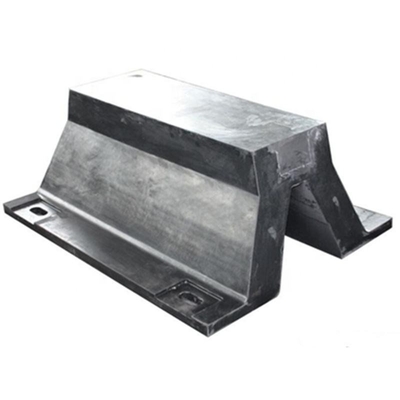
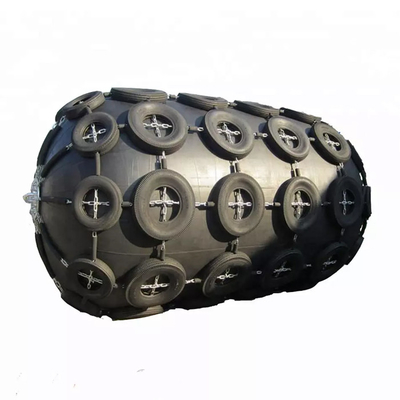
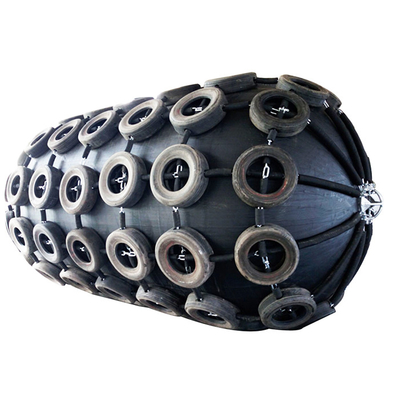
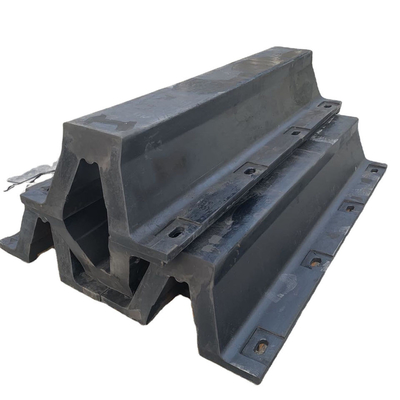
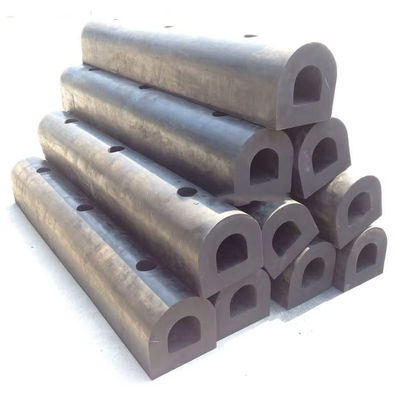
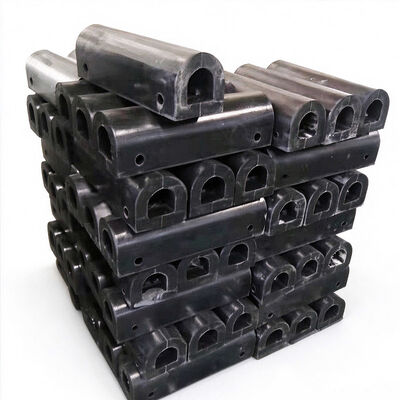
D Fenders are versatile rubber marine fendering products designed to protect vessels and marine structures from contact damage during berthing, mooring, and maneuvering operations. Featuring a distinctive D-shaped cross-section, the product combines a flat mounting surface with a rounded external contact face. This configuration provides a practical balance between installation convenience, structural adaptability, and impact protection.
D Fenders are manufactured from durable rubber compounds with properties selected according to the intended operating environment. Their elastic structure allows controlled deformation under external pressure, helping absorb part of the impact energy generated when vessels approach fixed structures. After the applied load is removed, the rubber gradually recovers its original profile, allowing repeated operation within the specified performance limits.
One important advantage of D Fenders is their adaptability to different installation requirements. They can be manufactured in various widths, heights, lengths, and rubber hardness levels. The flat rear surface makes them suitable for mounting on prepared steel plates, concrete structures, timber supports, and other compatible surfaces. Depending on the project, fixing holes, bolt positions, and section lengths can be customized to match the installation drawings.
D Fenders are widely used in commercial ports, shipyards, floating docks, workboat stations, and industrial marine facilities. Their compact structure is particularly useful where available installation space is limited or where existing fender systems need replacement. Correct dimensional selection and mounting design help maintain consistent contact protection, reduce maintenance difficulties, and improve the operational reliability of marine infrastructure.
A shipyard specializing in coastal cargo vessel construction planned to upgrade the protection system along its newly developed outfitting quay. The facility regularly handled vessels with displacements of approximately 4,500 tonnes, including general cargo ships and offshore support vessels. During final positioning and equipment installation, vessels frequently approached the quay at low speeds, creating repeated contact at different hull heights.
The original protection arrangement consisted of several independent rubber blocks. However, the spacing between these components resulted in uneven contact distribution, particularly when vessels with different hull geometries used the same berth. The shipyard required a more adaptable solution that could provide better coverage while fitting the existing steel support structure.
After reviewing the installation drawings and available mounting dimensions, D Fenders were selected for the replacement project. The design team considered the contact height, required fender projection, available clearance, and position of the existing fixing points. Customized lengths and mounting-hole arrangements were specified to accommodate the quay structure and reduce unnecessary modification work.
During installation, the steel mounting surfaces were inspected and prepared before the fender sections were positioned and secured. Alignment was checked to maintain a consistent contact profile along the designated berthing area. The installation was subsequently inspected to confirm that the fixing hardware was properly positioned and that the rubber sections were firmly attached.
Following commissioning, the shipyard used the upgraded berth for different vessel types within the approved operating conditions. The continuous contact arrangement helped reduce localized exposure of the quay structure and simplified routine inspections. Maintenance personnel could examine individual sections and identify areas requiring attention without dismantling the complete system.
The project demonstrated the importance of coordinating fender dimensions with actual structural conditions. The customized arrangement provided a practical solution for the shipyard's mixed-vessel operations and established a repeatable specification process for other berthing positions with similar requirements.
| Place of Origin | China |
|---|---|
| Product Name | Dock Rubber Fender |
| Type | D Shape Type |
| Processing Service | Compression Moulded |
| Color | Black (More Colors Optional) |
| Material | Smooth NR |
| Performance | Excellent chemical and physical properties |
| Logo | Customer's Request |
| Application | Port, Dock, Boat |
| Type | H | B | L | Holes | Q | C | h | D | d |
|---|---|---|---|---|---|---|---|---|---|
| D150x150x1000 | 150 | 150 | 1000 | 3 | 350 | 150 | 25 | 40 | 24 |
| D200x200x1000 | 200 | 200 | 1000 | 3 | 353 | 150 | 35 | 55 | 30 |
| D200x200x3000 | 200 | 200 | 3000 | 8 | 400 | 100 | 35 | 55 | 30 |
| D250x250x1000 | 250 | 250 | 1000 | 3 | 350 | 150 | 35 | 60 | 30 |
| D250x250x3000 | 250 | 250 | 3000 | 8 | 400 | 100 | 35 | 60 | 30 |
| D300x300x1000 | 300 | 300 | 1000 | 3 | 350 | 150 | 40 | 65 | 32 |
| D300x300x3000 | 300 | 300 | 3000 | 8 | 400 | 100 | 40 | 65 | 32 |
| D300x360x1000 | 300 | 360 | 1000 | 3 | 350 | 150 | 40 | 65 | 32 |
| D300x360x3000 | 300 | 360 | 3000 | 8 | 400 | 100 | 40 | 65 | 40 |
| D400x400x1000 | 400 | 400 | 1000 | 3 | 400 | 150 | 55 | 80 | 32 |
| D400x400x3000 | 400 | 400 | 3000 | 8 | 400 | 100 | 55 | 80 | 40 |
| D500x500x1000 | 500 | 500 | 1000 | 3 | 350 | 150 | 90 | 97 | 45 |
| D500x500x3000 | 500 | 500 | 3000 | 8 | 400 | 100 | 90 | 97 | 45 |
| Properties | Test Standard | Values |
|---|---|---|
| Compound | — | NR / SBR |
| Density (Specific Gravity) | DIN 53505 | 1200 kg/m³ |
| Tensile Strength | DIN 53504 | ≥16 MPa |
| Elongation at Break | DIN 53504 | ≥350% |
| Tear Resistance (23°C) | DIN 53507 | ≥80 N/cm |
| Abrasion Resistance | DIN 53516 | ≤100 mm³ |
| Compression Set (24 hrs @ 70°C) | DIN 53517 | ≤40% |
| Ozone Resistance (ppm 20% 72 hrs @ 40°C) | ISO 143/1 | No cracking visible by eye |
| Change in Hardness | DIN 53504 | ≤5° |
| Change in Tensile Strength | DIN 53504 | ≥80% |
| Change in Elongation at Break | DIN 53504 | ≥80% |
| Minimum Temperature | — | -30°C |
| Maximum Temperature | — | +70°C |
D Fenders can be manufactured in a range of cross-sectional dimensions to accommodate different vessel sizes, mounting structures, and available installation spaces. The width and height of the profile influence its projection from the supporting surface, contact area, and deformation behavior. Selecting the correct dimensions is therefore essential for achieving the intended protection without interfering with vessel access or other port operations.
For replacement projects, the existing installation can be measured to determine whether the original profile should be retained or modified. For new construction, the fender dimensions can be coordinated with structural drawings and the expected vessel contact zone. This allows engineers to consider the fender arrangement during the infrastructure design stage rather than treating it as an independent component.
Customized dimensions are particularly useful when dealing with non-standard quay geometries, restricted mounting areas, or vessels with specific hull configurations. However, dimensional customization must also consider energy absorption requirements and allowable reaction forces. The final profile should be selected through an appropriate technical assessment rather than simply increasing the rubber size to obtain greater protection.
The flat rear surface of a D Fender provides a convenient interface for installation on various structural substrates. Depending on the project, fixing arrangements may include pre-drilled holes, bolts, washers, backing plates, and other compatible accessories. The position and spacing of fixing points can be coordinated with the supporting structure to improve installation accuracy.
For steel structures, the mounting arrangement should consider plate thickness, hole positioning, corrosion protection, and load transfer. For concrete structures, suitable anchors and adequate substrate strength are important. The fixing system must be designed to resist the forces transmitted through the rubber body during vessel contact.
Project-specific mounting configurations can also help simplify replacement work. When dimensions and fixing positions are clearly documented, maintenance teams can prepare the supporting structure and installation hardware before replacement components arrive. This reduces unnecessary adjustment during installation and helps maintain alignment across multiple fender sections.
The D-shaped rubber body provides a deformable contact surface that helps reduce the severity of vessel impacts. Under compression, the curved external face transfers the applied load into the rubber structure, allowing deformation to take place before direct contact occurs between the vessel and the protected structure.
The performance of the fender depends on the rubber compound, hardness, profile geometry, compression level, and loading conditions. These parameters influence reaction force and energy absorption. For installations involving heavier vessels or more demanding berthing conditions, engineering calculations and manufacturer performance data should be used to verify the suitability of the proposed profile.
The elastic structure also supports repeated operation when loads remain within the specified limits. Following unloading, the rubber recovers toward its original shape and remains available for subsequent contact. Proper specification helps avoid excessive compression and reduces the likelihood of premature structural damage.
D Fenders can be supplied in customized lengths to match different berth layouts. Depending on the project design, separate sections can be arranged along a continuous mounting line or installed at selected contact locations. This flexibility helps accommodate different structural dimensions and simplifies transportation and handling.
Sectional installation also provides practical maintenance advantages. If one section becomes significantly damaged, the affected area can be evaluated and replaced independently when the mounting arrangement permits. This avoids automatically removing the entire protective system and can help reduce maintenance work.
For longer installations, attention should be given to section alignment, joint positioning, and the continuity of the protective surface. Properly coordinated lengths and fixing arrangements help minimize unnecessary gaps and maintain a consistent fender profile. The installation plan should also allow sufficient access for future inspection and replacement activities.
D Fenders can be incorporated into new port construction projects where protective components need to be coordinated with concrete quay walls, steel structures, and other supporting infrastructure. Customized dimensions and mounting arrangements allow the fender system to follow the approved structural drawings and designated vessel contact zones.
Floating docks and pontoons require compact protection systems that can accommodate repeated contact from recreational vessels, workboats, and service craft. D Fenders can be installed along selected edges and contact areas to reduce direct impact against the supporting structure. Their dimensions should account for the movement and structural characteristics of the floating facility.
Offshore support bases and industrial marine facilities accommodate vessels that regularly approach service platforms and loading areas. D Fenders can provide localized impact protection at designated contact points, helping protect structural surfaces during routine operations. The final arrangement should consider vessel movement, environmental exposure, and the operational loads expected at the facility.
Hongruntong Marine has more than 30 years of manufacturing experience in the marine industry, supporting customers with a range of rubber marine products and industrial protection solutions. This manufacturing background provides a practical understanding of the dimensional, material, and installation requirements associated with marine fendering systems.
For D Fender projects, experience is particularly valuable when customers need to replace existing products or develop a customized installation. Different berthing structures may have different mounting limitations, while vessels operating at the same port may have substantially different hull profiles and contact conditions. Understanding these differences helps establish a more appropriate product specification.
Hongruntong Marine works with customer-provided drawings, technical requirements, and application information to clarify the manufacturing scope. This supports communication between customers, engineering teams, and procurement departments, helping ensure that the supplied product corresponds with the intended installation requirements.
Standard product dimensions cannot always satisfy the requirements of marine construction and replacement projects. Hongruntong Marine can discuss customized D Fender dimensions and configurations based on customer drawings and confirmed specifications.
Customization may include cross-sectional dimensions, overall length, rubber hardness, fixing-hole positions, and other manufacturing details. For projects involving existing steel structures, accurate mounting information is particularly important because even small differences in hole positioning can create difficulties during installation.
Before production, the technical requirements should be reviewed to confirm dimensional tolerances, material specifications, quantities, and any special inspection requirements. Where the application involves demanding berthing conditions, customers should also provide relevant vessel and structural information so that the proposed fender configuration can be evaluated appropriately.
The quality of a D Fender is influenced by raw material selection, rubber mixing, molding, curing, and dimensional control. Each stage contributes to the finished product's physical properties and overall consistency. Proper process control helps reduce dimensional variation and supports reliable fitting during installation.
Hongruntong Marine places importance on coordinating manufacturing requirements with the agreed product specification. Relevant inspection items may include cross-sectional dimensions, length, appearance, surface condition, and other project-defined properties. For customized orders, inspection criteria should be established before production to ensure that the finished products can be evaluated against the customer's requirements.
Consistent manufacturing is especially important for projects requiring multiple fender sections. Matching dimensions and material specifications help maintain a uniform installation profile and simplify future replacement procurement.
Marine fender procurement often involves several stages, including technical confirmation, manufacturing, inspection, packing, and transportation. Clear coordination throughout these stages helps reduce communication errors and supports project scheduling.
Hongruntong Marine can assist customers in confirming drawings, product dimensions, fixing requirements, order quantities, and packaging details. For international orders, export packing and shipment coordination can also be discussed according to the destination and transportation method.
After delivery, customers can consult the company regarding product specifications, installation considerations, and routine inspection. Maintaining clear records of the original dimensions and mounting configuration is also useful when replacement components are required in the future. This project-oriented support helps customers manage both initial procurement and subsequent maintenance more effectively.
Yes. Customized production can be discussed according to confirmed drawings, dimensions, rubber requirements, and mounting details. Technical information should be reviewed before production to establish the final specification.
Yes. Fixing-hole positions and spacing can be specified according to the mounting arrangement, provided the design is technically and commercially feasible. Customers should supply accurate drawings or measurements.
The available length depends on the profile dimensions, manufacturing capabilities, and transportation requirements. Longer installations can also be designed using multiple sections. The required length should be confirmed during technical evaluation.
Yes. They can be used with cargo vessels, workboats, tugboats, service craft, and other vessels when properly specified. The profile and installation must be suitable for the vessel's displacement, berthing conditions, and contact geometry.
Customers should provide cross-sectional dimensions, required length, quantity, rubber hardness, fixing-hole details, installation drawings, application environment, and any special quality requirements. Photographs of the existing installation are also helpful.