Product Overview
Marine Bumper Anti Collision — CCS Certified, Long Service Life
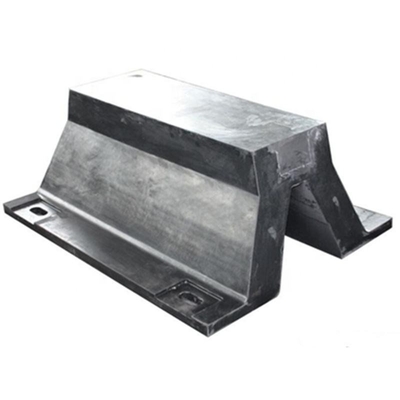
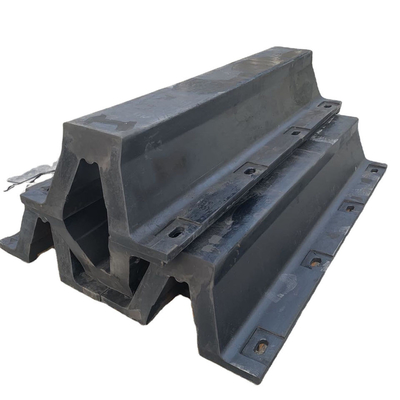
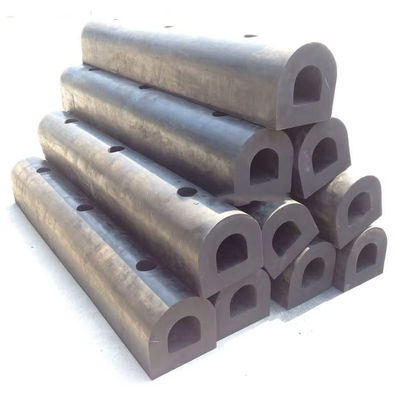
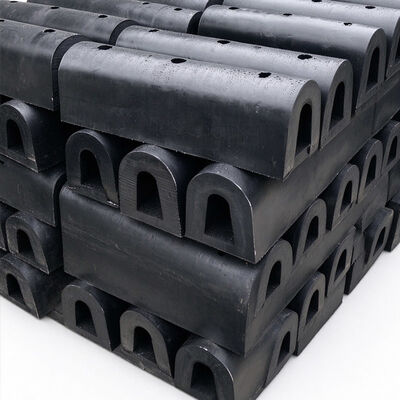
D Fenders are rubber marine protection components designed to reduce direct impact between vessels and fixed structures during berthing and routine maneuvering. Their D-shaped cross-section provides a curved contact surface for absorbing impact energy and a flat rear surface for secure mounting. Available in various dimensions and lengths, D Fenders can be specified according to vessel characteristics, installation space, and the operating requirements of ports, shipyards, and marine facilities.
Manufactured from selected rubber compounds, D Fenders are designed to withstand repeated compression, surface friction, and environmental exposure. Their elastic structure allows the rubber to deform when subjected to contact loads and recover after unloading, helping maintain a protective barrier during repeated vessel movements. Material hardness, rubber formulation, and cross-sectional dimensions influence the fender's reaction force, deformation behavior, and resistance to wear.
In marine environments, fenders may be exposed to seawater, ultraviolet radiation, temperature changes, and mechanical abrasion. Appropriate compound selection and manufacturing control are therefore important for maintaining performance over time. The fender profile must also be matched to the mounting arrangement to avoid excessive deformation, uneven loading, or premature damage around fixing points.
D Fenders are particularly suitable for installations requiring a compact, durable, and maintainable protective system. They can be installed along quay walls, floating structures, workboat platforms, and vessel contact zones. With suitable specification and regular inspection, they help reduce structural damage, support maintenance planning, and provide a practical solution for long-term marine operations.
Case Study: Coastal Maintenance Port
A coastal maintenance port servicing approximately 5,000-tonne cargo vessels experienced repeated wear along the steel contact surfaces of its service berth. The existing rubber protection had deteriorated unevenly after prolonged exposure to vessel movement, friction, sunlight, and marine moisture. Maintenance personnel found that the damaged sections required frequent inspection, while exposed steel surfaces were becoming increasingly vulnerable to impact-related coating damage.
The port operator evaluated replacement options with an emphasis on abrasion resistance, installation practicality, and long-term maintenance. D Fenders were considered suitable because their compact geometry could accommodate the available mounting area while providing a continuous rubber contact surface along the most frequently used berthing positions.
Before installation, the maintenance team measured the existing steel support structure and reviewed the vessel contact height. The replacement specification included the required profile dimensions, rubber properties, overall lengths, and compatible fixing hardware. The installation was planned to ensure that the fenders were properly aligned and that the mounting points could withstand the anticipated service loads.
Following installation, the port operator incorporated the new fenders into its routine inspection program. Personnel monitored the rubber surfaces, fixing points, and surrounding steelwork for abrasion, loosening, and abnormal deformation. This approach made it easier to identify localized wear and schedule repairs before defects affected the overall protective arrangement.
The project illustrates how appropriate rubber selection, correct installation, and systematic inspection can work together to support long-term fender performance. For comparable berths, the same assessment process can be applied after considering differences in vessel displacement, berthing velocity, environmental exposure, and structural configuration. Actual service-life improvements should be established through operating records and periodic condition assessments.
Specifications
| Place of Origin |
China |
| Product Name |
Dock Rubber Fender |
| Type |
D Shape Type |
| Processing Service |
Compression Moulded |
| Color |
Black (More Colors Optional) |
| Material |
Smooth NR |
| Performance |
Excellent chemical and physical properties |
| Logo |
Customer's Request |
| Application |
Port, Dock, Boat |
Dimensional Specifications
| Type |
H |
B |
L |
Holes |
Q |
C |
h |
D |
d |
| D150x150x1000 |
150 |
150 |
1000 |
3 |
350 |
150 |
25 |
40 |
24 |
| D200x200x1000 |
200 |
200 |
1000 |
3 |
353 |
150 |
35 |
55 |
30 |
| D200x200x3000 |
200 |
200 |
3000 |
8 |
400 |
100 |
35 |
55 |
30 |
| D250x250x1000 |
250 |
250 |
1000 |
3 |
350 |
150 |
35 |
60 |
30 |
| D250x250x3000 |
250 |
250 |
3000 |
8 |
400 |
100 |
35 |
60 |
30 |
| D300x300x1000 |
300 |
300 |
1000 |
3 |
350 |
150 |
40 |
65 |
32 |
| D300x300x3000 |
300 |
300 |
3000 |
8 |
400 |
100 |
40 |
65 |
32 |
| D300x360x1000 |
300 |
360 |
1000 |
3 |
350 |
150 |
40 |
65 |
32 |
| D300x360x3000 |
300 |
360 |
3000 |
8 |
400 |
100 |
40 |
65 |
40 |
| D400x400x1000 |
400 |
400 |
1000 |
3 |
400 |
150 |
55 |
80 |
32 |
| D400x400x3000 |
400 |
400 |
3000 |
8 |
400 |
100 |
55 |
80 |
40 |
| D500x500x1000 |
500 |
500 |
1000 |
3 |
350 |
150 |
90 |
97 |
45 |
| D500x500x3000 |
500 |
500 |
3000 |
8 |
400 |
100 |
90 |
97 |
45 |
Technical Data
| Properties |
Test Standard |
Values |
| Compound |
— |
NR / SBR |
| Density (Specific Gravity) |
DIN 53505 |
1200 kg/m³ |
| Tensile Strength |
DIN 53504 |
≥16 MPa |
| Elongation at Break |
DIN 53504 |
≥350% |
| Tear Resistance (23°C) |
DIN 53507 |
≥80 N/cm |
| Abrasion Resistance |
DIN 53516 |
≤100 mm³ |
| Compression Set (24 hrs @ 70°C) |
DIN 53517 |
≤40% |
| Ozone Resistance (ppm 20%, 72 hrs @ 40°C) |
ISO 143/1 |
No cracking visible by eye |
| Change in Hardness |
DIN 53504 |
≤5° |
| Change in Tensile Strength |
DIN 53504 |
≥80% |
| Change in Elongation at Break |
DIN 53504 |
≥80% |
| Minimum Temperature |
— |
-30°C |
| Maximum Temperature |
— |
+70°C |
Key Features
Abrasion Resistance for Repeated Vessel Contact
D Fenders are intended for marine environments where repeated vessel contact and surface friction can gradually wear down protective components. Their rubber contact face provides a replaceable protective layer between the vessel and the supporting structure. Selecting a suitable compound helps balance elasticity with resistance to surface wear, supporting reliable operation under the expected contact conditions.
Abrasion performance depends on the rubber formulation, contact pressure, relative movement, surface roughness, and frequency of vessel operations. A fender used at a berth with frequent lateral movement may experience a different wear pattern from one exposed mainly to low-speed perpendicular contact. These factors should be considered during material selection to avoid specifying a compound based only on general hardness or nominal dimensions.
Regular inspection remains essential even when abrasion-resistant rubber is used. Deep cuts, exposed reinforcement in specialized constructions, cracking, or uneven wear may indicate that the fender requires repair or replacement. Monitoring these conditions helps maintenance teams distinguish normal surface wear from damage that could compromise protective performance.
Resistance to Marine Environmental Exposure
Marine rubber components are exposed to a combination of moisture, salt deposits, sunlight, and temperature variation. D Fenders should therefore use compounds suitable for the intended environmental conditions. Appropriate formulation can help limit premature surface degradation and maintain the rubber's elastic behavior during repeated use.
Environmental resistance is influenced by the specific compound and the severity of exposure. A sheltered harbor installation may experience different ageing conditions from a berth exposed to intense sunlight and frequent wetting. Where special chemical exposure, unusually high temperatures, or other demanding conditions are anticipated, the material specification should be reviewed before production.
The mounting system also contributes to long-term reliability. Corrosion-resistant or appropriately protected fasteners may be necessary depending on the installation environment. Regular checks of the rubber body and fixing hardware help identify deterioration that could otherwise remain unnoticed until the fender becomes loose or displaced.
Stable Compression and Elastic Recovery
The protective function of a D Fender depends on its ability to deform under contact loads and recover after the load is removed. The D-shaped profile provides a compact rubber section that can compress under pressure while maintaining a defined contact surface. Correct sizing helps control the amount of deformation and reduces the risk of excessive compression under the intended operating conditions.
Rubber hardness and cross-sectional geometry affect the relationship between deformation and reaction force. A profile that is too small may not provide adequate protection, while an unsuitable oversized or excessively stiff profile may transmit higher forces to the supporting structure. Selection should therefore consider the vessel's displacement, approach conditions, available clearance, and required energy absorption.
For demanding applications, the manufacturer's performance data should be reviewed against the project design requirements. The actual energy absorption capacity and reaction force should not be inferred from the D-shaped appearance alone. Proper engineering selection helps ensure that the fender performs within its intended operating range.
Practical Maintenance and Component Replacement
The relatively simple structure of D Fenders allows routine inspection without complex dismantling in many installations. Maintenance personnel can check the exposed surface, overall profile, mounting alignment, and condition of the fixing hardware. Any abnormal deformation, cracking, loose fasteners, or damage to the supporting structure should be assessed promptly.
Where fenders are installed in individual sections, replacement can often be limited to the affected area if the remaining components and mounting substrate are in acceptable condition. This approach may reduce unnecessary maintenance work and help keep berthing facilities operational. Replacement procedures should follow the installation design, including the correct fastener specification and tightening requirements.
A planned inspection schedule is particularly useful at busy ports where vessels repeatedly use the same berthing positions. Recording the location and condition of each fender helps identify recurring wear patterns and supports better decisions about material selection, installation adjustments, and replacement intervals.
Applications
Coastal Ports and Exposed Berthing Areas
D Fenders can be used at coastal ports where rubber components experience frequent wetting, sunlight, and repeated vessel contact. Suitable material selection and appropriate fixing arrangements help maintain protective performance under these conditions. The installation should account for local environmental exposure and the operating profile of the vessels using the berth.
Steel Quays and Industrial Jetties
Industrial jetties often require protection against localized impacts and friction that may damage steel coatings or structural surfaces. D Fenders provide a rubber contact interface that helps reduce direct contact between vessels and steelwork. Their dimensions and mounting hardware should be selected to match the structural arrangement and expected loads.
Maintenance Berths and Service Piers
Maintenance berths accommodate vessels during inspections, repairs, and service operations. D Fenders can help protect these facilities from repeated low-speed contact while allowing straightforward condition monitoring. Where different vessel types share the same berth, the fender arrangement should be checked against the full range of expected contact conditions.
Why Choose Hongruntong Marine
More Than 30 Years of Manufacturing Experience
Hongruntong Marine has more than 30 years of manufacturing experience in marine-related products. This experience provides a foundation for understanding the practical challenges associated with port protection, vessel contact, rubber product selection, and industrial supply requirements.
For D Fender projects, product selection involves more than identifying a standard profile. The intended application, mounting structure, environmental exposure, and anticipated vessel movement all influence the final specification. Reviewing these factors before production helps establish a clearer relationship between the product supplied and the operating requirements of the facility.
Customers can provide technical drawings, dimensions, photographs, or written specifications to support product evaluation. Where information is incomplete, the outstanding requirements should be clarified before confirming the order. This process helps reduce misunderstandings and improves coordination between engineering, procurement, and installation teams.
Material Selection Based on Service Conditions
The performance of a rubber fender depends heavily on the properties of its rubber compound. Hongruntong Marine can discuss material requirements according to the intended service environment, expected wear, and required deformation characteristics. Important considerations include hardness, elasticity, ageing resistance, abrasion resistance, and compatibility with the operating conditions.
Different applications may require different material priorities. A berth with frequent sliding contact may place greater emphasis on abrasion resistance, while another installation may require a particular balance between flexibility and reaction force. Identifying these priorities early helps establish a suitable specification rather than relying on generic material descriptions.
Where specific material properties are required, the acceptance criteria and available verification documents should be agreed before production. This supports more transparent procurement and allows the delivered product to be evaluated against the requirements established for the project.
Dimensional Accuracy and Manufacturing Consistency
D Fenders must fit their mounting surfaces and provide the intended contact geometry. Variations in profile dimensions, length, or fixing-hole positions can complicate installation and affect alignment. Dimensional checks are therefore important for products manufactured to project-specific requirements.
Hongruntong Marine can review the customer's requested dimensions and drawings to clarify the required tolerances, section lengths, and fixing arrangements. Production requirements should be confirmed before manufacturing begins, particularly when replacement fenders must match an existing installation or when multiple sections need to align along a long berth.
Manufacturing consistency also supports maintenance planning. When replacement components follow the approved specification, operators can more easily coordinate future procurement and reduce uncertainty when replacing worn sections. Final acceptance should be based on the agreed drawings, inspection criteria, and project requirements.
Long-Term Technical and Maintenance Coordination
Fender reliability depends on correct installation and continued condition monitoring as well as manufacturing quality. Hongruntong Marine can assist customers in clarifying product-related questions concerning dimensions, fixing methods, inspection considerations, and replacement requirements.
For replacement projects, information about the existing fender profile and mounting structure can help determine whether the original configuration remains appropriate. If vessel operating conditions have changed, the specification should be reviewed rather than automatically repeating the previous dimensions.
Clear documentation of product specifications, order details, and agreed inspection requirements supports future maintenance. By establishing these details during procurement, customers can improve coordination between port operators, maintenance contractors, and purchasing teams throughout the product's service life.
Frequently Asked Questions
1. How can the service life of D Fenders be extended?
Service life can be supported by selecting a suitable rubber compound, installing the fender correctly, avoiding loads beyond its intended capacity, and carrying out regular inspections. Damaged or loose components should be assessed promptly.
2. Are D Fenders suitable for continuous outdoor installation?
Yes, provided the rubber compound is appropriate for the expected sunlight, moisture, temperature variation, and marine exposure. Special environmental conditions should be identified before the material is selected.
3. How do I determine the correct rubber hardness?
Rubber hardness should be selected according to the required deformation, reaction force, wear resistance, and operating conditions. Hardness alone does not determine energy absorption, so the complete fender specification should be evaluated.
4. Can damaged D Fender sections be replaced individually?
In many installations, individual sections can be replaced if the design allows sectional replacement and the mounting structure remains sound. The replacement dimensions and fixing arrangement should match the approved installation requirements.
5. What information is needed for a D Fender quotation?
Provide the required cross-sectional dimensions, length, quantity, rubber requirements, mounting-hole details, application, and delivery destination. Drawings or photographs of the installation are helpful when matching an existing fender.


 Your message must be between 20-3,000 characters!