Product Overview
Dock Bumper Natural Rubber Shock Absorbing Customized Size
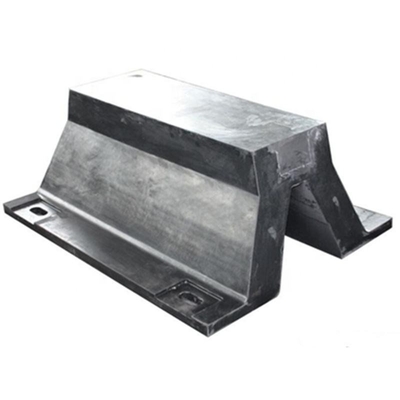
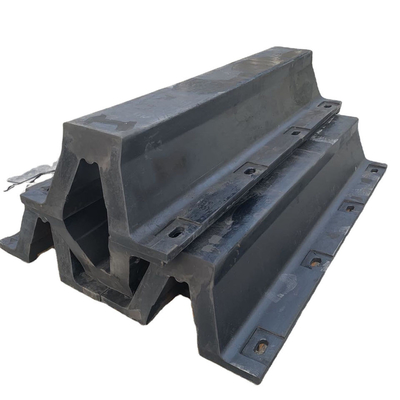
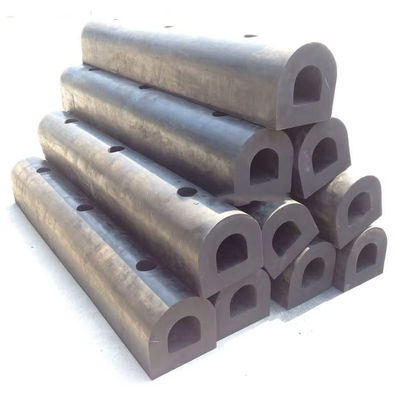
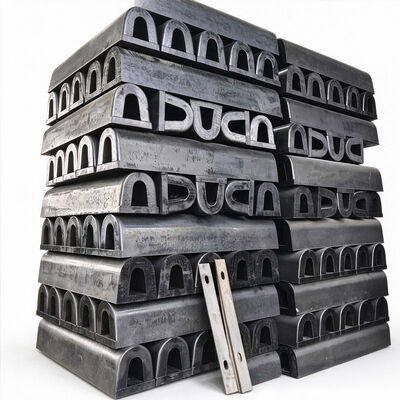
D Fenders are compact marine rubber fenders designed to provide reliable impact protection for vessels, docks, quay walls, and other marine structures. Their characteristic D-shaped cross-section combines a flat mounting surface with a curved impact face, allowing the fender to absorb berthing energy while maintaining a practical installation profile. Depending on project requirements, D Fenders can be manufactured in different dimensions, lengths, rubber compounds, and mounting configurations.
Manufactured from durable rubber compounds, D Fenders provide resistance to repeated compression, abrasion, weather exposure, and the demanding conditions commonly encountered in marine environments. The rubber body deforms under contact pressure and gradually returns toward its original shape after the load is removed. This elastic response helps reduce direct impact between vessels and structures, limiting surface damage and supporting safer berthing operations.
D Fenders are suitable for applications where installation space, structural simplicity, and dependable protection are important considerations. Their flat rear surface facilitates attachment to steel, concrete, timber, and other prepared mounting surfaces, subject to the specified fixing arrangement. They can be supplied as continuous lengths or customized sections to accommodate different hull profiles and installation layouts.
Compared with more complex fender systems, D Fenders offer a practical solution for smaller vessels, workboats, service craft, and general port facilities. Their performance depends on rubber formulation, cross-sectional dimensions, compression characteristics, mounting conditions, and the energy of the berthing vessel. Correct selection helps improve operational safety, reduce maintenance requirements, and extend the service life of protected marine infrastructure.
Case Study
A medium-sized commercial shipyard operating a 3,000-tonne general cargo vessel alongside its maintenance quay required additional protection along several sections of the berthing structure. During routine positioning, the vessel occasionally contacted the quay at low speed, creating repeated local impacts and visible wear on the existing protective surfaces. The shipyard needed a replacement system that could accommodate the available mounting space without requiring extensive reconstruction of the quay.
D Fenders were selected because their compact profile and flat mounting surface suited the existing structural arrangement. The engineering team evaluated the contact area, mounting substrate, expected vessel movement, and available installation clearance before determining the required dimensions and fixing method. The fenders were then installed along the identified contact zones to provide a continuous protective interface between the vessel and the quay.
During subsequent berthing operations, the rubber profiles absorbed localized contact forces and reduced direct contact with the quay structure. Their straightforward geometry also made routine visual inspection easier for maintenance personnel. Sections showing signs of wear could be assessed individually, helping the shipyard plan maintenance without automatically replacing the entire installation.
The project demonstrated the practical value of matching fender geometry to actual operating conditions. The shipyard could use the same installation principles at other berthing positions with comparable structural requirements, subject to a separate engineering assessment. In a real project, improvements in damage prevention, maintenance expenditure, and operating efficiency should be documented through inspection records and operating data rather than assumed in advance.
Specifications
| Place of Origin |
China |
| Product Name |
Dock Rubber Fender |
| Type |
D Shape Type |
| Processing Service |
Compression Moulded |
| Color |
Black (More Colors Optional) |
| Material |
Smooth NR |
| Performance |
Excellent chemical and physical properties |
| Logo |
Customer's Request |
| Application |
Port, Dock, Boat |
D Fender Dimension Table
| Type |
H |
B |
L |
Holes |
Q |
C |
h |
D |
d |
| D150x150x1000 |
150 |
150 |
1000 |
3 |
350 |
150 |
25 |
40 |
24 |
| D200x200x1000 |
200 |
200 |
1000 |
3 |
353 |
150 |
35 |
55 |
30 |
| D200x200x3000 |
200 |
200 |
3000 |
8 |
400 |
100 |
35 |
55 |
30 |
| D250x250x1000 |
250 |
250 |
1000 |
3 |
350 |
150 |
35 |
60 |
30 |
| D250x250x3000 |
250 |
250 |
3000 |
8 |
400 |
100 |
35 |
60 |
30 |
| D300x300x1000 |
300 |
300 |
1000 |
3 |
350 |
150 |
40 |
65 |
32 |
| D300x300x3000 |
300 |
300 |
3000 |
8 |
400 |
100 |
40 |
65 |
32 |
| D300x360x1000 |
300 |
360 |
1000 |
3 |
350 |
150 |
40 |
65 |
32 |
| D300x360x3000 |
300 |
360 |
3000 |
8 |
400 |
100 |
40 |
65 |
40 |
| D400x400x1000 |
400 |
400 |
1000 |
3 |
400 |
150 |
55 |
80 |
32 |
| D400x400x3000 |
400 |
400 |
3000 |
8 |
400 |
100 |
55 |
80 |
40 |
| D500x500x1000 |
500 |
500 |
1000 |
3 |
350 |
150 |
90 |
97 |
45 |
| D500x500x3000 |
500 |
500 |
3000 |
8 |
400 |
100 |
90 |
97 |
45 |
Technical Data
| Properties |
Test Standard |
Values |
| Compound |
- |
NR / SBR |
| Density (Specific Gravity) |
DIN 53505 |
1200 kg/m³ |
| Tensile Strength |
DIN 53504 |
≥16 MPa |
| Elongation at Break |
DIN 53504 |
≥350% |
| Tear Resistance (23°C) |
DIN 53507 |
≥80 N/cm |
| Abrasion Resistance |
DIN 53516 |
≤100 mm³ |
| Compression Set (24 hrs @ 70°C) |
DIN 53517 |
≤40% |
| Ozone Resistance (ppm 20% 72 hrs @ 40°C) |
ISO 143/1 |
No cracking visible by eye |
| Change in Hardness |
DIN 53504 |
≤5° |
| Change in Tensile Strength |
DIN 53504 |
≥80% |
| Change in Elongation at Break |
DIN 53504 |
≥80% |
| Minimum Temperature |
- |
-30°C |
| Maximum Temperature |
- |
+70°C |
Features
D-Shaped Cross-Section for Practical Energy Absorption
The defining feature of a D Fender is its combination of a flat mounting face and a curved external surface. When a vessel contacts the fender, the rubber body compresses and distributes the applied force across the contact region. The resulting deformation helps reduce the severity of direct impacts and protects both the vessel's contact area and the supporting structure. Actual energy absorption and reaction force depend on the rubber compound, profile dimensions, compression level, and installation conditions.
This geometry is particularly useful where a protective system must fit within a limited space. The flat rear surface provides a stable interface for mounting, while the projecting curved face creates a buffer between the vessel and the structure. Correctly specified dimensions help ensure that the fender provides sufficient clearance without unnecessarily reducing usable berthing space.
Durable Rubber Compound for Repeated Marine Contact
D Fenders can be produced using rubber compounds selected for the anticipated mechanical and environmental conditions. The compound formulation influences elasticity, hardness, abrasion resistance, ageing behavior, and resistance to environmental exposure. For marine applications, these properties must be balanced to provide dependable deformation under repeated loading while maintaining structural integrity over the intended service life.
During operation, the fender may experience compression, rubbing, temperature variation, sunlight, moisture, and contact with marine contaminants. Suitable material selection helps limit premature cracking, excessive wear, and loss of elastic performance. Compound selection should be based on the actual operating environment rather than relying on a generic description of rubber durability.
Flexible Dimensions and Installation Configurations
D Fenders are available in different cross-sectional dimensions and lengths to accommodate varied berthing arrangements. Project-specific configurations can address vessel size, hull contact height, quay geometry, available clearance, and fixing requirements. Depending on the design, the fender may be secured using bolts, washers, backing plates, or other suitable hardware compatible with the mounting substrate.
Accurate measurement is essential before production and installation. The mounting surface must be sufficiently strong, and the fixing arrangement must resist the loads transmitted through the fender. For longer installations, joint positioning and alignment should also be considered to minimize exposed gaps and maintain consistent protection along the intended contact zone.
Maintainable Structure and Replaceable Sections
The relatively simple construction of D Fenders supports practical inspection and maintenance. Personnel can examine the exposed rubber surface for cuts, deformation, cracking, displacement, and deterioration around the fixing points. Regular inspections help identify developing problems before they compromise the protective function.
Where the installation uses separate sections, damaged components may be replaced individually if the original mounting structure remains suitable. This can reduce unnecessary replacement work and simplify maintenance planning. However, reuse or replacement decisions should consider the condition of the rubber, fixing hardware, mounting substrate, and any deformation caused by abnormal impact loads.
Applications
Commercial Ports and General Cargo Berths
D Fenders can protect quay walls and vessel contact areas at general cargo terminals, small commercial ports, and multipurpose berths. They provide a practical buffer for vessels that regularly approach fixed structures during loading, unloading, and routine mooring operations. The selected profile must suit the vessel's displacement, approach conditions, and expected contact energy.
Shipyards and Vessel Maintenance Facilities
Shipyards use D Fenders along repair berths, maintenance platforms, and service areas where vessels may repeatedly approach or remain alongside a structure. Their compact design is suitable for installations that require dependable contact protection without complex structural modifications. Inspection access and the availability of replacement sections can support planned maintenance activities.
Workboats and Service Vessel Stations
Tugboats, pilot boats, utility craft, and other service vessels often operate around piers, floating facilities, and fixed platforms. D Fenders can provide local protection at common contact points, helping reduce surface damage during routine maneuvering. For high-energy impacts or specialized vessel operations, the fender arrangement should be verified through an appropriate engineering assessment.
Why Choose Hongruntong Marine
Marine Product Manufacturing Experience
Hongruntong Marine has more than 30 years of manufacturing experience in marine-related products. This background supports an understanding of the practical requirements associated with vessel berthing, port infrastructure, rubber components, and industrial supply projects. For D Fender orders, product selection should begin with the operating environment, mounting arrangement, expected contact conditions, and required service life.
A technically grounded manufacturing process helps align the product configuration with the intended application. Instead of selecting dimensions solely by appearance, project requirements can be reviewed against available profiles, material characteristics, and installation limitations. This approach helps reduce the risk of ordering a component that fits the mounting surface but does not provide suitable protection under actual operating conditions.
Customized Dimensions and Project-Oriented Design
Different ports and vessels require different fender configurations. Hongruntong Marine can review customer-provided dimensions, drawings, installation photographs, and application details to determine an appropriate manufacturing specification. Customization may involve profile size, overall length, rubber compound, mounting-hole arrangement, and packaging requirements, subject to production feasibility.
Before production, customers should confirm the required dimensions, tolerances, fixing locations, and environmental conditions. For projects involving substantial vessel displacement or elevated berthing energy, additional engineering information may be required to verify that the proposed fender system is suitable. This specification-based approach helps coordinate the needs of procurement teams, installation contractors, and maintenance personnel.
Material and Manufacturing Quality Control
Reliable fender performance depends on both material selection and manufacturing consistency. Rubber hardness, profile dimensions, surface condition, and curing quality can influence the finished product's behavior. Appropriate inspection procedures help identify dimensional deviations and visible defects before dispatch.
Hongruntong Marine can coordinate product requirements and agreed inspection documentation according to the project specification. Where material test reports, inspection records, or third-party verification are required, these requirements should be confirmed before the order is finalized. Clear documentation helps customers evaluate product conformity and maintain traceability throughout procurement and installation.
Technical Communication and After-Sales Support
Successful fender installation depends on more than the supplied rubber component. Customers may also need assistance confirming measurements, selecting fixing arrangements, understanding inspection requirements, and preparing replacement schedules. Clear technical communication helps reduce errors between the design, purchasing, and installation stages.
Hongruntong Marine can support customers in reviewing application details and clarifying product specifications before shipment. After delivery, installation guidance and product-related communication can help address questions concerning fitting, inspection, and maintenance. For international projects, confirming drawings, quantities, packing details, and shipping requirements in advance also helps coordinate procurement and site preparation.
Frequently Asked Questions
1. What dimensions are available for D Fenders?
D Fenders can be manufactured in different cross-sectional sizes and lengths. The appropriate dimensions depend on the mounting space, vessel contact height, expected impact conditions, and fixing arrangement. Customers should provide drawings or measurements for specification confirmation.
2. Which rubber materials are used for D Fenders?
D Fenders are generally manufactured from rubber compounds selected according to the required elasticity, hardness, abrasion resistance, and environmental performance. The final compound should be specified according to the intended operating conditions.
3. Can D Fenders be installed on concrete and steel structures?
Yes. They can be installed on suitable concrete, steel, timber, or other structural surfaces when the mounting method is properly designed. Fixing hardware, substrate strength, and load transfer must be evaluated before installation.
4. Are D Fenders reusable?
D Fenders are designed for repeated contact within their specified operating limits. Reuse depends on the condition of the rubber and mounting hardware. Units exposed to abnormal impacts should be inspected before returning to service.
5. Can D Fenders be supplied with quality documentation?
Product specifications and agreed inspection documents can be discussed during order confirmation. Customers requiring particular material reports, certificates, or third-party inspections should identify the applicable requirements before production.


 Your message must be between 20-3,000 characters!