Product Overview
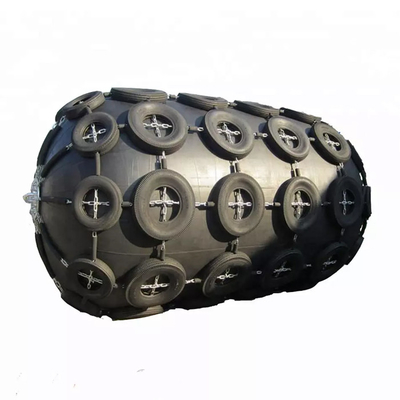
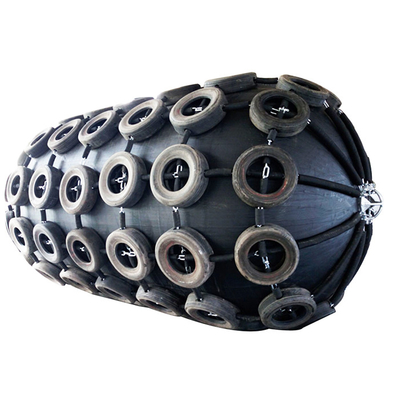
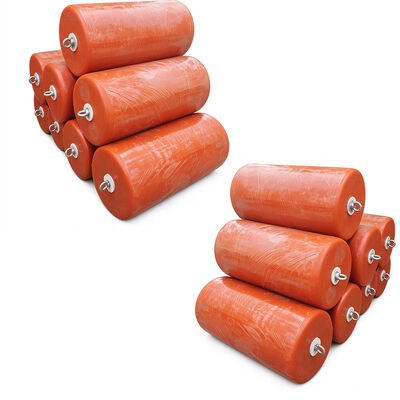
The Floating Foam Fender is a floating marine protection device designed to absorb berthing energy and reduce impact forces between vessels, offshore structures, port facilities, and other marine assets. It is commonly used in ports, shipyards, offshore terminals, vessel transfer operations, and temporary marine installations where reliable impact protection and buoyancy are required.
The fender typically consists of a closed-cell polyethylene foam core, a reinforced outer elastomeric skin, and integrated connection components. The foam core provides buoyancy and energy absorption, while the outer skin protects the internal structure against abrasion, tearing, seawater exposure, and repeated contact during marine operations. Depending on the intended application, the external covering may incorporate polyurethane elastomer or other engineered protective materials selected according to the required mechanical properties and operating environment.
The energy-absorption mechanism is based on controlled compression and deformation of the foam core when an external force is applied. During vessel berthing or ship-to-ship contact, the foam structure deforms to distribute impact loads over the contact area, reducing the concentration of forces on the protected surfaces. The amount of energy absorbed depends on the fender dimensions, foam density, compression characteristics, contact geometry, and allowable deformation. Correct selection therefore requires consideration of vessel displacement, approach velocity, berthing angle, available clearance, tidal variation, and the strength of the supporting structure. For demanding applications, fender dimensions and performance parameters should be determined through engineering calculations and confirmed against the project specification.
The closed-cell foam construction limits water absorption and enables the fender to maintain buoyancy during prolonged marine service. Unlike conventional pneumatic fenders, a foam-filled design does not depend on internal air pressure to maintain its basic operating form. This structural characteristic reduces dependence on inflation equipment and routine pressure adjustment. The reinforced outer layer provides a protective barrier against surface wear, localized impact, and environmental exposure, while the internal foam maintains the fender's flotation and deformation characteristics. The performance of the complete assembly depends on the compatibility of the core material, skin thickness, reinforcement arrangement, bonding process, and connection design.
Floating Foam Fenders are suitable for operating environments in which equipment must remain afloat while accommodating repeated contact and changing water levels. Their buoyant structure allows them to move with tidal fluctuations and wave-related changes in water level, provided that the mooring arrangement and operating conditions remain within the specified design limits. They can be manufactured in different diameters, lengths, energy-absorption ratings, and connection configurations to accommodate different vessel sizes and installation layouts. Protective surface colors, end fittings, lifting points, and attachment arrangements may also be selected according to project requirements. For ship-to-ship operations, the fender configuration should account for relative vessel movement, hull geometry, contact pressure, and the possibility of local loading near the fender ends.
The principal engineering value of a Floating Foam Fender is its combination of buoyancy, impact-energy absorption, and a pressure-independent foam-filled structure. It can be deployed as a primary or supplementary protection system according to the risk assessment and operating arrangement. Typical applications include vessel berthing, ship-to-ship transfer, offshore support operations, floating terminal protection, and temporary protection around marine construction equipment. For long-term service, the fender should be inspected for outer-skin damage, foam exposure, connection wear, deformation, and changes in flotation. Selection and installation should be based on documented performance requirements, compatible attachment hardware, and the environmental loads expected at the installation site.
Case Study: Offshore Supply Vessel Operations
A representative offshore support project involved a marine service operator that required additional impact protection for supply vessels working alongside a floating service platform. The operating area experienced tidal variation, intermittent wave action, and frequent vessel movements during personnel transfer, equipment handling, and replenishment activities. The existing contact-protection arrangement provided limited adaptability to changing relative positions between the platform and approaching vessels. Repeated contact created concerns about localized hull loading, surface damage, and the reliability of the connection points during routine operations.
The engineering assessment focused on the vessel dimensions, expected approach conditions, contact locations, platform geometry, and the available space for installing floating protection equipment. Particular attention was given to the relationship between fender deformation and the clearance required to prevent direct contact between the vessel hull and the platform structure. The project team also reviewed the expected direction of impact forces and the movement range associated with changes in water level. These factors were used to establish the preliminary requirements for fender dimensions, foam characteristics, external protection, and attachment configuration.
A Floating Foam Fender arrangement was proposed to provide a buoyant contact interface between the vessel and the protected structure. The closed-cell foam core was selected to provide flotation and controlled deformation, while the reinforced outer skin was intended to withstand routine surface contact and abrasion. The connection arrangement was designed around the platform's available attachment points and the expected movement of the fender during vessel approach and departure. Before deployment, the installation team was required to verify the attachment strength, connection compatibility, handling clearances, and the fender's positioning relative to the intended contact area.
During installation, the fenders were positioned to cover the principal contact zones identified in the operational assessment. The crew checked that the fenders could move with changes in water level without becoming trapped against structural projections or interfering with access routes. The attachment points were inspected to confirm that the load path remained compatible with the supporting structure. Operational procedures were also reviewed to establish suitable approach speeds, communication arrangements, and inspection responsibilities. These controls were necessary because the fender could reduce impact forces but could not compensate for uncontrolled vessel movement or unsuitable berthing practices.
In this representative scenario, the expected engineering benefit was a more adaptable contact-protection arrangement for routine offshore support activities. The foam-filled structure provided flotation without relying on inflation pressure, and the external protective layer helped manage wear caused by repeated contact. The final performance would need to be confirmed through project-specific calculations, commissioning inspections, and operational monitoring. Inspection records would provide information on surface condition, deformation, attachment integrity, and any changes in flotation over time. The case illustrates how Floating Foam Fenders can be integrated into an offshore protection system when equipment selection, installation geometry, and operating procedures are considered together.
Specifications
| Product Name |
Floating Foam Fender |
| Product Type |
Closed-Cell Foam Filled Floating Fender |
| Core Material |
High-Density Closed-Cell Polyethylene Foam |
| Outer Skin |
Reinforced Polyurethane or Elastomeric Rubber |
| Buoyancy |
Unsinkable, Positive Buoyancy |
| Energy Absorption |
High Energy Absorption With Low Reaction Force |
| Weather Resistance |
UV, Seawater, And Aging Resistant |
| Installation |
Chain or Bracket Mounting, Customizable |
| Service Life |
15–20 Years Under Normal Operating Conditions |
Performance Data (60% Compression)
| Diameter × Length (mm) |
Energy Absorption (kNm) |
Reaction Force (kN) |
Approx. Weight (kg) |
| 300 × 1000 |
3.8 |
54 |
11 |
| 500 × 1000 |
10.6 |
91 |
41 |
| 600 × 1000 |
15.3 |
109 |
49 |
| 600 × 1000 |
18.3 |
131 |
55 |
| 700 × 1500 |
31 |
191 |
85 |
| 750 × 1500 |
36 |
204 |
89 |
| 900 × 1800 |
62 |
294 |
140 |
| 1000 × 1500 |
64 |
272 |
125 |
| 1000 × 2000 |
85 |
363 |
170 |
| 1200 × 2000 |
122 |
436 |
275 |
| 1200 × 2400 |
146 |
523 |
365 |
| 1250 × 2000 |
132 |
454 |
353 |
| 1250 × 2500 |
165 |
567 |
410 |
| 1500 × 3000 |
286 |
817 |
570 |
| 1500 × 4000 |
381 |
1089 |
720 |
| 1700 × 3000 |
367 |
926 |
700 |
| 1700 × 3500 |
428 |
1080 |
780 |
| 1800 × 3000 |
412 |
980 |
850 |
| 1800 × 3600 |
494 |
1176 |
965 |
| 2000 × 3000 |
508 |
1089 |
965 |
| 2000 × 3500 |
593 |
1271 |
1100 |
| 2000 × 4000 |
678 |
1452 |
1220 |
| 2400 × 4000 |
976 |
1743 |
1720 |
| 2400 × 4800 |
1171 |
2091 |
2140 |
| 2500 × 4000 |
1059 |
1815 |
1865 |
| 2500 × 5000 |
1324 |
2269 |
2500 |
| 2500 × 5500 |
1456 |
2496 |
2675 |
| 2700 × 5400 |
1668 |
2647 |
2865 |
| 3000 × 5000 |
1925 |
2750 |
3200 |
| 3000 × 6000 |
2287 |
3268 |
3740 |
| 3300 × 6500 |
2998 |
3894 |
4735 |
| 3600 × 7200 |
3953 |
4706 |
5800 |
| 4000 × 8000 |
4522 |
5809 |
8700 |
| 4200 × 8400 |
6277 |
6405 |
10000 |
| 4500 × 9000 |
7720 |
7353 |
10700 |
Key Features
Closed-Cell Foam Core for Buoyancy and Energy Absorption
The internal foam core provides the principal buoyancy and compression characteristics of the Floating Foam Fender. Closed-cell construction limits water ingress into the foam structure, supporting flotation during extended exposure to seawater and changing weather conditions. When the fender is subjected to an external load, the foam deforms and distributes the applied force through its internal structure. The resulting energy-absorption performance is influenced by foam density, cell structure, compression range, fender geometry, and loading rate. These variables must be considered when matching the fender to a vessel's displacement and expected berthing conditions.
A correctly specified foam core can provide progressive deformation over its intended operating range, helping reduce sudden force concentration during contact. However, the allowable compression must be established through product performance data and the project design basis. Excessive compression can reduce remaining clearance and may increase the risk of direct contact between the vessel and the protected structure. For this reason, selection should account for both the required energy absorption and the maximum permissible deformation. The core material should also be compatible with the external skin and manufacturing process to maintain the integrity of the finished assembly.
Reinforced Outer Skin for Marine Surface Protection
The outer skin protects the foam core from abrasion, cuts, surface impact, and routine handling damage. Depending on the product specification, the covering may use polyurethane elastomer or another suitable protective material. Reinforcement can be incorporated to improve resistance to tearing and localized mechanical stress. The skin must remain compatible with the foam core under the expected deformation range, because repeated compression places stress on both the covering and the interface between the materials.
Marine exposure introduces additional considerations, including ultraviolet radiation, saltwater, temperature changes, and contact with painted or coated vessel surfaces. The appropriate outer material should therefore be selected according to the intended operating environment and the manufacturer's documented material properties. Surface damage should be inspected regularly, particularly around attachment areas, end sections, and locations exposed to repeated contact. Early identification of cuts, cracks, or delamination can help prevent localized damage from progressing into a condition that compromises the protective covering.
Pressure-Independent Foam-Filled Construction
Unlike air-filled fenders, Floating Foam Fenders maintain their basic form through the internal foam structure rather than a pressurized chamber. This construction removes the routine need for inflation and pressure adjustment associated with pneumatic systems. It can be advantageous at remote marine sites where access to compressors, pressure gauges, and specialized maintenance personnel is limited. The absence of an operating air chamber also means that a conventional pressure-loss failure mechanism does not apply to the foam core.
Pressure-independent construction does not eliminate the need for inspection or maintenance. The outer skin, end connections, lifting components, and mooring hardware remain subject to wear and mechanical loading. The fender should be checked for excessive permanent deformation, skin damage, loose fittings, and signs of water ingress or abnormal flotation. Its performance should be evaluated against the manufacturer's specified limits, particularly after severe impact or prolonged exposure to unusual operating conditions.
Adaptable Dimensions and Connection Arrangements
Floating Foam Fenders can be configured in different sizes and attachment arrangements to suit vessel geometry, platform layout, and installation constraints. Diameter and length influence the contact area, available deformation, buoyancy, and overall energy-absorption capacity. Connection components must be selected according to the expected load direction, fender movement, supporting structure, and maintenance access requirements. Lifting points and end fittings should be integrated into the design so that handling forces are transferred without creating unnecessary stress concentrations in the outer skin.
Customization should be based on documented engineering requirements rather than dimensions alone. Relevant inputs include vessel displacement, berthing velocity, approach angle, tidal range, wave conditions, available clearance, and the allowable loads on the supporting structure. For ship-to-ship operations, the fender layout must also account for relative vessel motion and the possibility of uneven contact. A project-specific configuration helps ensure that the fender's physical dimensions, material properties, and attachment system work as a coordinated protection assembly.
Applications
Port Berthing and Quay-Side Vessel Protection
Floating Foam Fenders can be installed at selected berthing locations to provide a buoyant interface between vessels and suitable marine structures. They are applicable to service berths, workboat facilities, and other locations where the fender must accommodate variations in water level. The foam core provides impact-energy absorption, while the protective outer skin manages routine surface contact. The fender arrangement should be selected according to vessel size, expected approach conditions, quay geometry, and the structural capacity of the attachment points.
Installation planning should consider the required contact height throughout the tidal cycle, the possibility of wave-driven movement, and the risk of the fender becoming trapped against structural projections. The fender should not obstruct vessel access, ladders, mooring lines, or operational walkways. Inspection should include the external covering, connection hardware, and supporting structure.
Ship-to-Ship Transfer and Offshore Support Operations
During ship-to-ship transfer, floating foam fenders can provide a protective contact layer between vessels operating alongside one another. Typical activities may include equipment transfer, supply replenishment, personnel logistics, and other controlled offshore support operations. The fender configuration must accommodate differences in hull shape, relative movement, and contact pressure while maintaining sufficient clearance between the vessels.
Engineering selection should account for the displacement and geometry of both vessels, expected relative approach speed, sea conditions, and the operating procedures governing the transfer. Fender positioning should be checked before each operation, and the crew should monitor movement during contact. The use of a suitable fender must be supported by an operational risk assessment and should not replace required vessel-control procedures or established offshore transfer standards.
Marine Construction and Temporary Floating Facilities
Floating Foam Fenders may be used around floating work platforms, temporary marine facilities, construction pontoons, and selected floating equipment where contact protection is required. Their buoyancy allows the fender to follow changes in water level, while the foam core provides deformation under impact. The external skin helps protect the core from routine abrasion caused by contact with adjacent structures and equipment.
For temporary installations, the design should consider changing load directions, handling frequency, construction debris, and the possibility of contact with sharp or uneven surfaces. Attachment points must be suitable for the expected loads, and the fender should be positioned to avoid interference with lifting operations, access routes, and construction activities. Regular inspection is especially important when the fender is moved frequently or exposed to uncontrolled contact during marine works.
Why Choose Hongruntong Marine
Manufacturing Experience and Marine Product Knowledge
Hongruntong Marine has more than 30 years of manufacturing experience, providing an established industrial background for the production of marine protection equipment. Manufacturing experience is relevant to Floating Foam Fender projects because the finished product depends on the coordination of foam selection, skin materials, bonding methods, reinforcement, dimensional control, and connection design. Each of these elements can affect the fender's deformation characteristics, flotation, durability, and suitability for its intended application.
For engineering procurement, product evaluation should focus on whether the proposed construction matches the operating conditions and project specifications. This includes reviewing material descriptions, dimensional tolerances, performance data, attachment details, and inspection requirements. A manufacturer with relevant marine product experience can support this process by clarifying technical parameters and identifying information required before production. Final selection should be based on verifiable product documentation and the project's engineering acceptance criteria.
Material Selection and Structural Configuration
The performance of a Floating Foam Fender depends on the compatibility of its internal foam, outer skin, reinforcement, and attachment components. Hongruntong Marine can assess project requirements to determine an appropriate product configuration, subject to the available product range and confirmed manufacturing specifications. Factors for evaluation include foam density, required buoyancy, expected deformation, surface-abrasion exposure, seawater conditions, and the mechanical demands placed on the connections.
Material selection should not be treated as an isolated decision. The external skin must tolerate the intended deformation range without premature cracking or separation from the core. Reinforcement should be suitable for the expected surface loads, while connection hardware must accommodate the intended installation arrangement. By reviewing these elements together, the project team can establish a more coherent technical specification and reduce the risk of mismatches between individual components.
Customization for Project-Specific Requirements
Floating Foam Fender installations vary according to vessel dimensions, contact geometry, operating environment, and available installation space. Hongruntong Marine can review technical requirements for customized dimensions and connection configurations where supported by the manufacturing design. Useful project information includes required diameter and length, target energy absorption, allowable deformation, vessel type, installation position, water-level variation, attachment arrangement, and applicable technical standards.
Customization should be supported by engineering review rather than nominal dimensions alone. A larger fender does not automatically provide the correct performance if its deformation characteristics, material properties, or contact geometry are unsuitable for the application. Similarly, connection points must be compatible with the supporting structure and expected load direction. A clearly defined specification helps align the proposed configuration with installation requirements, handling arrangements, and maintenance procedures.
Quality Control and Technical Documentation
Quality control is important because the fender is a complete assembly whose performance depends on multiple materials and manufacturing processes. Relevant inspection activities may include dimensional verification, visual examination of the outer skin, checks of connection components, review of material specifications, and assessment of finished-product condition. Where required by the project, additional tests and documentation should be agreed upon before production and recorded according to the applicable inspection plan.
Hongruntong Marine can coordinate product documentation and technical clarification according to confirmed project requirements. Procurement teams should establish the required drawings, inspection records, material information, performance data, packing details, and acceptance criteria in advance. Any certification or test report should be confirmed for the specific product and scope rather than assumed from general manufacturing capability. Clear documentation supports receiving inspection, installation planning, maintenance records, and traceability throughout the equipment's service life.
Frequently Asked Questions
1. What is a Floating Foam Fender used for?
A Floating Foam Fender provides impact protection between vessels and marine structures. Typical applications include port berthing, ship-to-ship operations, offshore support activities, and protection around floating facilities. The appropriate configuration depends on vessel characteristics, expected impact conditions, and installation geometry.
2. What materials are used in a Floating Foam Fender?
The typical construction includes a closed-cell foam core and a reinforced outer protective skin. Polyurethane elastomer or other suitable covering materials may be specified according to the product design. Exact material composition, reinforcement details, and bonding methods should be confirmed in the manufacturer's technical documentation.
3. How is the required fender size determined?
Sizing should consider vessel displacement, approach velocity, berthing angle, contact geometry, available clearance, and allowable loads on the supporting structure. The selected fender must provide appropriate energy absorption without exceeding its permitted deformation. Engineering calculations and documented product performance data should be used to verify suitability.
4. Does a Floating Foam Fender require inflation or routine pressure checks?
No. A foam-filled fender does not depend on internal air pressure for its basic structure and flotation, so routine inflation is not required. However, periodic inspection remains necessary to assess outer-skin condition, deformation, attachment hardware, and overall flotation performance.
5. What maintenance is required during service?
Maintenance generally includes visual inspection of the outer skin, examination of connection points, checks for cuts or delamination, and monitoring for abnormal deformation or flotation changes. Inspection frequency should reflect the operating environment, contact frequency, and consequences of equipment failure. After a severe impact or suspected damage, the fender should be assessed before returning to normal service.


 Your message must be between 20-3,000 characters!