Date: Aug 27, 2026
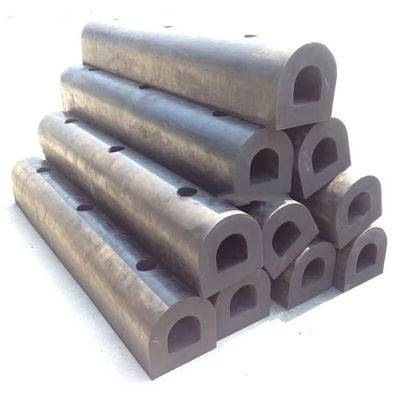
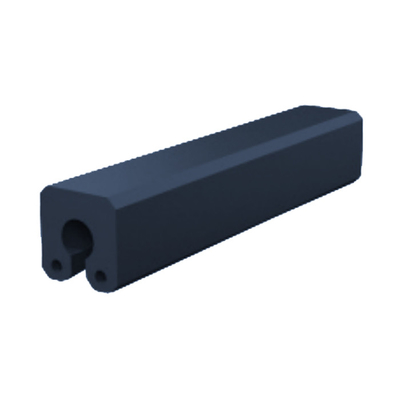
D-type rubber fenders are one of the most widely adopted extruded marine protective facilities in the global port and shipbuilding industry. Featuring a unique D-shaped cross-section, flat mounting base and arc contact surface, this type of fender delivers balanced energy absorption and stable reaction force under frequent low-to-medium impact loads. Different from heavy-duty cone fenders and cell fenders designed for large container terminals, D-type fenders are specialized for space-limited structures, frequent berthing scenarios and continuous anti-collision protection, making them indispensable in small and medium marine engineering projects.
Unique Structural and Mechanical Advantages
The core competitiveness of D-type fenders comes from its optimized structural design. The flat back allows full contact with quay walls, bulkheads and hull surfaces, enabling simple bolt-on installation without complex steel support frames. The integral extruded rubber structure supports continuous long-length installation, effectively forming a full-length protective buffer zone along berthing walls. Under berthing pressure, the D-shaped profile produces combined compression and rotation deformation, which evenly disperses impact force, avoids local stress concentration, and greatly improves shear resistance and tear resistance compared with ordinary rectangular fenders.
In addition, the semi-hollow back structure of standard D-type fenders realizes self-draining performance, preventing water accumulation, freeze-thaw damage and internal corrosion. High-quality natural rubber compound enhances resistance to seawater erosion, ultraviolet aging and ozone cracking, ensuring long-term stable outdoor service in harsh marine environments.
Core Applicable Scenarios of D-Type Fenders
1. Small and medium-sized port berths & fishing harbours
D-type rubber fenders are the preferred protective solution for fishing ports, inland river terminals, regional small cargo berths and ferry terminals. These scenarios feature frequent vessel docking, low tonnage and mild impact force. D-type fenders provide reliable buffer protection while controlling low reaction force, effectively protecting quay concrete structures and vessel hulls from collision and friction damage.
2. Shipyards, dry docks and repair docks
Ship maintenance areas have extremely high requirements for continuous wall protection. Vessels often slide and adjust positions repeatedly during docking and undocking. The continuous installation capability of D-type fenders forms an integral anti-collision strip along dry dock walls and slipway edges. It resists long-term friction and scraping, greatly reducing hull paint scratching and wall abrasion, and is widely used in ship repair yards and shipbuilding bases.
3. Vessel hull side protection
Different from most shore-fixed fenders, D-type fenders are highly suitable for direct mounting on vessel hulls. Tugboats, workboats, barges, patrol boats and yachts are all typical application targets. Installed on hull sides, bow and stern edges, they prevent collision damage during ship-to-ship contact, narrow waterway navigation and crowded harbour anchoring. Their compact size and lightweight features will not affect vessel navigation and operation.
4. Pontoons, floating docks and marina facilities
Floating platforms, floating bridges and yacht marinas usually have narrow installation space and lightweight structural load limits. D-type fenders with small installation thickness and flexible cutting length perfectly adapt to floating body protection needs. They provide soft buffer protection for recreational vessels and small working ships, with strong environmental adaptability to tidal fluctuation and floating body displacement.
5. Inland waterways, canal walls and sluice piers
Inland navigation channels, lock chambers and bridge piers face long-term repeated impact from passing ships. D-type fenders are installed along channel walls and pier sides to form linear protective barriers. Their excellent wear resistance and stable deflection performance effectively reduce structural fatigue damage caused by long-term ship collision.
Clear Application Boundaries: When to Choose Other Fender Types
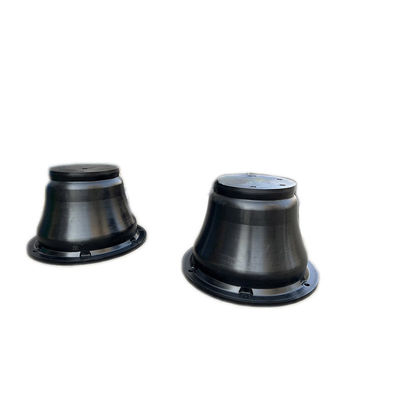
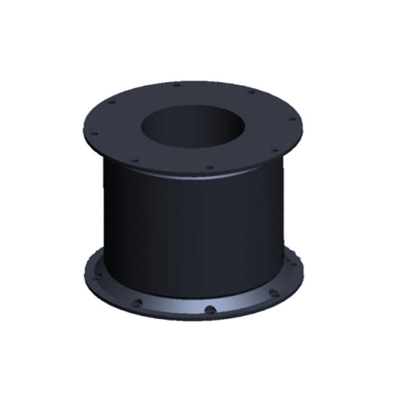
To achieve optimal engineering cost and protection effect, D-type fenders have clear application limitations. Due to relatively low energy absorption per unit length, they are not suitable for large container terminals, bulk cargo terminals and super-large tonnage vessel berths with high impact energy. For heavy-duty berthing scenarios, cone fenders, cell fenders or pneumatic fenders are more appropriate. D-type fenders always maintain the best cost-performance in medium and low energy berthing conditions.
Market Prospect and Industrial Value
With the continuous development of global inland waterway transportation, regional port upgrading, fishery infrastructure construction and marina tourism projects, the market demand for medium and small marine protective equipment remains stable. As a mature, cost-effective and easy-to-install fender product, D-type rubber fenders have irreplaceable advantages in standardized and customized short-cycle projects.
Chinese manufacturers continue to optimize rubber formula, improve aging resistance and bearing stability, and provide customized size cutting, pre-drilling and anti-ultraviolet surface treatment services. With reliable quality and competitive engineering adaptability, China-made D-type rubber fenders are widely exported to Southeast Asia, Africa, Europe and other regions, becoming the mainstream choice for global small and medium marine protection projects.


 Your message must be between 20-3,000 characters!