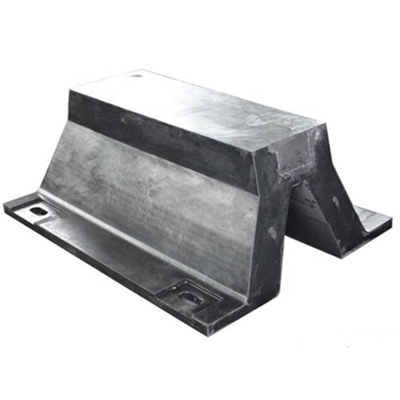
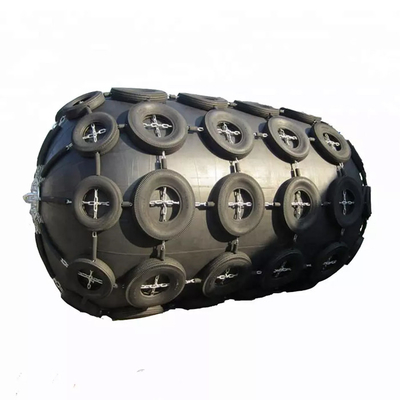
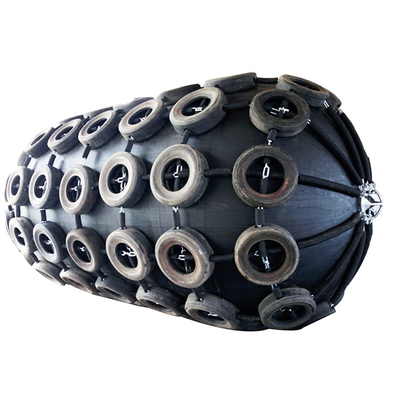
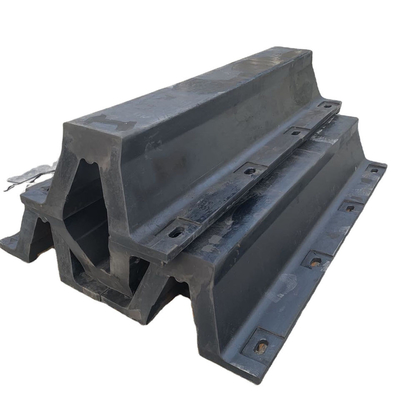
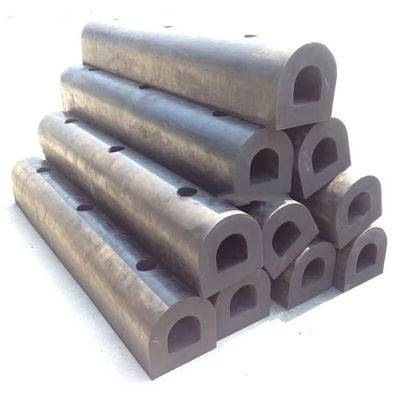
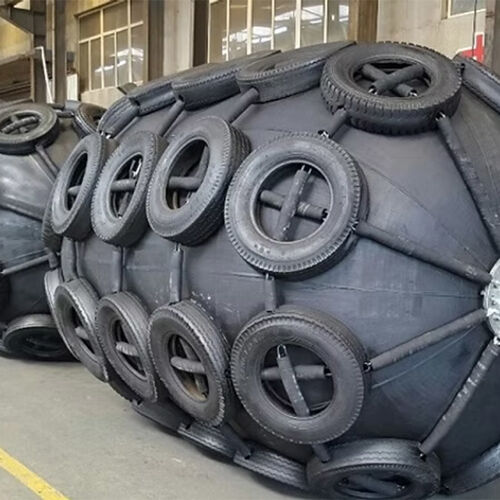
Recently, we provided a professional berthing protection solution for a large-scale bulk cargo terminal in Southeast Asia, which is mainly engaged in the berthing and unloading of 50,000-100,000 DWT bulk carriers. The terminal was previously equipped with traditional solid D-type rubber fenders, but due to the frequent berthing of large-tonnage ships, the fenders suffered serious wear and tear, requiring frequent maintenance and replacement, which not only increased operational costs but also affected the efficiency of berthing operations. After in-depth investigation of the terminal's operation needs, environmental conditions and existing problems, we recommended pneumatic fenders (pneumatic fenders) as the core protective equipment for the terminal's berthing upgrade, which has achieved remarkable results after installation and use.
The reason why we strongly recommend pneumatic fenders to this terminal is that they have obvious advantages over other types of fenders, and can perfectly solve the pain points of the terminal's existing protective system, which is fully consistent with the core needs of high-efficiency, durable and cost-saving berthing protection. Compared with traditional solid rubber fenders, foam-filled fenders and other types, the advantages of pneumatic fenders are mainly reflected in the following aspects.
Firstly, in terms of energy absorption and impact resistance, pneumatic fenders are far superior to other types of fenders. Pneumatic fenders adopt an inflatable cavity structure, which can efficiently absorb and disperse the impact energy generated by large-tonnage ships during berthing, with an energy absorption efficiency of up to 85%, which is 20%-30% higher than that of traditional solid rubber fenders. When a ship berths, the air in the fender can be compressed to convert the kinetic energy of the ship into air compression energy, and then slowly release it, which can effectively reduce the impact force by 70%-80%, avoiding damage to the hull and dock structure. For the bulk cargo terminal with frequent berthing of large-tonnage ships, this performance can greatly reduce the risk of collision damage and improve the safety of berthing operations.
Secondly, pneumatic fenders have better adaptability to different tonnage ships and berthing environments. Unlike solid fenders with fixed specifications and limited impact resistance, pneumatic fenders can adjust the internal air pressure according to the tonnage of the berthing ship and the intensity of the impact, so as to achieve the best buffering effect. Whether it is a small workboat or a 100,000 DWT bulk carrier, it can be perfectly adapted. At the same time, pneumatic fenders have excellent floating performance, which can automatically adjust with the change of water level and tide, ensuring all-weather effective protection. This is particularly important for the Southeast Asian terminal with large tidal range, which solves the problem that traditional solid fenders cannot provide effective protection when the water level changes greatly.
Thirdly, pneumatic fenders are more durable and have lower maintenance costs. Made of high-quality neoprene or natural rubber, the outer layer of pneumatic fenders has excellent wear resistance, seawater corrosion resistance, anti-ultraviolet and anti-aging properties, and can maintain stable performance in harsh marine environments such as salt spray, storms and high and low temperatures, with a service life of 15-20 years, which is 2-3 times that of traditional solid rubber fenders. In addition, the maintenance of pneumatic fenders is simple and convenient, only requiring regular inspection of air pressure and surface wear, without complex disassembly and replacement operations. Compared with the traditional solid fenders that need to be replaced every 3-5 years, the pneumatic fenders can save a lot of maintenance and replacement costs for the terminal every year.
Finally, pneumatic fenders are easier to install and transport. Compared with solid fenders of the same specifications, pneumatic fenders are lighter in weight, can be deflated when transported, greatly reducing the transportation volume and transportation cost, and are more convenient to transport to the terminal site. In terms of installation, pneumatic fenders only need simple fixing devices to complete the installation, without large-scale construction equipment and complex construction processes, which can shorten the installation cycle by 50% compared with traditional solid fenders, and minimize the impact on the normal operation of the terminal.
Since the pneumatic fenders were put into use at the Southeast Asian bulk cargo terminal, the berthing safety of the terminal has been significantly improved, the frequency of fender maintenance and replacement has been reduced by 70%, and the annual operation cost has been saved by nearly 600,000 US dollars. The person in charge of the terminal said that the pneumatic fenders not only solved the long-standing pain points of the terminal's berthing protection, but also improved the efficiency of berthing operations, which is the most cost-effective protective solution they have ever used. It is precisely because of these obvious advantages that pneumatic fenders have become the preferred choice for more and more ports, terminals and offshore facilities, and have become an important force in safeguarding the safety and efficiency of global marine operations.


 Your message must be between 20-3,000 characters!